When school closes for fall break, your program may welcome children who are unfamiliar with its rooms, routines, or emergency procedures. A focused plan review helps staff respond with confidence and account for every child; ChildCareEd’s Stay Alert! Steps for Emergency Prep Buy Now $25.00 offers practical learning on evacuation, sheltering, communication, drills, and emergency kits. Use the ideas below to make your fall-break readiness more specific, accessible, and reassuring for children and families.
Why does fall break call for a fresh emergency-plan review?
School-break programs often operate under conditions that differ from the regular school-year schedule. Enrollment may shift, children may attend only for a few days, staff assignments can change, and the program may use a school building or shared space with different access points. Even a familiar plan can have gaps when the group, location, or schedule changes.
A brief review is not about anticipating every possible event. It is a way to confirm that the team has clear, usable steps for protecting children, keeping them accounted for, communicating with families, and coordinating with responders. The CDC’s emergency preparedness guidance for early care and education underscores that providers have a role in preparation, response, and helping children cope and recover.
For a fall-break program, make sure the review addresses:
- Expected attendance, age groups, room locations, and staff coverage for each day.
- Building access, exits, assembly areas, and any spaces that may be unavailable during the school closure.
- How substitute or seasonal staff will find the plan and understand their responsibilities.
- New or temporary children’s contacts, health information, authorized pickups, and individual supports.
Preparedness also communicates care: families can feel more confident when they know the program has planned for both routine changes and unexpected disruptions.
What should directors verify before children arrive?
Start with the details that can change quickly. Confirm the daily roster and staff schedule, then check that emergency contacts and pickup authorizations are current and accessible. Review each child’s allergies, medication instructions, health needs, communication preferences, and mobility or sensory supports with the staff members who need that information. Keep records secure and share only what is necessary for safety.
Next, walk the program as staff and children will experience it. Confirm that exits are usable, evacuation routes are clear, assembly areas remain available, and staff know which doors or school areas are off-limits. If the program is operating in a school facility, coordinate with the school or building manager about alarms, locked entrances, construction, shared spaces, and emergency contacts. The federal ACF emergency preparedness checklist highlights coordination with school districts, licensing agencies, emergency management, and other partners.
A quick pre-opening checklist can help:
- Verify the address and directions responders would need, including the program’s room or entrance.
- Check that current rosters, emergency contacts, medical action plans, and pickup records are available on paper as well as securely stored digitally.
- Confirm primary and backup assembly or relocation locations.
- Review staff coverage, role backups, and procedures for children who need additional assistance.
State requirements vary - check your state licensing agency for required plans, drills, and documentation.
How should emergency procedures work for a mixed or changing group?
A plan needs to work for every child present that day—not only children who attend throughout the year. Explain simple procedures to visiting children during orientation, using calm, clear language. Show them the designated adults, exits, meeting place, and a familiar signal for stopping or gathering. Older school-age children can help practice group routines, but adult supervision and accountability remain the adults’ responsibility.
Write separate, plain-language actions for evacuation, shelter-in-place, and lockdown or other locally defined protective actions. Staff should know who leads each response, who takes attendance and emergency records, who brings medications and the go-bag, and who communicates with families. Keep instructions consistent with local emergency guidance; do not improvise tactics during an incident.
Make individual supports explicit. For example, identify the staff member who will assist a child with mobility needs, who carries prescribed emergency medication, and what supports help a child with sensory or communication differences follow directions. Include enough supplies for children who may need care longer than expected. The Child Care Technical Assistance Network’s planning and drill guidance emphasizes procedures for relocation, reunification, continuity of operations, and accommodation of children with medical or access needs.
🧭 Before opening, walk a new child through the nearest safe exit and meeting point in a reassuring, non-alarming way.
Which supplies and communication systems deserve special attention?
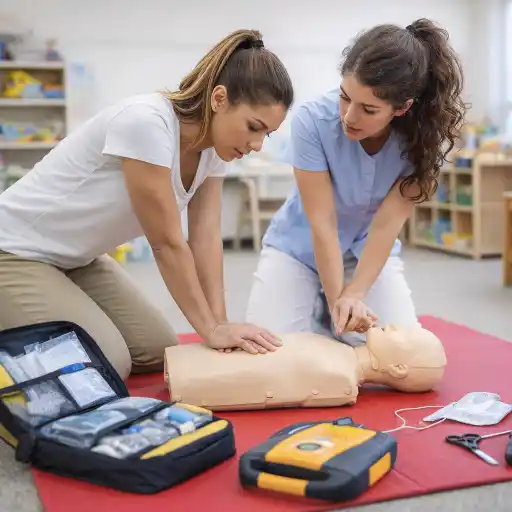
Fall-break readiness depends on supplies that are both available and matched to the actual group. Place a portable go-bag where staff can reach it quickly, and make sure every room or activity area has an accessible copy of the quick-reference instructions. A school-age emergency checklist can provide a useful prompt for reviewing key child and program information; see ChildCareEd’s Emergency Checklist for School Age Children Buy Now $0.00.
Review the kit for current, usable items rather than relying on a list alone. Consider:
- Printed roster, emergency contacts, authorized pickup information, and relevant medical instructions.
- First-aid supplies, gloves, flashlight, batteries, charged power bank, and a communication backup.
- Water, age-appropriate snacks, sanitation materials, and any needed medication or child-specific equipment.
- Comfort items and quiet activities, such as books or drawing supplies, to support children during a wait.
Communication plans should name one lead and a backup. Confirm which channels families monitor, and have a paper contact list available if phones or internet service fail. Prepare a concise message that states the program’s status, location, the action families should take, and when they can expect another update. Reunification instructions should include identity checks and documentation of each child’s release.
Review the emergency supply list Buy Now $0.00 alongside your own enrollment and licensing requirements, and replenish or replace anything missing, expired, damaged, or unsuitable for the children currently enrolled.
How can staff practice without making children anxious?
Practice helps staff turn written directions into coordinated action, but it should be calm, age-appropriate, and consistent with local requirements. Before a drill, tell children what will happen in simple terms: “We are practicing how to stay together and get to a safe place.” Avoid surprise simulations, frightening props, or language suggesting that a real emergency is happening.
Use fall-break practice to test the actual routines of the program: transitions between rooms, outdoor play, snacks, or a day with substitute staff. Confirm that everyone can hear the signal, locate the go-bag, take a roster, move children safely, and complete a name-to-face check at the destination. Make sure staff can account for children who are absent, arrive late, or move between activity groups.
After each practice, hold a short staff debrief and record what happened. Ask what went smoothly, where staff hesitated, whether every child could participate, and what needs correction. Assign an owner and follow-up date for each improvement. Keep the review constructive: gaps in a drill are useful information, not a reason to blame staff or frighten children.
Common pitfalls to watch for include:
- Using an outdated roster or assuming a school’s normal procedures apply to the break program.
- Relying only on phones, digital records, or one staff member who may be absent.
- Assigning tasks without a backup or failing to include children who need individualized support.
- Practicing procedures that do not match current building access or local instructions.
For more structured learning, Creating an Emergency and Disaster Preparedness Plan  Buy Now $16.00 offers focused guidance for developing and implementing a program plan.
Conclusion: What makes a fall-break emergency review effective?
An effective review makes the plan fit the group, building, schedule, and staffing realities of fall break. Confirm current records and supplies, coordinate with the school or facility, assign clear roles with backups, explain procedures to children in reassuring language, and practice the routes and accountability routines staff will actually use. Then document gaps and follow through on corrections.
The central question—how can a program stay ready when school is closed but child care remains open?—is answered through deliberate preparation and steady teamwork. Use the free Emergency Checklist for School Age Children Buy Now $0.00 as a practical review prompt, and keep it aligned with your written plan and local expectations. A few focused checks before the program opens can help children feel secure and help staff respond with greater clarity if plans must change.
Explore related ChildCareEd courses
- CDA Certification en Español: Recursos y Consejos para Educadores Bilingües
- Requisitos Para Ser Maestra Principal En Un Daycare: Lo Que Necesitas Para Empezar
- Recursos en Español sobre el Sueño Seguro del Bebé
- Capacitación en Salud y Seguridad Preventiva en Línea para Proveedores de Cuidado Infantil
- Regulaciones de Licenciamiento de Cuidado Infantil en California para Centros y Hogares de Cuidado Infantil Familiar
- Normas de Licenciamiento de Cuidado Infantil en Virginia para Centros Diurnos Infantiles y Hogares Diurnos Familiares
- New Child Care Regulations in Georgia for 2026
- How can child care programs handle drop-off, safety, and schedules during the 2026 World Cup in big cities?
- Power Outage at Daycare: Safety, Licensing, and Next Steps
- How can California child care providers prepare for wildfire smoke, power outages, and closed classrooms?
- How do I build an effective emergency preparedness plan for my Kansas child care program?
- What Health Supplies Should Family Child Care Providers Keep Stocked?
- How Can Fall Food Activities Support Children Who Aren’t Ready to Taste?
- How Can Child Care Programs Plan a Halloween Celebration Where Food Is Optional?
- How Can Child Care Programs Prevent Winter Playground Slips, Falls, and Cold-Weather Injuries?
- How Can Fall Break Child Care Programs Review Emergency Plans When School Is Closed?
- How Can Child Care Programs Review Agreements and Track Family Acknowledgments Before Holiday Closures?
- What Is Hiding Under Those Leaves? How Can Child Care Teams Refresh Fall Playground Inspections?
- How Can Fall Art Projects Teach Children to Ask for Help?
