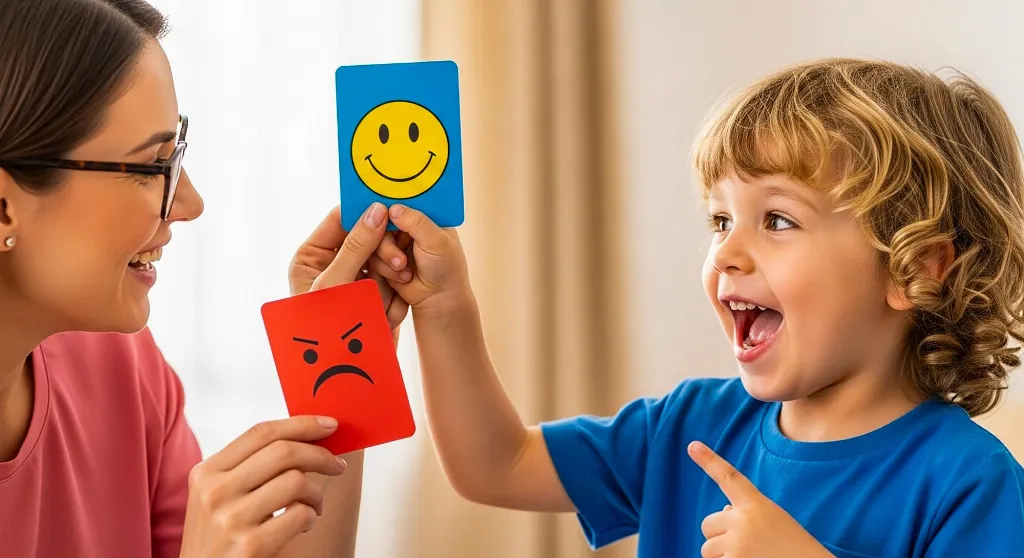
 Emotion sorting is a simple, playful way to help young children notice, name, and manage feelings. These activities use cards, toys, bins, or playdough so children can move things, match faces, and talk about what they see. When you add sorting games into daily routines you build #emotion language, self-regulation, and friendships.
For ready-to-use ideas and printables, see Emotion Sorting Activities Birth-Kindergarten Buy Now $0.00 and the practical guide Big Feelings, Little Hands for step-by-step options. state requirements vary - check your state licensing agency.
Why does emotion sorting matter?
1) Learning words and faces helps children tell adults what they need.
2) Sorting is a low-pressure way to practice feelings—it's like a game, not a test.
3) These activities build early #sorting and thinking skills while teaching calm strategies.
Why it matters: when children can name feelings they get help sooner and behave better in groups. Child care staff who use short, repeated games help children use tools when big feelings come up.
For more ideas on teaching emotion regulation, see Emotions in Motion and the printable My Book of Emotions Buy Now $0.00.
How do I start emotion sorting in my room?
1) Pick 2–4 feelings to begin (happy, sad, mad, calm).
2) Gather simple materials you already have: paper plates, stuffed animals, picture cards, or a small basket.
3) Model the steps: name the feeling, match the card, and show one calm tool.
Try this short script: “You look mad. Put this card in the ‘mad’ bin. Let’s take three breaths.”
Practical steps:
- 🙂 Make two labeled bins or taped floor spots (e.g., Happy / Sad).
- 😃 Place 6–10 face cards or toy faces in a basket.
- 🙂 Invite one child to pull a card and sort it into the right bin.
- 😌 End by asking, “What helps when you feel that way?” and show a calm tool.
For printable activities and mixed-age options, see the ChildCareEd Emotions Match and Sorting resources: Emotions Match Activity Buy Now $0.00 and Emotions Sorting Activity Buy Now $0.00. These are great for staff training and quick setup.
What games and activities really work?
Use playful routines so children practice often. Try these favorites—each supports vocabulary, empathy, and self-regulation. For more game ideas, see Big Feelings, Little Hands.
- 🙂 Emotion Basket Grab: Put face cards in a basket. Child pulls one and places it in a labeled emotion spot. Start with two emotions, then add more.
- 🐻 Stuffed Animal Feelings Sort: Line up animals. Give each a feeling card and ask why (use teacher help for toddlers). See Emotions PlayDoh Buy Now $0.00 to pair hands-on work with toys.
- 📷 Photo Sort (Real Faces): Use photos of real children or teachers showing feelings. Real faces teach that emotions look different on everyone.
- 🏃 Movement Sort: Put emotion labels on the floor. Call a feeling and a movement ("Happy: jump!"). This helps kids who need big-body breaks. See Emotions in Motion.
- 📚 Story Sort: After a read-aloud, ask children to sort cards showing how the character felt at different times in the story.
- 🎲 Calm-Down Tool Sort: Create categories like “Helps my body” or “Helps my voice” and sort tools (breathing, squeeze ball, quiet corner).
For printable games and classroom-size options, try the Emotions Bingo and Emotions Match resources: Emotions Bingo and ChildCareEd's matching activities.
How do I adapt sorting for ages and special needs?
1) Infants: Focus on tone and simple labeling. Show one face card and mirror expressions. 2) Toddlers: Start with two feelings and quick, large pictures. Use mirrors and puppets. 3) Preschool: Add more feelings, short role play, and “what helped?” questions. 4) Pre-K/Kindergarten: Introduce feeling sizes (small/medium/big) and problem-solving steps.
Use sensory materials (Play-Doh, felt faces) to help children who need hands-on learning—see Emotions Playdough Activity Buy Now $0.00. For classroom strategies and scripted stories, CSEFEL offers practical tools: CSEFEL strategies. If you notice repeated concerns or delays, connect with families and consider screening—CDC explains developmental monitoring and screening steps: CDC Learn the Signs. Act Early.
Remember: state requirements vary - check your state licensing agency. Keep activities short (3–5 minutes) and practiced daily during calm moments so skills are ready when big feelings come up.
How do I avoid common mistakes and measure success?
Common mistakes and fixes (easy to copy):
- ❌ Mistake: Only teaching when a child is upset. ✅ Fix: Practice daily during calm times so children remember steps later.
- ❌ Mistake: Giving too many emotion choices at once. ✅ Fix: Start with 2–3 feelings and add slowly.
- ❌ Mistake: Saying “You’re not mad.” ✅ Fix: Name what you see: “You look mad. Let’s find the card.”
- ❌ Mistake: Using calm corners as punishment. ✅ Fix: Teach the calm spot as a helpful choice and model it with children.
Ways to measure progress:
- 🙂 Track short wins: can the child point to a feeling card or show the face? Record a simple note each week.
- 📈 Count use of tools: how often does the child pick a breathing activity or choose the calm corner?
- 🗣️ Watch language: is the child using feeling words more often?
If behaviors don’t improve with consistent practice, involve families and consider referral to early intervention. The CDC has guidance on when to screen and next steps: Developmental Monitoring & Screening.
FAQ (quick answers for busy staff)
- Q: What if a child picks the “wrong” card? A: That’s fine. Ask, “Tell me about your choice,” then model gently. See ChildCareEd tips in Emotions for Kids.
- Q: How long should sorting sessions be? A: Keep them short—3–5 minutes—repeated often.
- Q: Can emotion sorting reduce behavior problems? A: Yes. Naming feelings + practicing calm tools lowers hitting and yelling over time when adults stay consistent.
- Q: When to ask for extra help? A: If meltdowns are frequent, long, or safety is a concern, partner with families and refer to specialists. Use screening resources from the CDC.
Conclusion
Emotion sorting is low-cost, easy to start, and powerful. Use simple materials, keep language consistent, and practice often. Pick two tools (breathing, squeeze ball) and two feelings to begin. For more resources and printables, explore ChildCareEd's activities and courses like Brighter Futures: Social Emotional Development  Buy Now $16.00. Your steady practice helps children name feelings, calm themselves, and join the group. You are doing meaningful work—small games and short routines add up to big change for the #children in your care. #play #calmdown
- The Best Promotion is Play
- Early Emotional Wellness
- From Tantrums to Triumphs: Equipping Preschoolers with Self-Regulation Skills
- Birth to Five CDA Credential with Portfolio Review
- Play Safe, Think Big: Literacy Through Play
- Opportunity for Growth: Emotional Development
- The Best Promotion is Play
- Potty Training Made Simple
- Playful Spaces for Infants & Toddlers
- Environments That Inspire Independence and Exploration
- ¿Cómo puedo usar escenarios de juego de roles de primeros auxilios en mi aula?
- Cómo Celebrar el Día Nacional del Kindergarten
- Actividades de Otoño Fáciles para Preescolares esta Temporada
- How can positive guidance help manage big feelings during indoor play in Oklahoma classrooms?
- Emotion Sorting Activities for Social-Emotional Learning
- How to Teach Feelings with an Emotion Sorting Activity
- Emotion Sorting for Kids: Learning Feelings Through Play
- Being Told No: Helping Children Manage Big Feelings
- How can child care teams help children manage big feelings?
- Can we tame the ‘monsters’ of big emotions in young children?
- How can friendly-monster crafts teach children about feelings?
- Can a Superhero Week Help Preschoolers Learn to Name and Manage Emotions?
- How can we help children identify and express emotions in child care?
- How can child care providers teach children to name and manage emotions?
- How can we build emotional vocabulary through books and play?
- Feelings Activities for Toddlers: Building Social and Emotional Skills
- How Can You Help a Child Hold Two Feelings About the Same Event?
- How Can Providers Use Feelings Pictures with Autistic Children Without Making Assumptions?
- How Can Child Care Providers Help Children Repair a Conflict Beyond “Say Sorry”?
- How Can Emotion Sorting Help Preschoolers Explain What Happened?
