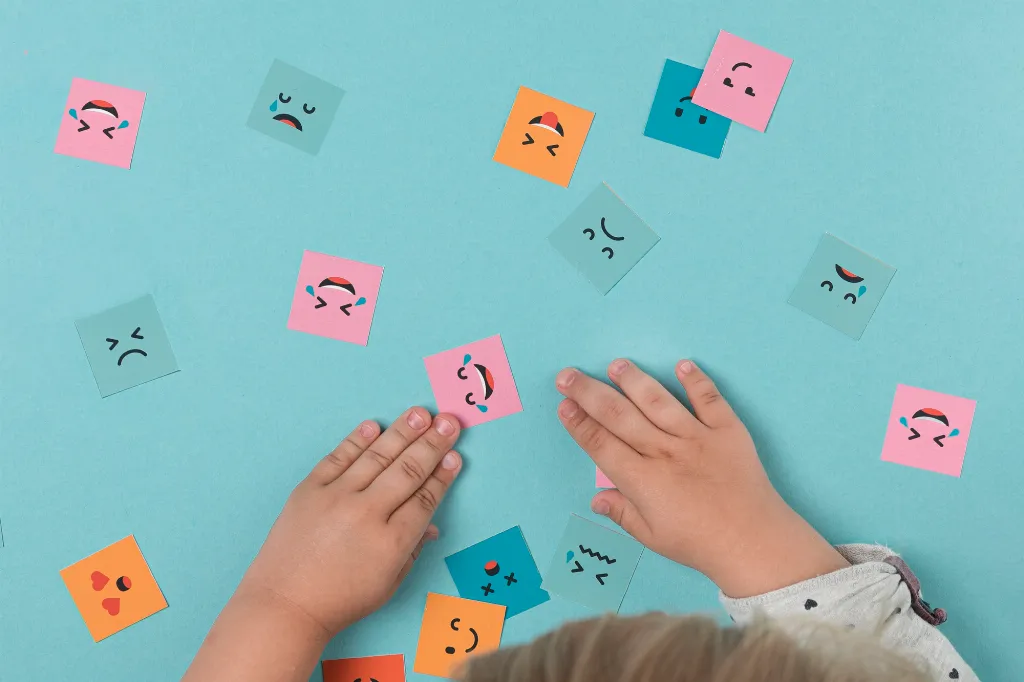
 Child care classrooms are full of feelings. A child may smile one minute and cry the next. That’s normal! Young children are still learning how to name emotions, understand them, and calm their bodies.
Emotion sorting games are a simple, fun way to teach feelings. They work because children learn best through play and because sorting is an early math skill, too. These games also support language, self-control, and friendship skills. #socialemotional #earlychildhood #SEL
What are emotion sorting games (and why do kids like them)?
Emotion sorting games help children:
-
Name feelings (happy, sad, mad, scared, calm)
-
Notice clues (faces, body posture, voice)
-
Match emotions to situations (what happened?)
-
Practice calming tools (what can I do next?)
Kids like these games because they feel like puzzles, matching, or treasure hunts. They also give children a safe way to talk about big feelings without being “in trouble.”
What materials do I need to start (cheap and easy)?
You can start with materials you already have:
-
Paper plates or cups (for “emotion bins”)
-
Sticky notes
-
Toy animals or dolls
-
Picture cards (faces, emojis, or photos)
-
A small basket or bag (“emotion grab bag”)
-
Painter’s tape (for floor sorting)
For ready-to-use printables and ideas from birth to kindergarten, use this ChildCareEd resource:
How do I teach emotion sorting the right way (without pushing kids too hard)?
Use this simple 3-step method:
1) Name it (teacher models).
“Your eyebrows look tight. Your hands are in fists. That looks like mad.”
2) Match it (child practices).
“Which card shows mad? Can you put it in the ‘mad’ spot?”
3) Help it (teach a next step).
“When I feel mad, I can stomp my feet 3 times, then take a breath.”
Keep it light and short. Many children do best with 3–5 minutes at a time.
Which emotion sorting games do kids actually love? (Try these 6 options)
1) Emotion Basket Grab
How it works: Put emotion cards (faces) in a basket. Each child pulls one card and sorts it into the matching “emotion home” (happy/sad/mad/scared/calm).
Make it easier: Start with 2 emotions only (happy/sad).
Make it harder: Ask, “What might make someone feel that way?”
2) Stuffed Animal Feelings Sort
How it works: Put a few stuffed animals in a line. Give children emotion cards. They “give” each animal a feeling and explain why (or you explain for toddlers).
Teacher script: “Bear dropped his snack. How might Bear feel?”
This is great for pretend play and supports empathy. #inclusion
3) Photo Sort: Real Faces
How it works: Use photos of children showing simple emotions (you can use pictures from magazines or classroom-safe photos). Children sort by emotion.
Tip: Real faces help children learn that emotions look different on different people.
4) Movement Sort (Big Body Version)
How it works: Put emotion labels on the floor. Call out a feeling and a movement:
-
“Happy: jump!”
-
“Sad: slow walk.”
-
“Mad: stomp 3 times.”
Then children move to the matching emotion spot.
This is perfect when kids have “wiggles” and need movement.
5) Story Sort (After Read-Aloud)
How it works: After a short book, ask children to sort emotions from the story:
-
“How did the character feel at the start?”
-
“How did they feel at the end?”
Keep it simple with picture cards and one question at a time.
6) Calm-Down Tool Sort
How it works: Make 2–3 categories like:
-
“Helps my body” (breathing, squeezing a ball)
-
“Helps my voice” (quiet corner, asking for help)
-
“Helps my hands” (playdough, drawing)
Children sort calming tools into the category that fits.
This turns “calm down” into something children can do, not just something they are told.
How do I adjust these games for different ages (birth to kindergarten)?
Infants (0–12 months):
-
Focus on your words and soothing routines
-
Use simple labels: “You’re upset. I’m here.”
-
Show one face card at a time and match your tone (soft voice)
Toddlers (1–2 years):
-
Use 2 feelings first: happy/sad (then add mad)
-
Use quick sorting with large pictures
-
Try mirrors: “Show me happy!”
Preschool (3–4 years):
-
Add more feelings (scared, surprised, proud, worried)
-
Ask short questions: “What happened?” “What can we try?”
-
Use role-play with dolls
Pre-K/Kindergarten (4–6 years):
-
Add “size of feeling” (small/medium/big)
-
Sort by “what helps” (breathing, talking, space)
-
Try simple problem-solving: “What could you do next time?” #bigfeelings
What are simple classroom tips that make emotion sorting work better?
-
Start during calm times, not during a meltdown
-
Use the same emotion words every day (keep it consistent)
-
Keep cards and bins in one place so children can use them on their own
-
Praise the skill, not the mood:
-
“You matched the feeling!”
-
“You tried a calm breath!”
-
-
Model your own feelings:
-
“I feel frustrated. I’m going to take a breath.”
-
Which ChildCareEd courses should staff take to support big feelings?
These trainings connect well to emotion sorting, self-regulation, and positive guidance:
-
Brighter Futures: Social Emotional Development
https://www.childcareed.com/courses-brighter-futures-social-emotional-development.html -
The ABCs of Behavior: Turning Challenges into Learning Opportunities
https://www.childcareed.com/courses-the-abcs-of-behavior-turning-challenges-into-learning-opportunities-4071.html -
Turning Behavior Around for Toddlers and Preschoolers
https://www.childcareed.com/courses-turning-behavior-around-for-toddlers-and-preschoolers.html
What common mistakes should teachers avoid?
-
Mistake: Teaching emotions only when kids are upset.
Fix: Practice with games during calm times so children can use the skill later. -
Mistake: Too many emotion choices at once.
Fix: Start with 2–3 emotions, then slowly add more. -
Mistake: Correcting a child’s emotion (“You’re not mad!”).
Fix: Try, “You might feel mad or worried. Let’s look at the cards.” -
Mistake: Skipping the “what helps” step.
Fix: Always pair feelings with a tool: breathe, ask for help, take space, squeeze a ball.
FAQ: Quick answers for busy classrooms
Q1: What if a child chooses the “wrong” emotion card?
That’s okay. Say, “Tell me about your choice.” Then gently model: “I wonder if it could also be sad.”
Q2: Should I force a child to talk about their feelings?
No. Offer choices: “Point to a card” or “show me with your face.” Some children need time.
Q3: Can emotion sorting help with behavior challenges?
Yes. Naming feelings and practicing calm-down tools can reduce hitting, yelling, and refusing over time—especially when adults stay consistent.
Q4: What’s a good related article for more ideas?
Try this ChildCareEd article with more easy activities:
https://www.childcareed.com/a/emotions-for-kids-fun-activities-to-teach-feelings-and-self-control.html
- Social Foundations and Responsive Classrooms
- CDA Infants/Toddlers: Importance of Consistent Care
- Play Safe, Think Big: Literacy Through Play
- Injury Prevention: Their Safety Is In Your Hands
- Supporting Little Hearts: Divorce and Separation in the Child Care Setting
- Art from the Heart for Preschoolers: Open Ended Art Projects that Build Self-Esteem
- Supporting Little Hearts: Divorce and Separation in the Child Care Setting
- Mind's Medicine: Music in Early Childhood
- Party Hats and Emotional Regulation: Helping Little Ones Navigate Big New Year Feelings
- Cómo Celebrar el Día Nacional del Kindergarten
- Mother’s Day Classroom Ideas Families Will Love
- How can positive guidance help manage big feelings during indoor play in Oklahoma classrooms?
- How can we prepare preschoolers for kindergarten success?
- Emotion Sorting Activities for Social-Emotional Learning
- How to Teach Feelings with an Emotion Sorting Activity
- Emotion Sorting for Kids: Learning Feelings Through Play
- Being Told No: Helping Children Manage Big Feelings
- How can child care teams help children manage big feelings?
- Can we tame the ‘monsters’ of big emotions in young children?
- How can friendly-monster crafts teach children about feelings?
- Can a Superhero Week Help Preschoolers Learn to Name and Manage Emotions?
- How can we help children identify and express emotions in child care?
- How can child care providers teach children to name and manage emotions?
- How can we build emotional vocabulary through books and play?
- Toddler Classroom Management: Routines, Behavior, and Big Feelings
- Social-Emotional Activities for 2-Year-Olds: Big Feelings, Little Words, Big Growth
- Feelings Activities for Toddlers: Point, Move, Match, and Name It
- Can You Guess the Feeling? Emotion Games for Pre-K Kids
