When a child turns away from a pumpkin, that moment is useful information—not a planning problem. Build a fall curriculum around children’s interests with From Play to Planning: Building Culturally Competent, Child-Centered Curriculum  Buy Now $55.00, which explores emergent learning, responsive adaptation, and culturally respectful planning. You can also strengthen your ability to capture children’s ideas with Children at the Wheel: Emergent Curriculum Buy Now $25.00; then use the practical steps below to shape seasonal experiences children genuinely want to explore.
Why should children’s preferences influence fall planning?
Seasonal themes offer abundant possibilities, but a calendar does not tell us what will interest every child. One preschooler may be eager to investigate pumpkin seeds; another may prefer leaves, trucks, music, or watching the rain. Treating a seasonal topic as a fixed plan can unintentionally turn an invitation into an expectation. Listening to children helps providers connect planned learning to what children notice, choose, and wonder about.
This approach is more than a way to keep children engaged. It supports agency: children experience that their ideas and choices matter. It can also help educators notice strengths and learning that may not appear in a teacher-directed craft. A child who declines pumpkin painting might still compare colors, choose a book about gardens, draw a different object, or explain a preference through gesture or words.
Responsive planning does not mean abandoning learning goals. Head Start’s curriculum guidance describes children’s interests and ideas, family input, and community values as important sources for curriculum decisions. Keep the learning purpose—such as describing objects, comparing features, or communicating an idea—and offer several routes into it. That is how a seasonal unit can become genuinely child-centered rather than simply decorated for autumn.
- Notice what children choose repeatedly and what they approach with curiosity.
- Make participation flexible instead of requiring one shared product.
- Use preferences as clues for planning—not as permanent labels about a child.
How can you discover what children actually prefer?
Start by observing before you finalize the plan. During free play, conversations, routines, and outdoor time, notice what children select, avoid, revisit, and talk about. Ask open questions such as “What would you like to find out?” or “Which materials would you like to use?” A child’s answer may come through speech, a home language, sign, pointing, a picture, AAC, movement, or sustained attention. Allow time for a response; some children need to watch or think before making a choice.
Preferences are not always expressed as direct statements. A child may return to the same leaf, sort objects by color, move away from a strong scent, or observe a group before joining. Record what you see in neutral, specific language. For example: “Mina chose the leaf photographs and pointed to two yellow ones,” offers more useful information than “Mina doesn’t like nature.” One moment is a snapshot, not a complete account of a child’s interests.
Invite family perspectives without assuming that every household celebrates the same holidays or has the same seasonal experiences. A brief, optional question about what a child enjoys noticing outdoors can help connect classroom planning with home knowledge. The course Tracking Progress, Shaping Futures: Observation & Assessment Skills Buy Now $55.00 offers focused learning on objective observation and using evidence to inform teaching.
- Offer choices in manageable pairs or small groups: “Would you rather look at leaves or weather pictures?”
- Watch for nonverbal cues, repeated choices, and changes in engagement.
- Ask families what interests or comfort needs might be helpful to know.
How can you keep a shared learning goal while offering alternatives?
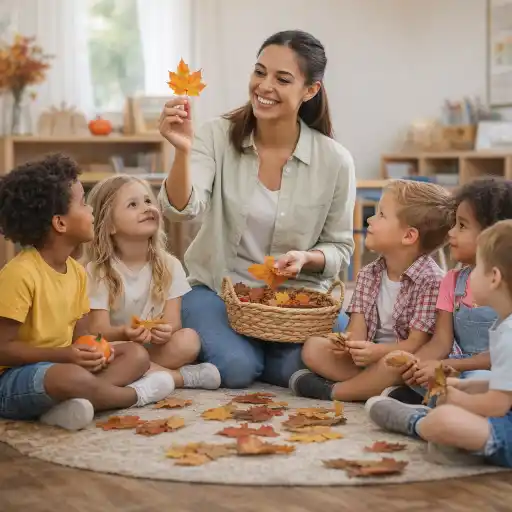
Choose a learning intention that can be explored with different materials and responses. If the goal is describing and comparing objects, children do not all need to handle pumpkins. They might compare leaves, pinecones, toy vehicles, classroom objects, or photographs. The shared vocabulary—large, small, smooth, bumpy, round, or longer—can apply across these choices.
Make options visible and genuine. During a “notice and describe” invitation, children might:
- Explore an object directly, if comfortable, or examine it with a tool.
- Match photographs or picture cards, point to a feature, or draw an observation.
- Listen to a description, use words or signs, or communicate with AAC.
- Observe first, take a short turn, or return to the activity later.
Offer a few options at a time so the choice is clear and staff can support each pathway. Use neutral language: “You can choose the leaf basket, the picture cards, or the drawing table.” Avoid praising one choice as more adventurous or more appropriate. When children’s responses differ, they can still work toward a common idea while exercising #choice and agency.
This is also a useful opportunity to draw on the sellable resource Things I Like: Expressing Preferences and Describing Objects from ChildCareEd. Its focus on expressing preferences and describing familiar objects fits naturally into an autumn inquiry: children can choose what to explore and practice communicating what they notice. Pair it with responsive curriculum planning rather than making the resource a required script.
How can seasonal activities welcome different sensory, cultural, and communication needs?
Fall invitations can include crunchy textures, strong scents, outdoor noise, crowded tables, and unfamiliar foods. Children’s responses vary, and reluctance to touch or taste is not evidence of disinterest. Keep direct contact optional; offer tools, photographs, demonstrations, or an observation role. A quieter space, smaller group, predictable sequence, or flexible seating can make it easier for children to participate comfortably.
Make communication accessible by pairing concise spoken directions with gestures, visual cues, real objects, or demonstrations. Accept children’s established communication methods, including home-language words, signs, pictures, and AAC. If a child has an individualized plan or specialist recommendations, follow those supports and coordinate with the family and relevant professionals as appropriate.
Seasonal themes should also leave room for different family practices and experiences. Use language such as “Some families enjoy this season in different ways,” and invite sharing only when children or families wish. No child should be expected to represent a culture or explain a family tradition. Explore accessible themes such as weather, plants, color, animal habitats, and change without assuming a particular holiday is universal.
- Offer ways to observe, point, use tools, communicate, pause, and return.
- For food-based activities, review allergies and medical information, follow program procedures, and provide a non-food alternative.
- 🍂 Treat watching quietly as a valid way to begin participating.
- Use books and materials that reflect varied cultures, languages, abilities, and family structures.
How can providers turn children’s interests into a practical planning cycle?
A responsive curriculum can follow a manageable cycle: observe, plan, invite, reflect, and adjust. First, capture what children are drawn to and what they communicate. Next, choose a learning intention that connects with those interests. Prepare a few materials and adaptations, then offer the experience without requiring everyone to respond in the same way. Afterward, consider what children explored and what might be a useful next step.
For example, if children are interested in vehicles rather than pumpkins, a provider can invite them to compare toy vehicles by size, shape, or color; draw a vehicle; sort pictures; or describe a favorite feature. The learning intention—observing, comparing, and communicating—remains intact, while the context follows children’s curiosity. If the interest changes, the plan can change too.
Keep documentation brief and factual. Note what a child chose, said, or did and what support helped access. Share strengths-based observations with families and invite their knowledge. Directors can help teams by protecting planning time, sharing effective adaptations, and reviewing whether materials offer meaningful alternatives. Avoid common pitfalls: making everyone complete the same craft, repeatedly prompting a child who has declined, or interpreting one refusal as a fixed dislike. State requirements vary - check your state licensing agency.
Conclusion: What does child-centered fall planning look like?
Child-centered fall planning begins with a simple premise: not every child needs to love pumpkins—or any particular seasonal theme—to learn and belong. Providers can preserve meaningful learning goals while offering varied materials, roles, communication methods, and ways to participate. Observation, family partnership, sensory and access supports, and respectful cultural language help turn a seasonal plan into a responsive invitation.
Notice what children choose, offer alternatives without judgment, and reflect on what helped them engage. When a child’s preference changes the plan, that is not a detour from curriculum; it is information that can make the curriculum more relevant. The goal is not identical participation, but a genuine opportunity for every child to explore, express an idea, and feel that their interests matter.
Helpful ChildCareEd courses
- From Play to Planning: Building Culturally Competent, Child-Centered Curriculum Buy Now $55.00
- Children at the Wheel: Emergent Curriculum Buy Now $25.00
- Tracking Progress, Shaping Futures: Observation & Assessment Skills Buy Now $55.00
- Inclusive Lessons for Preschoolers Buy Now $16.00
- Planning for Every Child: Responsive Strategies in Action Buy Now $55.00
- 45 Hour Child Growth and Development
- From Play to Planning: Building Culturally Competent, Child-Centered Curriculum
- What Makes Me Special: An Overview of Autism and ADHD
- From Tantrums to Triumphs: Equipping Preschoolers with Self-Regulation Skills
- Children at the Wheel: Emergent Curriculum
- 45 Hour Infant and Toddler Methods and Materials
- 45 Hour School Age Methods and Materials
- CDA Bridge Bundle: Family Child Care
- CDA Certification en Español: Recursos y Consejos para Educadores Bilingües
- 💛🧩 ¿Cómo puedo hacer que mi enseñanza sea inclusiva para los niños con autismo?
- 10 Ejemplos de Cómo la Cultura Influye en el Desarrollo Infantil
- Cómo Trabajar en el Cuidado Infantil en Carolina del Norte: Requisitos y Pasos
- Canciones, juegos y preguntas de círculo para niños
- How Can You Plan an Engaging Fall Curriculum for Preschoolers?
- How Can Child Care Providers Make Fall Activities Inclusive for Every Child?
- How Can Responsive Teaching Make Fall Classroom Activities More Effective?
- How Can Child Care Providers Celebrate Fall Without Assuming Every Family Shares the Same Traditions?
- How Can You Plan a Fall Celebration That Welcomes Families with Different Holiday Beliefs?
- How Can Infant Fall Walks Follow a Baby’s Gaze Instead of a Lesson Script?
- How Can Child Care Providers Give Families Meaningful Roles in Fall Learning?
- How Can You Build a Fall Giving Project That Protects Every Family’s Dignity?
- How Can You Plan Fall Activities for a Mixed-Age Family Child Care Group?
- Why Doesn’t One Preschool Activity Work for Every Child?
- How Can You Offer Every Child a Way to Join Fall Activities?
- Before You Change the Fall Theme, How Can You Tell When Children Need More Time to Explore?
- How Can Fall Food Exploration Build Descriptive Language Beyond “Yummy” or “Yucky”?
- How Can Children’s Preferences Shape a More Meaningful Fall Curriculum?
- How Can Two Real Choices Help Toddlers Shape Fall Classroom Activities?
