A seasonal classroom refresh does not need a shopping list: familiar materials can open up new questions, play, and learning when you change the invitation rather than the supplies. The CDA: Curriculum Alignment & Materials  Buy Now $16.00 course offers focused learning on selecting developmentally appropriate materials for children’s needs and classroom centers; explore it as you plan a purposeful autumn swap. Read on for practical ways to reuse what you have while keeping learning intentional, inclusive, and safe.
Why can a small fall swap create meaningful learning?
Children do not need a completely new set of materials every time the calendar changes. A familiar basket of blocks, fabric, paper, cups, and dramatic-play props can support fresh exploration when educators adjust how materials are arranged and what questions they invite. For example, adding paper leaves and a few clean containers to the block area can prompt children to build a tree-lined neighborhood, sort “harvest” items, or create a market.
This approach is more than an economical workaround. Purposeful material choices help connect everyday play to curriculum goals, while repeated access gives children time to develop more complex ideas. A reused cardboard tube may first become a telescope, then a tree trunk, then part of a structure children test for stability. Familiarity can encourage confidence; a new invitation can spark curiosity.
A fall swap also offers a useful team-planning opportunity. Providers can discuss which materials children already use, what goals the group is working toward, and how to support different ways of participating. As the ChildCareEd article low-cost fall classroom activities explains, seasonal materials can support inquiry and teaching practice when educators connect them to clear intentions.
- Start with children’s interests and your curriculum—not a theme display.
- Keep familiar, well-loved materials available while adding a small seasonal prompt.
- Use #materials with several possible purposes to invite choice and sustained play.
How do you plan a swap around learning goals?
Begin by identifying one or two goals that are relevant to the children now. A goal might be comparing size, describing texture, using new vocabulary, collaborating on a shared construction, or representing an idea through art. Then look at the classroom inventory and select existing items that can support those goals. This reverses the impulse to buy a themed kit first and search for a learning connection afterward.
Think of the swap as a change in context, arrangement, or prompt—not necessarily a change in the objects. Fabric scraps can become “wind” for a movement and storytelling invitation; blocks can become a pumpkin patch or an orchard; reused paper can become a sign-making station for a pretend farm stand. A few leaves, if collected safely and permitted by program policy, can invite close observation and comparison.
Write a short planning note so the whole team understands the purpose:
- Goal: What concept, skill, or disposition might children explore?
- Materials: What can be repurposed from current classroom stock?
- Invitation: What brief question could encourage investigation without dictating the result?
- Evidence: What might you observe or hear that shows children engaging with the idea?
For instance: “Children will compare length and shape. We will offer blocks, paper leaves, and a measuring ribbon. Ask, ‘What do you notice about these branches?’ Observe children’s comparisons and explanations.” A focused plan keeps the swap connected to learning while leaving room for children’s own #curiosity and direction.
What no-cost autumn station ideas can you try?
Use existing center materials as a base, then add a small number of safe, seasonal or autumn-inspired items. The point is not to make every center look different; it is to give children a fresh reason to revisit familiar tools. Examples from fall center planning include bringing seasonal ideas into science, literacy, sensory, dramatic play, and math areas, as described in preschool fall center activities.
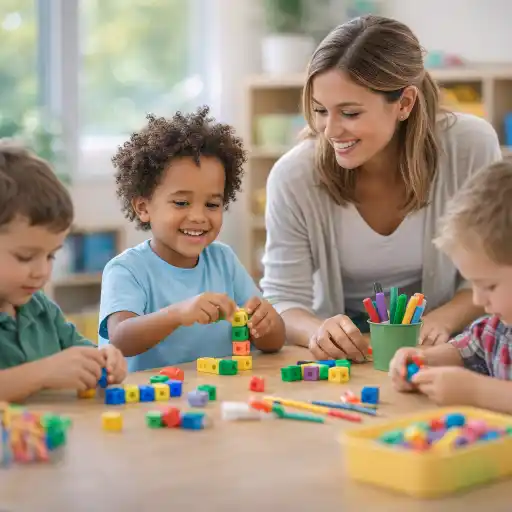
- Construction: Reposition blocks, cardboard tubes, and fabric. Invite children to make a shelter for toy animals or build a “path through the orchard.”
- Math and sorting: Reuse bowls, large counters, and paper shapes. Sort by color, size, shape, or another attribute, then compare groups.
- Art and design: Offer scrap paper, washable paint, cardboard, and reusable tools for child-directed autumn patterns or textures. Value process over matching products.
- Dramatic play: Reuse clean containers, bags, clipboards, and pretend food to create a market, garden stand, or leaf-cleanup service.
- Science and discovery: Provide magnifiers, drawing paper, and a few approved objects for close observation. Ask children what they notice and what they wonder.
🍂 Keep the setup intentionally simple: a tray, three or four materials, and one open-ended prompt can be enough to launch sustained play. Rotate one element at a time and leave favorite resources in place. Children benefit from the chance to return, refine an idea, and see familiar #play in a new light.
How can educators keep the swap inclusive and safe?
Reusing materials is not automatically safe or accessible. Inspect each item before it reaches a center. Remove broken, sharp, contaminated, or unstable objects, and consider choking hazards, allergies, sensory sensitivities, age, and developmental ability. Natural objects also require careful review; “from outdoors” does not guarantee that an item is clean or suitable. Follow program procedures for cleaning, storage, supervision, and material use.
Design for varied participation from the beginning. Children may sort by placing objects, pointing to picture choices, naming a feature, using a home language, drawing, or watching before they join. Offer larger tools, clear visual labels, reachable storage, stable work surfaces, and enough space for mobility. Keep a quiet alternative available for children who prefer to observe before handling new textures.
Family knowledge can help make the seasonal invitation more relevant. Ask about children’s interests, words, and experiences, and include images or stories that reflect the families in your program. Donations should be optional; families can contribute ideas or cultural knowledge instead of materials.
- Check each item’s condition and suitability for the children who will use it.
- Keep pathways and sightlines clear so children can access the station and staff can supervise.
- Offer more than one way to communicate, explore, and contribute.
- Follow your program’s health and safety policies; state requirements vary - check your state licensing agency.
Thoughtful adaptations do not dilute the learning goal. They make it possible for more children to engage with the same idea and show their thinking in meaningful ways.
How can observation turn a simple swap into responsive teaching?
After setting up a station, watch before changing it or stepping in to direct. Notice which materials children choose, how they combine them, what they say, and whether they return to the experience. A brief, objective note can be more useful than a broad judgment: “Two children arranged paper leaves by size and explained their choices” gives the team a concrete starting point for planning.
Use a small cycle to decide what comes next:
- Observe: Record children’s actions, words, questions, or strategies.
- Interpret carefully: Connect what you saw to the goal without assuming more than the evidence shows.
- Respond: Add a tool, adjust access, ask an open question, or let children continue without interruption.
- Reflect: Decide whether to keep, adapt, or rotate the invitation.
If children sort objects by color, you might later offer a different attribute to compare, such as size or texture. If they build a farm stand, adding blank signs and clipboards may extend writing and dramatic play. Ask questions such as “How did you decide?” or “What else could this become?” and give children time to respond. The goal is to scaffold thinking—not produce a perfect craft or lead every move.
Directors can make reflection manageable by inviting staff to share one observation and one possible next step during a brief team check-in. The materials-and-curriculum audit article offers a related reminder: evaluate how children use materials, not just whether an item is present. This responsive cycle helps a no-shopping swap remain purposeful over time.
Conclusion: How can you refresh fall learning without shopping?
A meaningful fall classroom swap begins with what you already have and what children are ready to explore. Choose a clear learning intention, rearrange a few familiar materials, and add one simple invitation that leaves room for children’s decisions. Check that the setup is safe and accessible, then observe how children use it before deciding what to change.
Small shifts can bring new energy to construction, math, art, dramatic play, and science without adding clutter or expense. Most importantly, the seasonal theme stays in service of children’s learning rather than becoming a goal in itself. To strengthen your planning for developmentally appropriate materials and centers, explore ChildCareEd’s CDA: Curriculum Alignment & Materials Buy Now $16.00 course. A thoughtful swap is not about having more; it is about seeing new possibilities in the resources already around you.
Related ChildCareEd courses
- CDA Bridge Bundle: Preschool
- CDA Bridge Bundle: Family Child Care
- CDA Bridge Bundle: Family Child Care without Portfolio Review
- CDA Bridge Bundle: Infant/Toddler without Portfolio Review
- CDA Bridge Bundle: Preschool without Portfolio Review
- Texas Director Credential
- 45-Hour Infant and Toddler Curriculum
- CDA: Curriculum Alignment & Materials
- 💛🧩 ¿Cómo puedo hacer que mi enseñanza sea inclusiva para los niños con autismo?
- 10 Ejemplos de Cómo la Cultura Influye en el Desarrollo Infantil
- Proporciones de Cuidado Infantil y Tamaños de Grupo por Edad en Nueva Jersey (Guía Rápida para Centros y Hogares)
- Proporciones de Cuidado Infantil y Tamaños de Grupo por Edad en Virginia (Guía Rápida para Centros y Hogares)
- ¿Cuál es la Diferencia Entre la Crianza Respetuosa y la Crianza Permisiva?
- Lista para Abrir una Guardería en Casa en Dakota del Norte: Cómo Empezar
- Actividades de Otoño Fáciles para Preescolares esta Temporada
- Cómo Trabajar en el Cuidado Infantil en Carolina del Norte: Requisitos y Pasos
- Cómo Ser Maestra de Preescolar en Maryland
- Capacitación Previa al Servicio para Proveedores de Cuidado Infantil en Dakota del Norte
- Capacitación CDA gratuita en Illinois
- Celebrando la amistad en el cuidado infantil durante el Día de los Mejores Amigos
- Canciones, juegos y preguntas de círculo para niños
- Cómo simplificar la capacitación para sus empleados de daycare
- How Can You Prepare Your Classroom for Fall While Prioritizing Safety, Health, and Learning?
- How Can You Refresh a Back-to-School Classroom for Under $100?
- How Often Should You Rotate Preschool Learning Centers?
- ¿Faltan Materiales o Falta una Nueva Estrategia? Cómo Revisar los Rincones del Aula
- How Can One Cardboard Box Become Four Fall Dramatic-Play Settings?
- How Can You Refresh Fall Learning Stations Without Buying New Materials?
