A fall walk with an infant does not need a scripted sequence to be purposeful: the baby’s gaze can guide what you notice, name, and explore together. The Playing with a Purpose: Infant/Toddler Lesson Planning  Buy Now $24.00 course helps providers plan developmentally appropriate experiences while building practical skills for responsive curriculum. Read on for a flexible approach you can use on your very next walk.
Why does following an infant’s gaze matter on a fall walk?
For infants, learning often begins with attention shared between a child and a trusted adult. The baby looks toward a bright leaf, pauses at a rustling sound, or watches light shift across the path. When you notice and respond to that focus, you let the infant’s interest shape the experience instead of requiring them to complete an adult-designed lesson.
This responsive approach supports relationships as well as exploration. Harvard’s Center on the Developing Child describes back-and-forth exchanges—often called serve and return—as important to early communication and social development. A baby’s gaze, gesture, movement, or vocalization can be a “serve”; your warm attention, words, or pause becomes a return. In a fall walk, that might sound like, “You’re watching the red leaf move,” followed by a moment of quiet to let the infant respond.
Following a child’s lead does not mean abandoning intention. Rather, the adult prepares a safe setting and stays available, while the infant’s cues help determine what deserves attention. This can make a brief, ordinary walk feel meaningful without turning it into a performance.
- Shared attention helps infants experience their signals as noticed and valued.
- Unhurried observation gives providers information about interests, comfort, and emerging skills.
- Simple narration connects the baby’s present focus with language and relationships.
How can providers plan without scripting every moment?
Planning remains valuable, but for infants it works best as a flexible framework rather than a fixed sequence. Before heading outside, choose a broad intention—such as noticing movement, listening to outdoor sounds, or sharing descriptive language. Prepare the route and supervision plan, then let the baby’s attention shape the details.
Think of planning as setting the conditions for discovery. You may expect to notice leaves, but the infant might instead attend to a bird call, a shadow, or the caregiver’s scarf moving in the breeze. Respond to that actual interest. The lesson is not “find three colors”; it is “notice what the child notices, respond thoughtfully, and see where the exchange goes.”
Keep the group and timing manageable. Infants may need a short outing, a pause to be held, or a return indoors when they show fatigue. An older baby may want to look around from a stroller or supported position, while a younger infant may take in sounds and light from a caregiver’s arms. Allow participation to vary.
- Set one modest goal, such as shared attention or visual tracking.
- Prepare a safe route, appropriate clothing, and a clear supervision arrangement.
- Use prompts as possibilities, not steps the baby must complete.
- Leave space for silence; a pause is part of the interaction.
This kind of planning is intentional and adaptable: it supports a purposeful experience while respecting the infant’s pace and choices.
What can a baby’s gaze reveal during the walk?
A gaze is one meaningful cue among many, not a test with a single correct response. An infant may track a leaf across the field of vision, look repeatedly toward a moving branch, glance at your face after hearing a sound, or turn away when the scene becomes too much. Notice the whole child: body posture, breathing, facial expression, vocalizations, and movement can add context.
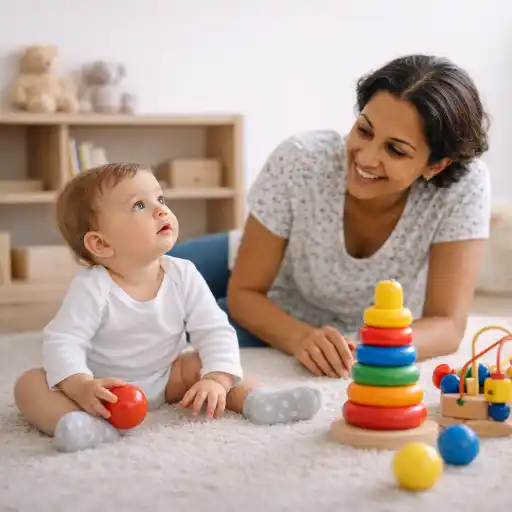
When you see sustained interest, join it gently. Name what the infant is attending to—“The branch is moving”—and wait. If the baby vocalizes or shifts their gaze back to you, answer with a smile or a short phrase. If the infant looks elsewhere, follow the new focus or simply let them observe. Head Start guidance on responding to infants and toddlers emphasizes using observation to individualize interactions and learning opportunities.
Do not assume that a baby who does not look at a leaf is disengaged. They may be listening to its rustle, watching a caregiver’s expression, or taking a break. A child with visual differences, sensory preferences, or developmental variations may connect with the experience through sound, touch, movement, or familiar language. Work with families and relevant specialists when adaptations would support participation.
- Engagement might include steady looking, relaxed posture, reaching, smiling, or vocalizing.
- Turning away, stiffening, fussing, or rubbing the eyes can signal a need to pause.
- Interpret cues in context and respond to the individual infant, rather than comparing babies.
How can providers make the walk safe and comfortable?
Safety begins before the group leaves the classroom. Check the route for broken pavement, traffic, standing water, animal waste, sharp objects, or other hazards. Plan staffing and positioning so every infant remains within the required supervision arrangements and staff can maintain clear sight and hearing. Keep the walk brief enough to match the infants’ comfort and the program’s procedures.
Dress infants for the weather and monitor them throughout the outing. Choose shade and protective clothing; the CDC advises keeping babies six months and younger out of direct sunlight. Consider temperature, wind, air quality, and changing conditions, and return indoors if an infant seems uncomfortable. Family information and program policy should guide decisions about clothing, health needs, allergies, and outdoor routines.
Infants explore with their mouths, so a walk does not require handing over loose leaves, acorns, seeds, pinecones, or other small natural objects. Let babies observe materials in their environment without giving them objects that could pose choking, contamination, or injury risks. Do not leave an infant unattended in a stroller or on a blanket, and follow safe equipment and transportation practices.
- 👀 Stay attentive and close; avoid phones and other distractions while supervising.
- Choose a hazard-checked route and maintain clear visibility of each infant.
- Use weather-appropriate clothing and shade; watch for signs of discomfort.
- Keep small, sharp, brittle, or unknown natural materials out of infants’ reach.
Outdoor play can offer new sights, sounds, and movement opportunities, but careful supervision and program policy come first. State requirements vary - check your state licensing agency.
How can observations from the walk shape future planning?
A short, objective note can turn a fleeting moment into useful information for the team and family. Record what the infant did and what happened immediately before or after, rather than assigning a judgment. For example: “On the shaded walk, Leo watched a leaf move from left to right, then vocalized when I paused. He turned away after several minutes, so we went back inside.”
From this observation, staff might plan another brief outdoor moment, offer a slow-moving fabric shape indoors, or share the infant’s interest with family. Documentation is most helpful when it informs a next step—not when it is used to force the same activity on every child. The National Association for the Education of Young Children highlights how observation and reflection can guide responsive planning and meaningful follow-up.
Directors can support this practice by agreeing on a simple documentation format and allowing time for staff reflection. A useful cycle is: observe, record, interpret cautiously, plan an adaptable next experience, and notice whether the infant responds differently. Include family knowledge about the child’s routines, preferences, home language, and comfort outdoors.
- Write observable actions: “looked,” “reached,” “vocalized,” or “turned away.”
- Note context such as position, weather, duration, and adult support.
- Use the observation to adapt materials, timing, language, or positioning.
- Share relevant, respectful details with families and colleagues.
Conclusion: What is the key to a meaningful infant fall walk?
The key is to prepare thoughtfully, supervise closely, and let the infant’s attention guide the moment. A baby watching a leaf, listening to a breeze, or turning toward a bird has already offered a direction for exploration. Respond with calm narration, wait for the infant’s cues, and adjust or end the experience when needed.
Keep the plan flexible: choose a simple intention, make the route safe, observe the whole child, and document what you learn. A fall walk does not have to follow a lesson script to be intentional. By following the baby’s gaze, providers support connection, individualized exploration, and responsive curriculum—one small outdoor moment at a time.
For a deeper foundation in planning age-appropriate experiences, explore Playful Learning: Infant & Toddler Activities Buy Now $25.00, CDA Infants/Toddlers: Benefits to Observing Buy Now $16.00, Creating the Natural Outdoor Classroom Buy Now $16.00, and Intentional Safety for Infants/Toddlers Buy Now $24.00.
- What Makes Me Special: An Overview of Autism and ADHD
- Baby Steps to Milestones
- CDA Bridge Bundle: Family Child Care without Portfolio Review
- CDA Bridge Bundle: Infant/Toddler without Portfolio Review
- CDA Bridge Bundle: Preschool without Portfolio Review
- Lesson Planning for Preschoolers
- Texas Director Credential
- Playing with a Purpose: Infant/Toddler Lesson Planning
- CDA Certification en Español: Recursos y Consejos para Educadores Bilingües
- Recursos en Español sobre el Sueño Seguro del Bebé
- 10 Ejemplos de Cómo la Cultura Influye en el Desarrollo Infantil
- Proporciones de Cuidado Infantil y Tamaños de Grupo por Edad en Carolina del Norte (Guía Rápida para Centros y Hogares)
- Proporciones de Cuidado Infantil y Tamaños de Grupo por Edad en Virginia (Guía Rápida para Centros y Hogares)
- Actividades de Otoño Fáciles para Preescolares esta Temporada
- Cómo Trabajar en el Cuidado Infantil en Carolina del Norte: Requisitos y Pasos
- Calabazas, hojas y manzanas: actividades de otoño para preescolares
- Celebrando la amistad en el cuidado infantil durante el Día de los Mejores Amigos
- Canciones, juegos y preguntas de círculo para niños
- Baby’s First Fall: Simple Ways to Explore the Season Through Play
- How Can a Familiar Sound Help Infants Anticipate What Comes Next?
- How Can Everyday Fall Routines Support Infant and Toddler Development?
- How Can Infant Fall Walks Follow a Baby’s Gaze Instead of a Lesson Script?
- How Can You Plan a Safe Fall Texture Walk for Infants Who Aren’t Yet Walking?
- How Can Providers Plan Safe Fall Exploration for Babies Who Put Everything in Their Mouths?
- How Can Window Leaf Watching Enrich Infant Learning on Indoor Fall Days?
- Where Did the Soft Pumpkin Go? How Can Fall Peekaboo Play Support Infants?
- How Can Providers Turn Autumn Play into Back-and-Forth Conversations with Infants?
- How Can Fall Container Play Help Older Infants Drop, Find, and Try Again?
