Introduction
This article helps child care providers and directors learn simple, respectful ways to guide young children. Positive discipline teaches skills, not fear. It builds strong relationships and safer play. You will find clear steps, short lists, and links to trusted resources so you can try ideas tomorrow morning.
Key words to remember: #positive #discipline for #toddlers and #preschoolers in your #classroom. State requirements vary - check your state licensing agency.
What is positive discipline and why does it matter?
- Positive discipline means teaching, not punishing. It focuses on respect, clear rules, and helping children understand feelings and choices. Read a plain overview at Positive Discipline to see the main ideas.
- Why it matters:
- 🔹 Children learn self-control and problem-solving when adults teach calmly.
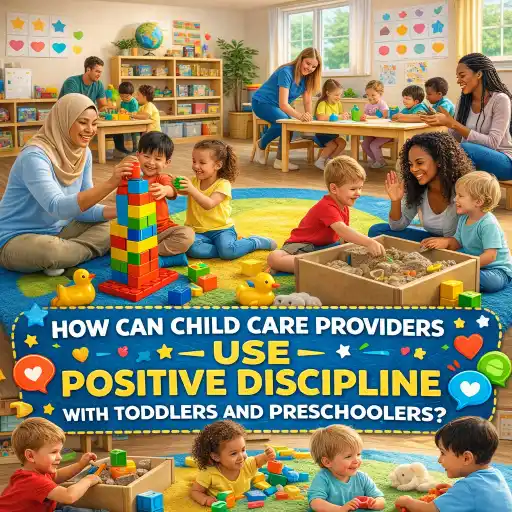
- 🔹 Classrooms feel safer and calmer, which helps learning.
- 🔹 Kids keep trying when adults use encouragement instead of threats.
- Evidence and guidance you can trust: Use materials from Positive Discipline: Strategies That Actually Work to shape your plan.
- Quick reminder: positive discipline is kind but firm. It teaches children what to do, not only what not to do. When children feel seen and safe, behavior improves.
What practical strategies work with toddlers and preschoolers?
- Start with connection. Greet each child, get to their eye level, and spend short one-on-one moments. Connection helps children feel safe and reduces acting out. See tips in Positive Discipline Strategies for Child Care Providers.
- Use simple, clear expectations. Make 3–5 rules in easy words and show pictures. For example: “Hands are for helping.” Post rules and go over them often.
- Encourage, not just praise. Try telling what you saw: "You helped your friend—thank you." This grows self-worth.
- Redirect early. When a child looks upset, offer a safe choice: 🔁 “Do you want the puzzle or the book?” Redirecting teaches a new way to act.
- Use Time-Ins and calm corners instead of isolating time-outs. Stay with the child, name feelings, and teach calming tools. ChildCareEd explains this idea in their guidance article.
- Design the room to support behavior: cozy corners, clear shelves, and duplicates of popular toys cut conflicts. Read ideas in Creating a Positive and Calm Classroom Environment.
How can I involve families and keep consistency across home and program?
- Share your approach in simple steps so families can try the same strategies at home. For example:
- 🔸 Explain one rule and a calm routine (e.g., “We use walking feet inside”).
- 🔹 Offer a short handout or link that shows choices and calming tools (many ChildCareEd courses and articles have ready ideas, like this one).
- 🔸 Ask families what works at home and add those ideas to your plan.
- Use consistent words. If you call it a “cozy corner” at school, tell families the name so children find the same meaning at both places. When adults use the same words, children learn faster.
- Make simple plans for tough moments. Use the team idea from Positive Behavior Support (PBS): gather staff and family, observe patterns, and try small changes.
What common mistakes should we avoid and how do we measure progress?
- Common mistakes (and how to avoid them):
- ⚠️ Relying on punishment alone — instead teach replacement skills and give practice.
- ⚠️ Giving too many rules — pick 3–5 clear rules and keep routines steady.
- ⚠️ Using inconsistent responses — make sure all staff follow the same plan.
- ⚠️ Yelling or losing calm — remember co-regulation: your calm helps children calm.
- How to measure progress (simple steps you can use):
- 🔍 Track patterns for 1–2 weeks. Note when behaviors happen (before, during, or after an activity).
- 📝 Use a simple sheet: behavior, time, triggers, adult response, and what worked.
- ✅ Count successes: number of calm transitions, helpers, or times a child used words instead of hitting.
- 🤝 Meet with staff and families once a month to check trends and change small things.
- When to seek extra help: if a behavior is very intense, long-lasting, or stops learning, consider a specialist. PBIS and targeted supports are good next steps; see Managing Behaviors in the Early Childhood Education Classroom ..
Conclusion and FAQ
Conclusion: Positive discipline is practical and kind. It asks us to teach skills, set clear expectations, and work with families. Small changes — not big punishments — make big, lasting differences. Use the ChildCareEd resources linked above to support staff training and program consistency. Remember, state requirements vary - check your state licensing agency.
FAQ (quick answers):
- Q: How long before I see results?
A: Small improvements can appear in days; lasting change often takes weeks of consistent steps. - Q: Is Time-In better than Time-Out?
A: For young children, Time-Ins that teach calming and stay connected usually work better than isolation. - Q: What if staff disagree on rules?
A: Hold a short team meeting, pick 3 classroom rules, and practice scripts everyone will use. - Q: Where can I learn more?
A: Try ChildCareEd courses such as Staying Positive: Guidance for Preschoolers Buy Now $24.00 or The Right Kind of Influence for Young Children Buy Now $16.00.
 - Q: When should I call a specialist?
A: If behavior hurts learning or safety, consult a mental health or special education consultant.
You are doing important work. Start with one strategy this week, celebrate small wins, and keep building. For ready-made lessons and printable ideas, visit ChildCareEd and the linked research pages above.
- 45 Hour Child Growth and Development
- 45 Hour Preschool Methods and Materials
- Power of Art: Bldg Self-Esteem & Positive Behavior for ALL Abilities
- Teach with Respect!
- CDA Bridge Bundle: Infant/Toddler without Portfolio Review
- Connections That Count: Building Relationships in Child Care
- Texas Director Credential
- Staying Positive: Guidance for Preschoolers
- Going Head-to-Head with Challenging Behavior
- Proporciones de Cuidado Infantil y Tamaños de Grupo por Edad en Maryland (Guía Rápida para Centros y Hogares)
- Proporciones de Cuidado Infantil y Tamaños de Grupo por Edad en Virginia (Guía Rápida para Centros y Hogares)
- How can North Dakota childcare workers use positive discipline every day?
- How Does Temperament Affect How Minnesota Children Learn and Behave?
- Celebrando la amistad en el cuidado infantil durante el Día de los Mejores Amigos
- Child Care Discipline Philosophy: Supporting Positive Behavior
- Early Childhood Discipline Philosophy: Guidance, Respect, and Support
- How can child care programs use gentle guidance and positive discipline effectively?
- What Makes a Great Home Daycare? 10 Things Parents Notice First
- Time-In or Time-Out? 7 Real Classroom Scenarios and What to Try
- Proporciones para guarderías en casa bajo el Título 22: Cómo la mezcla de edades cambia su capacidad en California
- When Learning Feels Hard: Positive Discipline Strategies for Children Who Struggle
- How Can Child Care Providers Use Positive Discipline to Teach, Connect, and Guide Young Children?
- How Can Child Care Providers Support Social-Emotional Development in Young Children?
- How Can Child Care Providers Help Children Calm Down Without Using Time-Out?
- What Are 10 Proactive Classroom Management Techniques for Early Educators?
- What Is the Difference Between Positive Discipline and Punishment in Early Childhood Education?
- How Should Child Care Providers Respond When Preschoolers Lie?
