Introduction
This short guide helps child care providers and directors understand the difference between #timeouts and #timeins. Both are tools to guide children’s behavior. They work in different ways and are used for different reasons. Knowing when and how to use each one helps keep your #classroom calm and safe.
Why it matters:
1) Children learn best when adults teach and stay calm. 2) Using the right tool at the right time helps kids learn rules and feelings. 3) Staff feel more confident when everyone uses the same plan. For more big-picture ideas about positive guidanc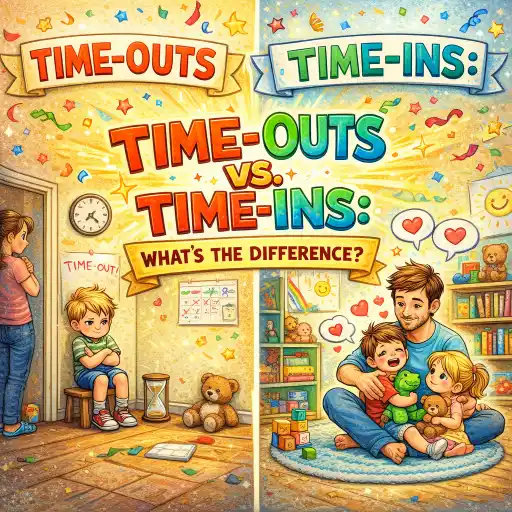 e and why prevention helps, see Positive Discipline Strategies for Child Care Providers and Behavior Management Techniques That Align with DAP.
Note: state requirements vary - check your state licensing agency.
What is a time-out and when should we use it?
A time-out is a short removal of a child from a fun, reinforcing setting. It is meant to reduce harm or stop a rule break quickly. Time-outs work by taking away attention and play for a brief moment. The Centers for Disease Control offers clear steps for using time-out that are easy to follow in child care settings — see CDC Tips for Using Time-Out and CDC Steps for Effective Time-Outs.
Practical points (enumerated):
- 😊 Keep it brief: use roughly 1 minute per year of age for toddlers and preschoolers (but follow program policy).
- 📋 Give one clear warning, then follow through if the child does not comply.
- 🚫 Do not lecture during the walk to the spot. Do not give attention while the child is in time-out.
- 🔁 After time-out, have the child do the original direction (for example, pick up toys) so the consequence connects to the behavior.
Use time-out for safety or clear rule breaks that do not stop with redirection. CSEFEL recommends reserving time-out for serious, repeated, or dangerous behavior and always using it as part of a full behavior plan that includes teaching and prevention — see CSEFEL guidance.
What is a time-in and how does it teach skills?
A time-in is different. In a time-in the adult stays close. The goal is to help the child calm and learn skills like naming feelings and using words. Time-ins fit inside a positive, teaching approach. ChildCareEd explains time-in as a key part of replacing punishment with coaching and relationship-building; see Positive Discipline Strategies for Child Care Providers.
How to do a time-in (numbered steps):
- 🧑🤝🧑 Connect: get down to the child’s level. Use a calm voice.
- 😮💨 Co-regulate: breathe together, offer one simple choice (hug or space).
- 💬 Coach: name the feeling and teach a small skill (deep breaths, words to ask for a turn).
- ✅ Return: when calm, practice the expected behavior and praise effort.
Time-ins work well for big feelings, learning self-control, and for younger children who may feel scared when left alone. For classroom supports that match this idea, read How can we help children manage big emotions?.
How do I decide which to use: time-out or time-in?
Use a simple decision plan you teach the team. Try this 4-step rule:
- 🛑 Safety first: If the child is dangerous to self or others, act to protect everyone. Use removal if needed (time-out or safe separation) and follow program policy.
- 🔁 Prevention tried? If you tried redirection and simple choices and it didn’t work, consider a brief time-out for noncompliance after a clear warning.
- 🧠 Big feelings or learning moment? Choose a time-in to help the child calm and learn words for feelings.
- 🤝 Teach and restore: always follow any consequence with a short teaching moment and praise when the child tries the right skill.
Remember research: time-out can reduce problem behavior if used correctly, but it can cause crying or aggression in some cases if not delivered with high fidelity. See the research review on side effects in Aggression and Crying as Side Effects of Time-Out. CSEFEL and national resources suggest time-out should be one part of a larger, positive plan and not the only tool — see CSEFEL and the National Pyramid resources at NCPMI.
How can we avoid common mistakes and keep staff consistent?
Common mistakes often make both time-outs and time-ins less effective. Here are practical steps to avoid pitfalls:
- 📣 One warning only: give a clear, calm warning and then follow through. Do not keep threatening without acting.
- 🙊 No lectures: avoid long talks in the moment. Children in distress cannot process long explanations.
- 🧩 Be consistent: use the same steps across staff and shifts. Train substitutes and float staff.
- 📊 Track and teach: collect quick data on when behaviors happen and add prevention strategies (visuals, routines, duplicates of toys).
- 🤝 Partner with families: lead with strengths, share one short observation, then one plan. For tips on family communication see Effective Parent Communication and ChildCareEd's guidance on team work What Positive Behavior Guidance Strategies Actually Work?.
Also be aware that time-ins should not be used as a reward for bad behavior, and time-outs should not be used when the child is simply tired, hungry, or lacks a skill. For developmentally appropriate practices and prevention-first ideas, see Behavior Management Techniques That Align with DAP.
-
For staff-friendly strategies that fit time-ins, prevention, and calm teaching, use Staying Positive: Guidance for Preschoolers
 Buy Now $24.00—it focuses on positive discipline, social-emotional support, and developmentally appropriate guidance you can standardize across the team. (Childcare Ed)
 -
For a bigger-picture behavior plan that helps teams decide when to teach vs. when to remove from reinforcement (like a brief, correct time-out), add Viewing Guidance in a Positive Light
Buy Now $24.00—it covers guidance theories and practical, developmentally appropriate approaches for common classroom behaviors. (Childcare Ed)
Conclusion
In short:
- #timeouts remove attention briefly to stop a dangerous or repeated rule break.
- #timeins keep the adult close to help the child calm and learn emotional skills.
- #children learn best when adults use both prevention and teaching, not just punishment.
Try a small plan this week:
- ✨ Pick one behavior to target. 2) Teach a short replacement skill. 3) Agree on one consistent time-in/time-out script for staff to use. 4) Share the plan with families.
For classroom-ready steps and tools, see ChildCareEd resources like Positive Discipline Strategies and the CDC time-out tips at CDC Time-Out Tips. When behavior is severe or does not improve, work with families and specialists. State requirements vary - check your state licensing agency.
FAQ (quick):
- Q: Which is kinder, time-out or time-in? A: Both can be kind if used with clear teaching and respect.
- Q: Can infants have time-outs? A: No. Use calming and prevention for babies; time-out is not recommended for very young children (see CSEFEL).
- Q: What if time-out causes crying or aggression? A: Track it. If side effects happen often, use teaching, prevention, and consult a mental health partner (see research on side effects).
- Q: How long should staff training take? A: Start with one short staff meeting and a written script. Practice briefly and review weekly.
- Positive Attention: Interactions & Supervision of Infants & Toddlers
- CDA Home Visitor Subject Area 3 Part 3 Birth to 5
- 1-Hour Abuse and Neglect Training
- Power of Art: Bldg Self-Esteem & Positive Behavior for ALL Abilities
- Money Matters in Medicine
- Injury Prevention: Their Safety Is In Your Hands
- Self-Regulation & Change: Helping Children Cope
- Texas Director Credential
- Matchmaking for Mentors
- Technology as a Classroom Tool
- CPR for childcare providers: what to know
- Recursos en Español sobre el Sueño Seguro del Bebé
- ¿Cómo afecta la dopamina a los niños: señales, efectos e influencias diarias?
- 10 Ejemplos de Cómo la Cultura Influye en el Desarrollo Infantil
- California Licensing and Program Standards: Title 22 vs. Title 5
- Gentle Parenting vs. Permissive Parenting: What’s the Difference?
- Child Care Staffing in California: Understanding Title 5 Ratios
- Canciones, juegos y preguntas de círculo para niños
- Cooperative Play vs. Parallel Play: What’s the Difference?
- Can California’s Universal TK Expansion Make the Early Learning Pipeline Stronger?
- Childcare Broker vs. Business Broker: What’s the Difference?
- What Are Michigan Child Care Ratios and Group Sizes by Age (Center + Home Quick Guide)?
- How can child care providers tell typical from atypical child development and act early?
- How Can We Teach Young Children the Difference Between Fair and Equal?
- How Can Providers Support Children Through Friendship Changes?
- How can I become an effective early childhood mentor?
- Lead Teacher vs. Assistant Teacher: What’s the Difference in a Child Care Classroom?
- Developmental Delay vs. Developmental Difference: What’s the Difference?
- Teacher-Led vs. Child-Led Activities: What Is the Difference?
- Teacher-Led vs. Child-Led Activities: What Is the Difference?
