Introduction
This short guide helps #providers learn simple, respectful ways to teach children the results of their choices. In child care, we often need fast, fair responses when a child breaks a rule. Two common approaches are natural or logical consequences and punishment. This article explains the difference, gives clear examples you can use in a classroom, and shows how to avoid common mistakes.
Why this matters: Staff who use consequences that teach help calm the room, build trust, and support better long-term behavior. You will see simple steps and real examples you can try tomorrow. For more on positive, respectful approaches, see Positive Discipline and how to turn behavior into learning at What If Every Challenging Behavior….
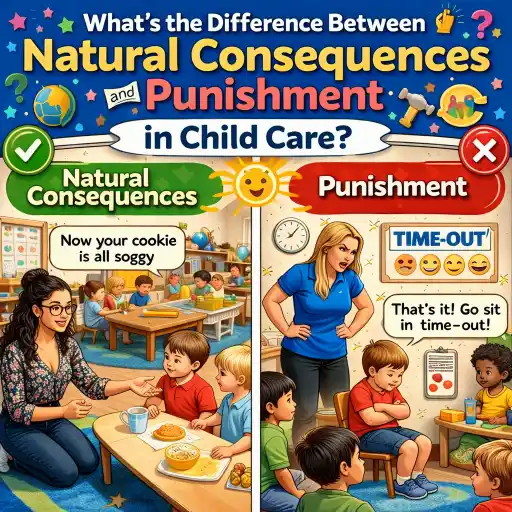
What is a natural or logical consequence — and how is that different from punishment?
1. Natural consequence (what happens on its own):
- Example: A child leaves a marker cap off and the marker dries out. The marker can’t be used the next day. The result comes from the child’s action.
2. Logical consequence (an adult links a result to the choice):
- Example: If a child throws sand, the sand table is closed until the sand is cleaned up. The consequence is related and helps the child learn.
3. Punishment (aims to stop behavior but often teaches fear, not skill):
- Example: Yelling, scolding, hitting, or taking away unrelated items (like favorite toys) just to punish. Research warns that punishment can reduce learning and harm relationships—see guidance from the American Academy of Family Physicians and advice on alternatives from Emory.
Helpful short rule: consequences that teach are related, respectful, and predictable. For more about logical consequences in early learning, see the CSEFEL brief at CSEFEL.
How can I use natural and logical consequences in my #classroom? (Practical examples)
Use simple, step-by-step consequences that match the child’s age and the behavior. Here are easy examples you can use or adapt. Try to explain choices calmly before transitions so children know what will happen.
- 🟢 Snack & food: If a child refuses to eat their snack, a natural consequence is they stay a bit hungry until the next snack. (Do not withhold food in ways that harm the child; think safety and nutrition first.)
- 🙂 Clean-up: If a child does not help put away blocks, a logical consequence is that they miss a few minutes of the next free-play activity until blocks are put away. Example script: “We put blocks away to keep them safe. If you want to play outside, help clean up now.” See similar ideas at Promoting Positive Behavior.
- 🔁 Shared toys: If a child grabs a toy from a friend, have the child help the friend finish the activity and practice asking for a turn. Repairing the relationship teaches empathy and skill—read classroom problem-solving tips at What If Every Challenging Behavior….
- ⚠️ Safety moves: If a child climbs on chairs, you stop them immediately and move them to a safe spot. Then you teach and practice “feet on the floor” so they learn the rule. Safety comes first; don’t let natural consequences risk harm (see safety note at Study.com).
Steps to use a logical consequence:
- Tell the child the rule and the available choices calmly.
- Give a short warning if time allows: “In two minutes, we will clean up.”
- If the child chooses not to follow the rule, follow the related consequence calmly and briefly.
- Problem-solve afterward by asking what they might do next time.
Why does choosing teaching consequences over punishment matter for programs and #children?
1. Relationship building: When adults use respectful, related consequences, children feel safe and respected. That helps trust grow between staff and children.
2. Skill teaching: Natural and logical consequences teach cause-and-effect. Children learn that choices have results. This builds responsibility and self-control rather than fear-based obedience. ChildCareEd explains how challenging moments become learning if we respond with curiosity and skill-building—see Turning Challenging Behavior Into Learning.
3. Classroom climate and staff well-being: Using consequences that teach reduces power struggles and repeated conflicts. Programs report calmer routines when staff apply consistent, respectful consequences. The research shows strong classroom practices support social-emotional growth and readiness for school—see program beliefs research at ECRP.
4. Legal and health concerns: Avoid corporal punishment. Medical and family-health sources link physical punishment to poor outcomes. For safer alternatives, review guidance from Emory and the AAFP summary at AAFP.
What common mistakes do #providers make, and how can we avoid pitfalls?
1. Mistake: Using punishment that is unrelated to the behavior (e.g., taking away snack because a child spilled paint). Why it fails: Children do not connect the action to the result. Solution: Choose a consequence that fits the behavior (e.g., help clean up paint; the child practices being careful next time).
2. Mistake: Reacting angrily or shaming a child in front of peers. Why it fails: shaming damages trust and can increase acting out. Solution: Stay calm. Use short, clear statements and move to teach and repair.
3. Mistake: Not planning consequences. Why it fails: inconsistent responses confuse children and cause repeated misbehavior. Solution: Team-plan 3–5 simple rules and related consequences everyone follows. ChildCareEd suggests consistent team approaches in Positive Discipline.
4. Mistake: Forgetting to teach the skill the child needs. Why it fails: Stopping a behavior is not enough; children need the replacement skill. Solution: After calm, practice the right skill (asking for a turn, using words, cleaning up). Use role-play or short coaching moments.
5. Mistake: Using natural consequences that might harm the child (like leaving a child without a coat outside). Why it fails: Safety must come first. Solution: Always check safety and use logical consequences when natural ones would be dangerous. (Reminder: state requirements vary - check your state licensing agency.)
When you introduce the difference between natural/logical consequences vs. punishment, you can point providers to Solutions NOT Punishments (https://www.childcareed.com/courses-solutions-not-punishments.html  Buy Now $16.00), which trains staff on choosing respectful, related responses that teach skills instead of using fear-based discipline.
And for your sections on planning consistent responses, teaching replacement skills, and treating behavior as communication, link The ABCs of Behavior: Turning Challenges into Learning Opportunities (https://www.childcareed.com/courses-the-abcs-of-behavior-turning-challenges-into-learning-opportunities-4071.html Buy Now $55.00$45.00), which uses the ABC (Antecedent–Behavior–Consequence) approach to understand “why” behaviors happen and respond effectively.
Conclusion and FAQs
Quick takeaways:
- Natural/logical consequences teach cause and effect; punishment mostly stops behavior in the short term and can harm relationships.
- Keep consequences related, respectful, and predictable.
- Plan as a team and teach replacement skills after a consequence.
Short FAQs:
- Q: Can consequences be used with toddlers? A: Yes, but keep them immediate and simple. For very young children, natural consequences must be safe and obvious (e.g., spilled snack = less to eat).
- Q: What if a child repeats the behavior? A: Observe patterns, ask why (hunger, tired, attention?), and try a teaching plan with family partnership and supports. See behavior-as-communication ideas at ChildCareEd.
- Q: Is time-out a punishment? A: Time-out can be a neutral way to calm down when used briefly and taught in advance. Use one minute per year of age as a simple guide and explain why the child is taking a break (see Purdue).
- Q: Who should I tell about these approaches? A: Share your plan with staff and families so everyone is consistent. Consistency is key.
For more practical tools, printable scripts, and training for your team, explore ChildCareEd resources such as Positive Discipline and the training on behavior as learning opportunities at What If Every Challenging Behavior…. Using related, respectful consequences helps children learn responsibility and keeps your #classroom calmer and kinder.
- Tailoring Instruction to Children's Needs
- Solutions NOT Punishments
- Teach the Montessori Way: A Practical Guide
- Emergency Preparedness and Response Planning Resulting from a Natural or Man-Made Event
- Emergency Preparedness and Response Planning Resulting from a Natural or Man-Made Event
- Super Special School Agers
- CDA Bridge Bundle: Family Child Care
- Sensitive Periods in Montessori: Guiding Natural Learning
- Creating Environments that Nurture Growth and Community
- Texas Director Credential
- CDA Certification en Español: Recursos y Consejos para Educadores Bilingües
- 🩺 Cumplimiento de Salud e Inmunización en Cuidado Infantil de Nevada ✔️
- Juegos de Motricidad Gruesa
- Cómo usar tu certificación de 90 horas en Maryland para completar tu CDA
- 10 Ejemplos de Cómo la Cultura Influye en el Desarrollo Infantil
- ¿Cómo solicito la licencia para una guardería en California?
- Regulaciones de Licenciamiento de Cuidado Infantil en California para Centros y Hogares de Cuidado Infantil Familiar
- Retraso del Habla en la Guardería: Cómo Pueden Ayudar los Proveedores
- Cómo Trabajar en el Cuidado Infantil en California: Requisitos y Pasos
- Capacitación Previa al Servicio para Proveedores de Cuidado Infantil en Dakota del Norte
- Why Does Punishment Backfire With Young Children?
- How can we guide behavior without punishment?
- How can child care programs use gentle guidance and positive discipline effectively?
- How Can Child Care Providers Use Positive Discipline to Teach, Connect, and Guide Young Children?
- How Can Child Care Providers Use Natural and Logical Consequences with Young Children?
- What Is the Difference Between Positive Discipline and Punishment in Early Childhood Education?
- What Is the Difference Between Discipline and Guidance in Child Care?
- What Are Developmentally Appropriate Ways to Teach Children About Consequences?
