Introduction
Outdoor learning and a nature-based curriculum help children grow in many ways. When we bring lessons outside, we support #outdoor play, #learning with real things, and strong bonds with #nature. Child care programs can use simple steps from The Outdoor Classroom and the free resources in Creating the Natural Outdoor Classroom to get started.
Why it matters:
1) Time in nature improves attention, behavior, and health for both kids and #teachers, according to research on outdoor learning benefits (study summary).
2) Outdoor lessons give children hands-on chances to practice reading, math, science, art, and social skills, as shared in ChildCareEd guides like What Are Creative Ways to Use Nature as Your Classroom?.
This article answers four practical questions that will help you plan, teach, and keep children safe outside. Remember: state requirements vary - check your state licensing agency.
1) What benefits do children and staff get from outdoor, nature-based learning?
Outdoor learning gives clear benefits. Here are the main gains:
- 😊 Better health: More running, climbing, and fresh air improve strength and vision (CDC).
- 🌱 Stronger learning: Nature helps focus and supports literacy and thinking skills as described in recent research (study).
- 🧠 Emotional growth: Time outside lowers stress and builds confidence for #children and #teachers (research summary).
- 🤝 Social skills: Group play and projects like gardens teach sharing, teamwork, and problem solving (see Benefits of Outdoor Classrooms).
- ♻️ Stewardship and curiosity: Children learn to care for living things and ask better questions (forest and farm curricula ideas at Willow Brook).
These benefits affect the whole program: happier children, calmer classrooms, and often less staff burnout when teachers get some outdoor time too (study).
2) How do we start outdoor lessons if we have small space or limited time?
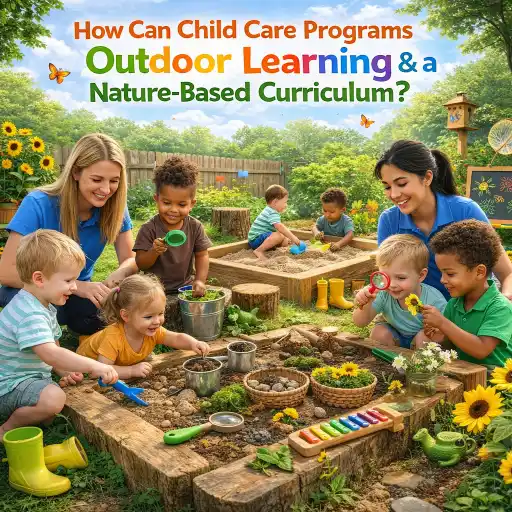
Start small and steady. Use steps many programs recommend, like those in the Minnesota DNR guide How to teach outside and ChildCareEd trainings.
- 🔎 Explore: Walk your yard or nearby park alone first. Note shade, hazards, and quiet spots. Mark a simple outdoor meeting place (Minnesota DNR).
- 📋 Plan 3 easy lessons: morning meeting, story under a tree, and a short nature walk. Keep tools small (clipboards, pencils, a bucket).
- 🌿 Use what you have: a planter, a patch of grass, tree stumps, or a sidewalk for chalk. ChildCareEd suggests many creative ideas in Creative Ways to Use Nature.
- 🧑🤝🧑 Build routines: Teach outdoor rules, put on shoes and hats, and pick simple signals (one whistle = stop).
- 🍃 Repeat often: Even 15 minutes daily helps. Use short lessons that match your learning goals (math, reading, art).
Programs with little land can use pockets of nature, short walks, community gardens, or windowsill plants. Online toolkits like the CoOL Toolkit offer low-cost project ideas such as garden lessons and bioblitzes (CoOL Toolkit).
3) How do we keep outdoor learning safe and meet licensing rules?
Safety and licensing matter. Use these practical steps and links to help meet rules and protect children.
- 🛡️ Inspect and map hazards: Use ChildCareEd's hazard planning ideas and perform a simple hazard map for your outdoor space (Creating Safe Outdoor Play Environments).
- 🚑 Follow health guidance: Check CDC advice for sun safety, hydration, insect bite protection, and water safety (CDC).
- 📑 Licensing: state requirements vary - check your state licensing agency. Keep rosters, parent permissions for sunscreen or repellent, and staff ratios documented.
- 🔧 Use safe materials: Avoid old CCA-treated wood, test sandbox sand, and choose safe surfacing. ChildCareEd lists common hazards and precautions in its safety post.
- 👩🏫 Train staff: Offer short training (try ChildCareEd courses like Creating the Natural Outdoor Classroom
 Buy Now $16.00) and practice moving kids outdoors smoothly.
Common safety tools: first aid kit, shade, water, whistle, and a plan for busy streets or water near your site. Regular checks and routine practice make outdoor time predictable and safe.
4) What activities and curriculum ideas help learning goals outdoors?
Use nature to teach core skills. Here are hands-on activity types that match learning standards and help assessment.
- 🌾 Garden projects (math + science): Plant rows to count, measure growth, and chart weather. Garden-based learning is a friendly gateway project (CoOL Toolkit).
- 📚 Literacy outside: Read under a tree, label plants, and use nature journals for writing and drawing (ChildCareEd).
- 🧮 Math with loose parts: Sort, compare, and pattern with rocks, seeds, and leaves. Use rock pathways to teach geometry and counting (Growing Green).
- 🔬 Science investigations: Do bioblitzes, water testing, or life cycle studies. These are great for objective observations and data recording (CoOL Toolkit).
- 🎨 Arts and sensory play: Use leaf rubbings, mud kitchens, and natural materials for fine motor and creative skills (Growing Green).
Design lessons with clear goals: 1) One skill to observe, 2) One simple tool (journal, meter, or tally), 3) A brief reflection time back indoors. ChildCareEd course resources and activity lists help match outdoor play to CDA or state early learning goals (CDA course Buy Now $16.00).
Conclusion
Outdoor learning and nature-based curricula are practical, affordable, and powerful. Child care programs can start with small steps, use ChildCareEd resources, and follow safety guidance from the CDC and local licensing agencies. The result is stronger #children, happier #teachers, and learning that connects to the real world.
Common mistakes to avoid:
- ❌ Treating outdoor time as a reward. Make it part of the daily routine.
- ❌ Skipping hazard checks. Inspect regularly and map risks.
- ❌ Overplanning. Leave time for free exploration—children learn a lot when they are allowed to discover.
Quick FAQ:
- Q: How long should outdoor sessions be? A: Start with 15–30 minutes daily and build up.
- Q: What if weather is bad? A: Have a covered spot, indoor nature activities, or bring nature inside.
- Q: How do we link to standards? A: Use simple objectives and document observations that show growth (literacy, math, social skills).
For hands-on training and toolkits, visit ChildCareEd for courses and free resources like Creating the Natural Outdoor Classroom Buy Now $16.00 and the resource pages.
- Creating the Natural Outdoor Classroom
- CDA Home Visitor Subject Area 3 Part 3 Birth to 5
- 1,2,3, Eyes on Me: Classroom Safety
- 45 Hour School Age Methods and Materials
- CDA Infants/Toddlers: Brain Development and Gene Expression
- CDA: Creating the Outdoor Classroom
- Texas Director Credential
- CDA Infants/Toddlers: Stages of Development
- 45-Hour Infant and Toddler Curriculum
- CDA Home Visitor Subject Area 8 Part 1 Birth to 5
- Bye Bye Winter: The Role of Outdoor Play in Early Childhood Development
- CDA Certification en Español: Recursos y Consejos para Educadores Bilingües
- Recursos en Español sobre el Sueño Seguro del Bebé
- Proporciones de Cuidado Infantil y Tamaños de Grupo por Edad en Maryland (Guía Rápida para Centros y Hogares)
- Proporciones de Cuidado Infantil y Tamaños de Grupo por Edad en Virginia (Guía Rápida para Centros y Hogares)
- Actividades de Otoño Fáciles para Preescolares esta Temporada
- How can New York early childhood programs use garden-based learning?
- Cómo simplificar la capacitación para sus empleados de daycare
- How can Minnesota child care programs keep kids learning and engaged over the summer?
- How can I build a nature-based curriculum for my New York program?
- Can forest preschool activities be integrated into traditional programs?
- How can I bring a Forest Preschool (nature-based learning) to my program?
- Common After School Activities Kids Get Bored With—and What to Try Instead
- How Can Child Care Programs Make Nature-Based Learning Meaningful, Inclusive, and Safe?
- How Can Child Care Providers Make Outdoor Learning Meaningful, Safe, and Inclusive?
- How Can Providers Bring Nature-Based Learning Into Any Program?
- Why Is Outdoor Learning Growing in Early Childhood?
- How Can Responsive Teaching Make Fall Classroom Activities More Effective?
