Fall storms can turn an ordinary classroom day into a moment of uncertainty, but a familiar routine helps children know what to expect and helps staff act with confidence. ChildCareEd’s Emergency and Disaster Preparedness  Buy Now
$55.00$45.00 course offers child care professionals a more complete learning experience in emergency procedures, planning, and calm response; it can help you strengthen program practices and build applicable training knowledge. Pair that learning with the Storm Routine Visual Story and Staff Practice Planner to make preparation concrete for both children and adults.
Why does predictable storm practice matter for young children?
For young children, a storm is not just a weather event: wind, thunder, a sudden change in plans, or an unfamiliar shelter space can feel confusing or frightening. Predictable practice gives children a simple sequence to rely on and gives adults a shared way to guide them. Repetition is not meant to eliminate every worry; it helps make the next safe action more familiar.
Routines also support emotional security. NAEYC’s discussion of young children during community disasters emphasizes that children read adults’ emotional cues and benefit from responsive, reassuring caregivers. When staff are calm, use consistent words, and preserve familiar parts of the day where possible, children are more likely to feel supported even when the schedule changes. As CDC emergency guidance notes, age-appropriate explanations and preparation can help children cope.
A visual story and staff planner are useful because they turn a written emergency plan into everyday language and rehearsal. The visual story can show where children go and what they do; the planner helps adults confirm assignments, supplies, accommodations, and follow-up. Together, they make #preparedness a shared practice rather than a last-minute explanation.
How can a visual story make the storm routine easier to understand?
A visual story uses brief, concrete language and pictures to explain a sequence before a storm is present. Keep it reassuring and accurate: do not promise that nothing will ever happen, and do not describe hazards in frightening detail. Instead, describe the action adults and children will take. For example: “When we hear our storm cue, we walk with our teacher to our safe place. We stay together until an adult tells us what happens next.”
Build the story around the actual room, route, and designated shelter location in your program’s written plan. Include photos or simple illustrations of familiar staff, the safe area, and useful objects such as the classroom go-kit. Use a consistent order, such as “Listen → Walk → Sit together → Wait for the adult’s direction.” Adapt wording and visuals for infants, toddlers, preschoolers, children who use augmentative communication, and children who benefit from additional sensory or mobility supports.
- Read the story during a calm part of the day, then revisit it briefly before scheduled practice.
- Use the same short cue and key phrases across rooms and shifts.
- Let children ask questions, point to pictures, or practice with a trusted adult.
- Offer a familiar comfort item or a quiet observation option when appropriate.
ChildCareEd’s guidance on running fire and weather drills with young children also highlights calm language, visuals, clear roles, and support for individual needs.
What should staff practice before storm season?
Practice should connect the children’s simple sequence to the adults’ operational responsibilities. Before the season, review your written emergency plan, local alerts, shelter locations, evacuation options, and family communication process. Assign a lead and backup for each task so that an absence or staffing change does not leave a critical duty uncovered.
Use the Staff Practice Planner to record and review role assignments. Depending on your program’s plan, staff responsibilities may include monitoring official weather information, leading children, taking attendance, bringing emergency supplies and medications, supporting children with individualized needs, and communicating with families after children are safe. Check that the designated route and shelter remain accessible and that supplies are easy to retrieve.
- Walk the route at the children’s pace and check for barriers, doors, and mobility needs.
- Confirm attendance records, emergency contacts, medications, and comfort supplies are accessible as required by your procedures.
- Practice staff handoffs and backup roles, including for substitutes and late-day shifts.
- After practice, take a short debrief: What worked? What was unclear? What needs to change?
Use drills to test the plan, not to test children. Keep practice brief, developmentally appropriate, and focused on actions. Follow program policy and applicable licensing guidance: state requirements vary - check your state licensing agency. For broader planning context, review ChildCareEd’s storm safety guidance for deciding when to shelter, close, or evacuate.
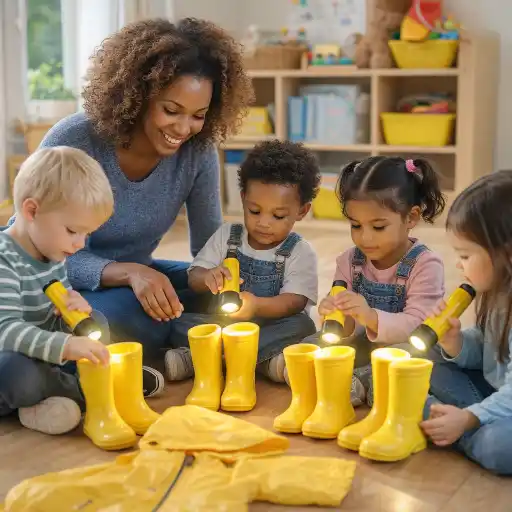
How can teachers support children’s emotions during a storm?
Children may respond differently to loud sounds, darkness, disrupted meals, or moving to another room. Some may seek closeness, ask repeated questions, become unusually quiet, or show frustration through behavior. These responses are communication, not misbehavior to punish. A steady adult presence, simple explanations, and choices that fit the safety plan can help children feel accompanied.
Use honest, short statements that describe what is happening and what adults are doing: “The storm is loud. We are together in our safe place while we wait.” Avoid broadcasting dramatic forecasts or sharing unnecessary details in front of children. Nemours KidsHealth recommends taking children’s concerns seriously, modeling calm, and offering familiar activities such as drawing, stories, or quiet games while waiting.
Whenever safely possible, preserve pieces of the usual routine—songs, snack, a familiar book, or a predictable transition cue. The CDC recommends reassuring children and speaking in language they can understand during emergencies. Staff can also regulate themselves with a breath, a brief grounding pause, or a clear handoff to a colleague; children often take cues from adults’ tone and body language.
Plan individualized supports with families in advance, including communication preferences, sensory accommodations, mobility assistance, and health needs. If a child’s distress persists or substantially affects daily participation after an event, document observations and partner with the family to consider additional support.
How should programs communicate with families and learn from each practice?
Family communication is most effective when planned before severe weather arrives. Share the program’s general storm procedures, how updates will be delivered, and what families should do during sheltering or reunification. Keep contact information current and identify who sends messages. During an actual event, staff should prioritize children’s safety first, then provide concise, factual updates through the program’s established channels.
After a drill, use the planner to capture the date, scenario, participating staff, duration, observations, and corrective actions. Record specific improvements rather than simply marking the exercise “complete.” For example, a team might discover that the visual story needs a clearer picture of the shelter space, a supply bag is stored inconveniently, or a backup staff member needs role practice.
Invite families to share information that could make the routine more accessible and reassuring for their child. If a storm affects the wider community, remember that adults and families may also be managing stress or disruption. NAEYC encourages educators to communicate with empathy and support children through familiar routines and trusted relationships.
Keep the written emergency plan, staff practice records, and family communication procedures aligned. Check local requirements for drill frequency, record retention, and emergency response. State requirements vary - check your state licensing agency.
What common pitfalls can a predictable storm routine prevent?
Good preparation is practical rather than theatrical. A routine should help children understand safe actions without turning a drill into a frightening performance. Avoid surprise simulations that imitate disaster sounds or create a sense of immediate danger. Instead, follow your program’s policies and use a clear, calm cue for practice.
- Unclear adult roles: Post primary and backup assignments, then rehearse them across shifts.
- Overly complicated directions: Use a small number of consistent steps and child-friendly words.
- Practicing only with children: Rehearse staff responsibilities, attendance procedures, accommodations, and communication too.
- Ignoring individual needs: Plan for communication, mobility, sensory needs, medication access, and familiar support in coordination with families.
- Skipping the debrief: Note a few concrete changes after each practice and assign someone to follow through.
When a child is distressed, do not insist that every child participate in exactly the same way. Offer reasonable supports while maintaining supervision and following the safety plan. A trusted adult, comfort item, preview of the steps, or gradual participation may help. If a child’s fear is persistent, communicate with the family and consult appropriate early childhood or behavioral-health supports. The goal is effective readiness alongside emotional care.
Use the Storm Routine Visual Story and Staff Practice Planner as living tools: update them when rooms, staffing, children’s needs, or procedures change. The strongest routines are simple, inclusive, practiced, and reviewed.
Conclusion: What makes storm practice predictable and supportive?
Preparing children for fall storms means joining sound emergency planning with developmentally responsive teaching. A short visual story helps children anticipate the sequence; staff rehearsal clarifies roles and reveals gaps; calm language, familiar routines, and individualized supports help children feel secure. Families also benefit when communication and reunification procedures are clear before a storm arrives.
Start with a practical next step: review the written plan, create or refresh a visual story using your real shelter location, assign staff backups, and schedule a brief practice followed by a documented debrief. Keep safety decisions grounded in official alerts and your program’s procedures. To build broader emergency-planning knowledge, explore ChildCareEd’s Emergency and Disaster Preparedness course Buy Now $55.00$45.00 as a next step for strengthening staff readiness and classroom practice.
Predictability does not mean pretending storms are harmless; it means helping children know that trusted adults have a plan and will guide them through it. With thoughtful practice, your team can protect #children while preserving connection, reassurance, and the steady rhythms of care.
Additional English-language ChildCareEd courses:
- 45 Hour Child Growth and Development
- 45 Hour Preschool Methods and Materials
- Balancing Act: Schedules and Routines
- The ABCs of Behavior: Turning Challenges into Learning Opportunities
- 45 Hour Infant and Toddler Methods and Materials
- Pediatric RSV First Aid & CPR/AED
- 45 Hour School Age Methods and Materials
- CDA Bridge Bundle: Family Child Care without Portfolio Review
- Texas Director Credential
- CDA Certification en Español: Recursos y Consejos para Educadores Bilingües
- 🌪️Fire Drills, Flashlights & Fast Thinking: Why Emergency Preparedness Is a Must
- Capacitación en Salud y Seguridad Preventiva en Línea para Proveedores de Cuidado Infantil
- Proporciones de Cuidado Infantil y Tamaños de Grupo por Edad en Nueva Jersey (Guía Rápida para Centros y Hogares)
- Proporciones de Cuidado Infantil y Tamaños de Grupo por Edad en Virginia (Guía Rápida para Centros y Hogares)
- How can preschool teachers safely use summer weather and cloud activities with kids in Oklahoma?
- How Can Texas Child Care Providers Prepare Safe Classrooms for Weather Emergencies and Active Play?
- How can Minnesota child care programs prepare for severe weather and poor air quality?
- How can we talk about tornado drills so Oklahoma preschoolers learn without fear?
- How can child care programs keep playgrounds safe every day?
- How can child care programs keep playgrounds safe every day?
- How can child care programs keep playgrounds safe for infants through school-age children?
- How Child Care Programs Can Keep Children Safe During Extreme Weather
- Daycare Outdoor Weather Safety: Temperature, Heat Index, and Playtime
- Playground Safety Checklist for Daycares: 10 Hidden Hazards Staff Often Miss
- How Can Child Care Programs Prevent Common Playground Injuries?
- How Can Children Design a Playground Sign That Stays Standing in the Wind?
- How Can You Support Children Who Join Your Program in the Middle of Fall?
- What Can Preschoolers Build to Catch the Breeze?
- How Can Child Care Programs Prepare Children for Fall Storms Through Predictable Practice?
