Keeping children safe is the most important job at a child care center. This article is for directors and providers who want clear, doable steps. You will find simple actions, checks, and ideas you can use right away. Remember: state requirements vary - check your state licensing agency.
Why does safety and risk management matter for my program?
Why it matters:
- Protects children’s lives and health. Good safety plans prevent injuries and illnesses.
- Builds trust. Families choose programs they believe are #safe and reliable.
- Supports staff. Training and clear roles reduce panic during an emergency.
Use a safety culture that includes training, checks, and clear plans. ChildCareEd explains ways to build that culture in 10 Actions to Create a Culture of Safety Buy Now $0.00. Small steps every day make a big difference for #safety.
How do I create an emergency plan my staff will use?
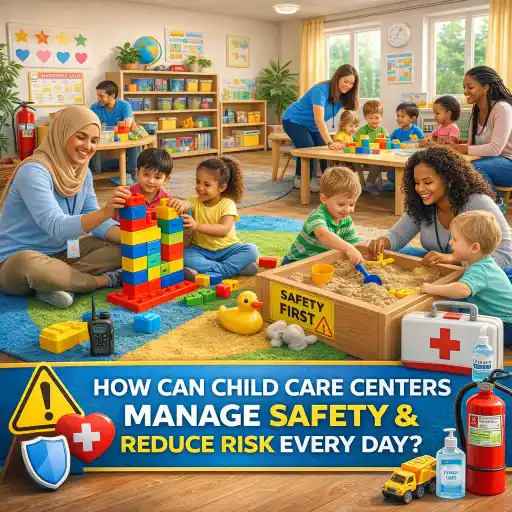
An emergency plan should be simple, written, and practiced. Follow these steps so staff know exactly what to do.
- 📄 Write it down: List hazards (fire, storm, intruder, medical). Use the Sample Childcare Emergency Action Plan Buy Now $0.00 as a template.
- 🧭 Set roles: Who leads evacuation? Who calls 911? Who checks attendance?
- 📦 Pack kits: First aid, meds, water, comfort items, contact lists and copies of the plan.
- 🔁 Practice: Do regular drills for fire, lockdown, and shelter-in-place. ChildCareEd describes key drill steps in Emergency Preparedness in Child Care.
- 📣 Communicate: Tell families how reunification works and where to meet.
Keep one copy of the plan in each room. Update it after drills or any change (new children, new building layout). State rules differ — state requirements vary - check your state licensing agency. Having a clear plan helps staff act fast and calm, protecting children during a real emergency. This strengthens your #emergency readiness.
What daily checks, routines, and training cut risks at my center?
- 🔍 Daily checks (quick):
- Are exits unlocked and clear?
- Any broken toys or loose bolts on playgrounds?
- Are diapers, meds, and cleaning supplies stored #safely?
- 🗓 Monthly audit: Use a checklist like the one in Facility walk-through audits. Fix red items today, assign yellow items, and praise green results.
- 🧯 Safety equipment: Check first aid kits, fire extinguishers, smoke/CO detectors, and emergency "go bags" often.
- 🧼 Health routines: Teach handwashing, clean toys, and isolate sick children when needed. Follow CDC guidance on infection prevention at Preventing Infectious Diseases.
- ⚽ Playground safety: Inspect surfaces, spacing, and age-appropriate equipment. Use ChildCareEd’s Playground Safety Checklist.
Train staff with short, frequent refreshers. Courses like Health and Safety Orientation and Administering Basic Health and Safety on ChildCareEd help staff pass knowledge into action. The Childcare Safety First program offers focused, practical modules on health, nutrition, and emergency procedures that staff can apply immediately. Regular practice reduces mistakes and keeps children healthy and happy. These routines support #training and #playground safety.
How do I manage staffing, background checks, and insurance to lower risk?
Strong hiring, clear policies, and proper insurance protect children and your program. Do these steps to reduce risk:
- 🧾 Background checks: Require checks before staff work with children and repeat as rules say. See state examples like Tennessee’s guidance on Background Checks for Child Care Employees. Always follow your state rules—state requirements vary - check your state licensing agency.
- 👩🏫 Training and orientation: New staff need basic health and safety training. Offer ongoing refreshers and record certificates. ChildCareEd lists trainings at Health and Safety Training Resources Buy Now $0.00.
- 🚗 Transportation: If you transport children, follow safe vehicle and seat rules and take a transportation safety course (see Transportation Safety
 Buy Now $16.00).
 - 🛡 Insurance: Talk to a specialist to cover liability, property, and workers’ comp. Insurance helps your program recover after accidents. See an example at WinStar Insurance: Childcare Insurance Specialists.
- ✅ Common mistakes to avoid:
- Not updating emergency contacts yearly.
- Skipping drills because they are “inconvenient.”
- Storing medicines where children can reach them.
Build a plan, train staff, document checks, and keep insurance up to date. Combine these steps with a safety culture from 10 Actions to Create a Culture of Safety Buy Now $0.00 and your program will be more resilient. This supports strong #staffing and long-term stability.
Conclusion
Safety and risk management are a mix of good plans, steady routines, and trained people. Start with a clear emergency plan, do daily and monthly checks, train your team often, and follow hiring and insurance steps. Use ChildCareEd resources for templates and courses. State requirements vary - check your state licensing agency. Take one small action this week: run a 5-minute walk-through or review your emergency contact list. That step moves your program toward safer days for children and peace of mind for staff and families. #safety #emergency #training #playground #staffing
Safety matters because children depend on adults to keep them safe. When your center is safe, families trust you, staff feel calm, and children can learn and play. A strong safety approach also helps your program follow rules and recover after an incident.Daily habits stop many problems before they start. A monthly director walk-through plus simple daily checks keep your space safe and inspection-ready.- Indoor and Outdoor Activities
- 🧼Band-Aids, Germs & Giggles: Why Basic Health & Safety Training Is a Big Deal in Child Care
- Proporciones de Cuidado Infantil y Tamaños de Grupo por Edad en Nueva Jersey (Guía Rápida para Centros y Hogares)
- Creative National Ice Cream Day Ideas for the Classroom
- How can childcare centers use simple health and safety best practices every day?
- How can child care centers manage safety and reduce risk every day?
- How can child care programs keep playgrounds safe every day?
- How should your Minnesota childcare program respond if a child was exposed to measles?
- Cómo simplificar la capacitación para sus empleados de daycare
- Should Washington Child Care Centers Rethink Parking Lots, Barriers, and Building-Side Safety?
- How can I create a daily schedule that meets Michigan's active learning expectations?
- How can I create a safe childcare environment for every age group?
- How can child care programs keep playgrounds safe for infants through school-age children?
- How can childcare providers and families keep children safe around water?
- How can childcare programs make transportation safe, inclusive, and compliant?
- How can childcare programs effectively prevent lead exposure in their environments?
- How can I manage childcare supplies and classroom materials efficiently and safely?
- Which Active Supervision Strategy Should You Use During Transitions, Meals, Naps, and Outdoor Play?
- When Does Classroom Clutter Become a Safety Issue?
