Building a #culture of #safety in your child care program helps children learn, families trust you, and staff feel supported. This short guide gives clear steps you can use today. Below you will find practical questions and simple, numbered actions. State requirements vary - check your state licensing agency.
Why it matters:
1. When safety is routine, injuries and close calls drop and children can explore without fear. See the practical list in 10 Actions to Create a Culture of Safety Buy Now $0.00 for science-informed ideas.
2. A safety culture builds trust with families and helps staff work calmly. For ideas on everyday habits, read Everyday Safety: Creating Healthy Environments.
What is a "culture of safety" and what does it look like?
A #culture of safety is how your whole program thinks and acts about keeping children safe every day. It includes rules, routines, training, and kind communication. It means everyone notices risks, speaks up, and fixes problems together. For mixed-age guidance, see Creating a culture of safety for mixed ages Buy Now $0.00.
- Identify 3 main goals: 1) keep children healthy, 2) prevent injuries, 3) include families.
- Write simple rules: post a short, clear safety list where staff and families see it.
- Make safety part of meetings: add one safety item to each staff huddle or meeting.
- Celebrate safety wins: praise staff when they follow safe steps or spot a hazard.
Why this works: clear, small steps become habits. Use the steps in 10 Actions (mixed ages) Buy Now $0.00 to guide choices.
What daily habits and checks cut risks right away?
Daily habits keep small problems from becoming big ones. Use short, repeatable checks that your team can do every day.
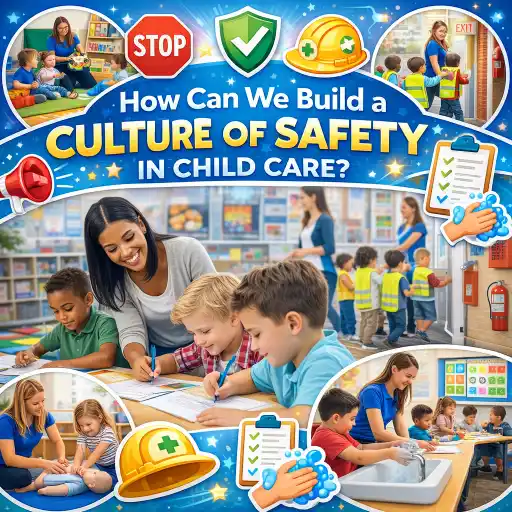
- 😊 Do a 5-minute morning walk-through: look for broken toys, unlocked gates, spills, or exposed outlets. See the practical checklist ideas at How can child care centers manage safety and reduce risk every day?.
- 🧯 Check emergency gear weekly: first aid kit, fire extinguisher, smoke and CO detectors, and your "go bag."
- 🔍 Use zones and active supervision: divide the room or playground into zones so each adult knows what they watch. Active supervision details are at Active Supervision In Texas and related resources.
- 🧼 Practice health routines: handwashing, cleaning toys, and isolating sick children. Follow CDC infection prevention guidance: Preventing Infectious Diseases.
- 📋 Keep short logs: sign off daily checks so you can track patterns and fix things fast.
These habits support staff and reduce stress. When everyone does the same quick checks, your program runs smoother and children are safer.
How do we train staff and practice emergencies so everyone acts fast?
Training and practice turn plans into calm action. Use short trainings, clear roles, and regular drills so staff know what to do.
For programs in Maryland, compare these recommendations with Maryland's Basic Health and Safety Training to see how the state's required content aligns with today's common risks and short, practical trainings.
- 📚 Start with short learning: choose 30–60 minute modules on first aid, supervision, and emergency steps. ChildCareEd offers many short courses — try Emergency Preparedness Training.
- 📝 Write an easy emergency plan: list who calls 911, who leads evacuation, where families reunite. A sample plan is described in Emergency Preparedness in Childcare.
- 🚨 Practice drills often: do fire, lockdown, and shelter-in-place drills with children. Document each drill and adjust the plan after practice.
- 👥 Assign roles and buddy teams: each adult has a primary role and a backup for transitions, meals, and nap times.
- 📣 Plan communication: keep an updated family contact list and a step-by-step reunification plan. Use the tips in A Guide to Safety Conversations with Families Buy Now $0.00 when talking with parents.
Keep training short and repeat it. Staff forget long lectures but remember practiced routines. State requirements vary - check your state licensing agency. Include #training and quick refreshers in staff schedules.
How do we partner with families and keep safety going long-term?
Families are partners in safety. When you share clear plans and invite feedback, everyone helps protect children.
- 📢 Share the basics: send a one-page safety summary to families (arrival, illness rules, emergency reunification spot). Include links to your program policies and to trusted resources like CDC Protecting Against Infections.
- 🤝 Hold quick safety talks: offer 10–15 minute family meetings at drop-off or pick-up to explain drills and daily checks. Use the guidance in Enhancing Communication with Families.
- 📋 Ask for feedback: use a short survey or a suggestion box. Fix one clear item each month and tell families what you changed.
- 🧭 Build shared roles: rotate a safety lead among staff and invite a family representative to give ideas once a year.
Common mistakes and how to avoid them:
- ❌ Mistake: skipping drills because they feel hard. Fix: do short, age-appropriate practices and celebrate effort.
- ❌ Mistake: long, one-time training with no follow-up. Fix: pair every training with a 10–15 minute practice or coaching visit.
- ❌ Mistake: not updating contacts. Fix: ask families to confirm emergency info every 3 months.
Work with community partners for added safety checks like site reviews: see the ATSDR Choose Safe Places tools at Choose Safe Places Full Checklist.
Conclusion
Start with small steps. Pick 3 actions to try this week:
- 🔹 Do a 5-minute morning walkthrough and log findings.
- 🔹 Run one short safety drill and record lessons learned.
- 🔹 Send a one-page safety summary to families and ask for one suggestion.
Safety grows when it is simple, shared, and practiced. Use resources from ChildCareEd and trusted public health guides like the CDC. Keep building your #culture, support your #staff, and keep learning with short #training and regular #emergency practice.
FAQ
- Q: How often should we do drills? A: At least quarterly for most drills; more often for new staff or new children.
- Q: Who needs background checks? A: Any adult who supervises children — follow state rules and your licensing agency.
- Q: What if families object to drills? A: Explain why drills keep children safe and show how they will be brief and age-appropriate. Use family meetings to listen and adapt.
- Q: Where can I get short trainings? A: Check ChildCareEd course catalog for microlearning on safety and health.
Latest Jobs
- 45 Hour Child Growth and Development
- Basic Health & Safety and Breastfeeding Awareness
- 45 Hour Preschool Methods and Materials
- 45 hour Growth and Development Birth-age 12 ONLINE
- Easy Steps to Resume and Interview Success
- Pediatric RSV First Aid & CPR/AED
- 45 Hour School Age Methods and Materials
- Texas Director Credential
- 👶 ¿Cuáles son las proporciones y grupos requeridos en Dakota del Norte? 🏫
- Curso de Comunicación de 9 Horas de Maryland
- 10 Ejemplos de Cómo la Cultura Influye en el Desarrollo Infantil
- Regulaciones de Cuidado Infantil en Maryland para Centros y Hogares de Cuidado Infantil Familiar
- Proporciones de Cuidado Infantil y Tamaños de Grupo por Edad en Virginia (Guía Rápida para Centros y Hogares)
- How can we build strong teacher-child relationships?
- How Can We Build Strong Partnerships with Families?
- How can we build strong work ethics in DC early childhood classrooms?
- How can Washington classrooms be more inclusive using nature, play, and community?
- How can Minnesota childcare programs build a strong team culture?
- Understanding Culture’s Role in Whole-Child Development
- How can childcare providers build positive relationships with families?
- How Can We Build a Positive Child Care Workplace Culture?
- How can child care centers manage safety and reduce risk every day?
- How can we build a strong culture of safety in child care?
- Cómo simplificar la capacitación para sus empleados de daycare
- How can Minnesota child care programs welcome Somali, Hmong, and Spanish-speaking families?
- How can early childhood programs build a culture of safety?
- From Mealtime to Manners: How Cultural Influences Show Up in Everyday Child Care
- How Can Child Care Providers Communicate Respectfully with Families About Special Needs?
