Latest Blog & News in English
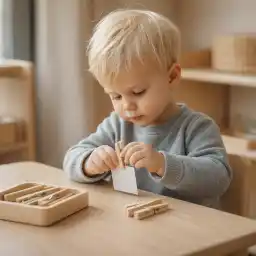
How Do Clip Cards Build Fine Motor Strength and Focus?
09/04/2026Can a simple clothespin and picture card turn practice time into purposeful learning? Clip cards strengthen finger muscles while inviting children to look closely, make decisions, and persist; providers who want a deeper foundation can explore How Preschoolers Develop to connect fine-motor activitie... How Do Clip Cards Build Fine Motor Strength and Focus?

How Can Take-Home Books Strengthen the Home-School Reading Bond?
09/04/2026When a book travels from your child care program into a child’s home, learning can become a shared family experience rather than something that ends at pickup. Explore practical ways to make take-home reading meaningful, and consider Supporting Families and Caregivers in Language and Literacy ... How Can Take-Home Books Strengthen the Home-School Reading Bond?
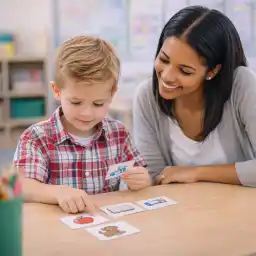
How Can Picture Task Cards Support Emerging Readers?
09/04/2026When children are not yet reading conventional text, pictures can make literacy learning visible, inviting, and achievable. Picture task cards give providers a practical way to build sound awareness, vocabulary, comprehension, and independence through brief, playful activities; for deeper preparatio... How Can Picture Task Cards Support Emerging Readers?
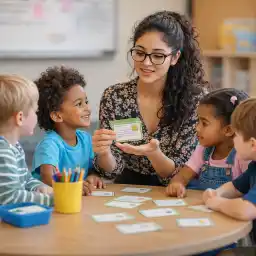
What Makes Task Cards Perfect for Small-Group Instruction?
09/04/2026How can a simple card help a small group become more focused, flexible, and engaging? Well-designed task cards give children a clear starting point while helping educators differentiate instruction, observe learning, and encourage #independence. To strengthen these practices, explore Tailoring Instr... What Makes Task Cards Perfect for Small-Group Instruction?

How Can Task Cards Make Independent Center Time Run Smoothly?
09/04/2026Do center rotations become noisy, confusing, or overly dependent on adult reminders? Thoughtfully designed task cards give children a visible starting point while preserving hands-on choice; for broader planning support, explore Spicing Up the Classroom: Learning Centers, which can strengthen center... How Can Task Cards Make Independent Center Time Run Smoothly?
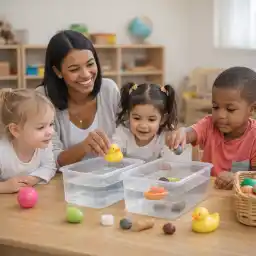
What Can Float vs. Sink Sorting Teach Preschoolers About Science?
09/04/2026What happens when a simple tub of water becomes a laboratory for young investigators? A float-versus-sink sorting activity helps preschoolers practice prediction, observation, classification, language, early mathematics, and problem-solving in one engaging experience. For deeper guidance on planning... What Can Float vs. Sink Sorting Teach Preschoolers About Science?
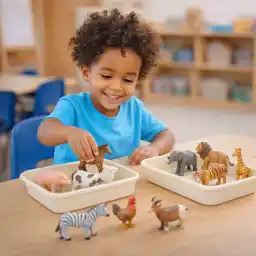
Why Is Wild vs. Farm Animal Sorting a Favorite Preschool Activity?
09/04/2026Why do preschoolers return so eagerly to wild-versus-farm animal sorting? The activity combines familiar animals, hands-on decision-making, language, early science, mathematics, and fine-motor practice in one approachable invitation. To strengthen the way you plan playful, developmentally appropriat... Why Is Wild vs. Farm Animal Sorting a Favorite Preschool Activity?
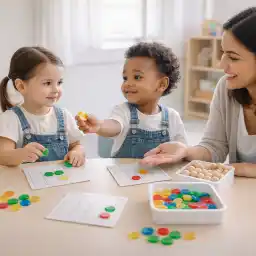
How Can Bingo Games Support Turn-Taking and Social Skills?
09/04/2026When a child calls out, grabs a marker, or becomes upset while waiting, a predictable game can turn a difficult moment into meaningful practice. Bingo offers repeated, low-pressure opportunities to listen, wait, communicate, celebrate peers, and manage disappointment; for deeper guidance strategies,... How Can Bingo Games Support Turn-Taking and Social Skills?

How Can Child Care Providers Create Low-Cost STEM Activities With Items They Already Have?
09/02/2026What if your next engaging STEM experience is already in the recycling bin? With a few safe household items, intentional questions, and time for children to test ideas, you can create meaningful learning without purchasing expensive kits. For a deeper, classroom-ready approach, explore Beautiful Jun... How Can Child Care Providers Create Low-Cost STEM Activities With Items They Already Have?

How Can We Celebrate Every Family and Create a Classroom Where Everyone Is Represented?
09/02/2026Every child deserves to recognize their family, language, and lived experience in the classroom. The Family and Culture Classroom Activity Pack can help providers turn that goal into meaningful daily practice, while Community and Family Engagement in Childcare offers focused professional learning fo... How Can We Celebrate Every Family and Create a Classroom Where Everyone Is Represented?
