When a book travels from your child care program into a child’s home, learning can become a shared family experience rather than something that ends at pickup. Explore practical ways to make take-home reading meaningful, and consider Supporting Families and Caregivers in Language and Literacy  Buy Now $16.00 to gain strategies you can share with caregivers while earning focused professional development hours.
Take-home books are more than literacy materials. They can become bridges between children’s classroom experiences, family routines, cultural knowledge, and joyful conversations. When providers thoughtfully select books, prepare children and caregivers, and invite two-way communication, a simple book bag can strengthen relationships while supporting vocabulary, comprehension, confidence, and reading habits.
Why does access to books at home matter?
Children need repeated opportunities to hear stories, examine print, talk about pictures, and connect new ideas to their own lives. A book available at home gives families an accessible invitation to participate, even when schedules, transportation, or finances make other forms of engagement difficult. Scholastic’s research summary reports that access to books in the home is strongly associated with educational achievement and describes improvements in fluency and family reading time when children receive books for home libraries.
For young children, the goal is not independent mastery alone. Shared reading develops oral language, story knowledge, vocabulary, memory, and positive associations with books. Research involving Head Start families found that children responded to reading by asking questions, noticing picture details, relating stories to personal experiences, and acting out events (Head Start Families Sharing Literature).
- Books provide practice between classroom visits.
- Families gain a concrete way to participate in learning.
- Children experience continuity between home and school.
- Providers learn more about children’s interests and family literacy practices.
Access should never be treated as a measure of family commitment. Some families may have limited time, limited storage, or few books in their preferred language. A supportive program reduces barriers and offers flexible, welcoming options.
How should providers choose books for take-home use?
Effective take-home collections balance accessibility, interest, representation, and instructional purpose. A book that is too difficult may turn reading into a frustrating assignment; a book that is too easy may still be valuable for fluency, confidence, and repeated enjoyment. The Keep Books teacher guide recommends considering a child’s reading level, instructional setting, and purpose when selecting a text.
For infants and toddlers, select sturdy books with clear images, rhythmic language, and opportunities for pointing or naming. For preschoolers, include predictable stories, informational texts, rhymes, and books that invite retelling or dramatic play. Early readers benefit from texts they can read with high accuracy, while adults can read more complex literature aloud.
- Include fiction, nonfiction, poetry, concept books, and wordless picture books.
- Choose topics connected to children’s interests, play themes, and questions.
- Offer books that reflect varied cultures, family structures, languages, abilities, and communities.
- Provide bilingual or home-language options whenever possible.
- Rotate titles so children encounter both familiar favorites and new perspectives.
Representation should be authentic and expansive rather than limited to holidays or special events. Ask families which stories, characters, songs, and subjects feel meaningful to them. This approach strengthens #belonging and communicates that every family’s knowledge is an asset.
How can a classroom routine prepare children for successful home reading?
Children are more likely to use take-home books productively when providers explicitly teach the routine. Introduce the book at school before sending it home. Read it aloud, invite children to join repeated lines, model how to hold and turn pages, and demonstrate how to revisit a favorite page. The Keep Books guide emphasizes that children benefit from learning how to become owners and collectors of books, including storing books in a consistent place and rereading them independently.
A predictable routine might look like this:
- Preview the cover, illustrations, title, and author.
- Read the book with expression and invite children to participate.
- Identify one or two interesting words or ideas.
- Offer a brief follow-up, such as drawing, acting, retelling, or finding print.
- Explain what children can try with a caregiver at home.
- Pack the book with a simple family note or activity.
Start with one book per child or family rather than sending home a large packet that feels overwhelming. A labeled book bag, reusable envelope, or small basket can help children understand that books are cared for and returned according to the program’s expectations. If books are gifts, explain that children may write their names in them, revisit them often, and make them part of their personal home library.
Most importantly, frame rereading as a strength. Repetition allows children to notice new details, anticipate language, practice fluency, and deepen comprehension.
How can take-home books invite meaningful family participation?
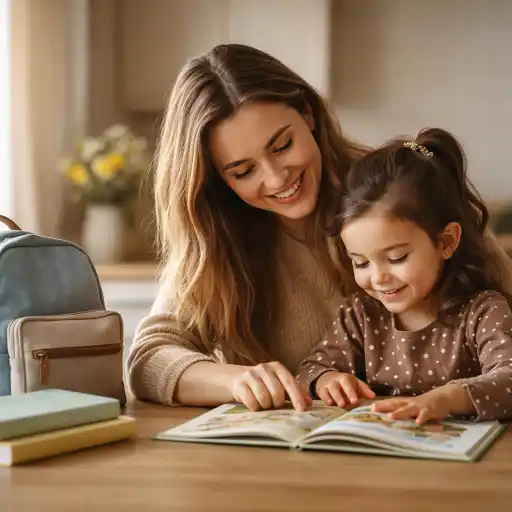
Family engagement grows when participation is flexible, respectful, and enjoyable. Avoid presenting take-home reading as homework that must be completed in one correct way. Instead, invite caregivers to talk, listen, look at pictures, tell the story in their own words, or connect the book to daily life. Families can read in the language they know best; strong home-language conversations support children’s overall communication and literacy development.
Provide a short, friendly guide with prompts such as:
- “What do you notice on this page?”
- “Does this remind you of something we have done?”
- “What might happen next?”
- “Can you tell the story using the pictures?”
- “Which part would you like to act out?”
Offer choices for families with different schedules. A child might read before bed, during breakfast, on public transportation, or while waiting for an appointment. Five focused minutes can be meaningful. Families may also listen while a caregiver reads, share a personal story related to the topic, or use the book as inspiration for a drawing, song, or household scavenger hunt.
Invite responses without requiring written documentation. A family can send a voice message, a child’s drawing, a comment at pickup, or a photograph of the book in use. These exchanges help providers see what resonates and reinforce the idea that families are partners, not assistants completing a school task. For additional professional learning, Reading Aloud and Storytelling Buy Now $16.00 offers practical guidance on interactive reading, vocabulary, comprehension, and engaging storytelling.
How can programs make take-home reading inclusive and sustainable?
A successful program plans for access, communication, materials, and follow-through. Directors can begin with a small pilot, gather family feedback, and adjust the process before expanding it. Staff should agree on expectations for distribution, sanitation when relevant, replacement, language access, and privacy. State requirements vary - check your state licensing agency before establishing program procedures related to materials sent home.
Common pitfalls include sending books without explanation, choosing only one language, equating participation with compliance, and selecting texts based solely on reading level. Providers can avoid these problems by:
- Including visual and translated directions when possible.
- Offering multiple ways to participate, including oral storytelling and picture discussion.
- Using strengths-based communication rather than reminders that imply blame.
- Inviting families to recommend titles and topics.
- Tracking which books children enjoy without ranking families by return rates.
Programs can monitor impact through brief observations: Does a child retell more of the story? Use a new word? Choose books more often? Talk about home reading with peers? Family feedback can reveal whether books are convenient, culturally relevant, and enjoyable. Avoid treating these observations as high-stakes testing; their purpose is to improve the experience.
For children learning more than one language, include books in the home language and welcome family narration in any language. The course Building Bridges for Dual Language Learners Buy Now $16.00 can help providers strengthen culturally responsive communication and collaboration with multilingual families.
What are the main takeaways for child care providers?
Take-home books strengthen the home-school reading bond when they are treated as invitations to connect, not assignments to complete. Their greatest value comes from the relationships and conversations they make possible.
- Select engaging, developmentally appropriate, representative books.
- Introduce the book and model simple reading routines before it travels home.
- Encourage conversation, rereading, storytelling, and play in any language.
- Offer flexible participation options that respect family schedules and strengths.
- Use family feedback and child observations to refine the program.
A take-home book may be read at bedtime, revisited during breakfast, narrated in a home language, or acted out with siblings. Each of these experiences connects children’s worlds. With thoughtful planning, providers and directors can turn a small book bag into a durable partnership that supports #literacy, family belonging, and children’s confidence as readers.
Additional professional learning may support implementation: Classroom Tools for Emergent Literacy Buy Now $25.00 focuses on interactive read-alouds, reading buddies, labeling, and other practical literacy supports, while Assessment of Language and Literacy Skills Buy Now $24.00 helps providers use objective observations to plan responsive learning experiences.
References
- Scholastic Education. Take-Home Books: To Build Home Libraries.
- Ohio State University. Teachers’ Guide for Using Keep Books.
- ChildCareEd. Supporting Families and Caregivers in Language and Literacy. Buy Now $16.00
- ChildCareEd. Reading Aloud and Storytelling. Buy Now $16.00
- ChildCareEd. Assessment of Language and Literacy Skills. Buy Now $24.00
- CDA Home Visitor Subject Area 3 Part 3 Birth to 5
- Bienvenido! Welcoming All Families
- CDA Family Child Care Credential with Portfolio Review
- Pediatric RSV First Aid & CPR/AED
- CDA Home Visitor Credential Birth to 5
- FCCLH Pre-Service Course
- Supporting Families and Caregivers in Language and Literacy
- CDA Home Visitor Subject Area 8 Part 1 Birth to 5
- Celebrate the Joy of Reading on National Book Lovers Day
- CDA Certification en Español: Recursos y Consejos para Educadores Bilingües
- Cómo Abrir Una Quardería En Casa Sin Dinero?
- 10 Ejemplos de Cómo la Cultura Influye en el Desarrollo Infantil
- Cómo Empezar una Guardería en Casa: Requisitos y Pasos
- ¿Cómo solicito la licencia para una guardería en California?
- Lista para Abrir una Guardería en Casa en Carolina del Norte: Cómo Empezar
- Lista para Abrir una Guardería en Casa en Dakota del Norte: Cómo Empezar
- Lista para Guardería en Casa en Illinois: Cómo Iniciar una Guardería en el Hogar
- Lista para Guardería en Casa en California: Cómo Iniciar una Guardería en el Hogar
- Lista para Guardería en Casa en Texas: Cómo Iniciar una Guardería en el Hogar
- Celebrando la amistad en el cuidado infantil durante el Día de los Mejores Amigos
- How can preschool programs build early literacy every day?
- Why Do Bilingual Classroom Activities Matter for Dual Language Learners?
- How Can Child Care Providers Support Language Development in Young Children?
- How Can Take-Home Books Strengthen the Home-School Reading Bond?
- How Can Child Care Providers Strengthen Language and Literacy Development?
- What Are the Best Ways to Support a Child’s Speech Development?
