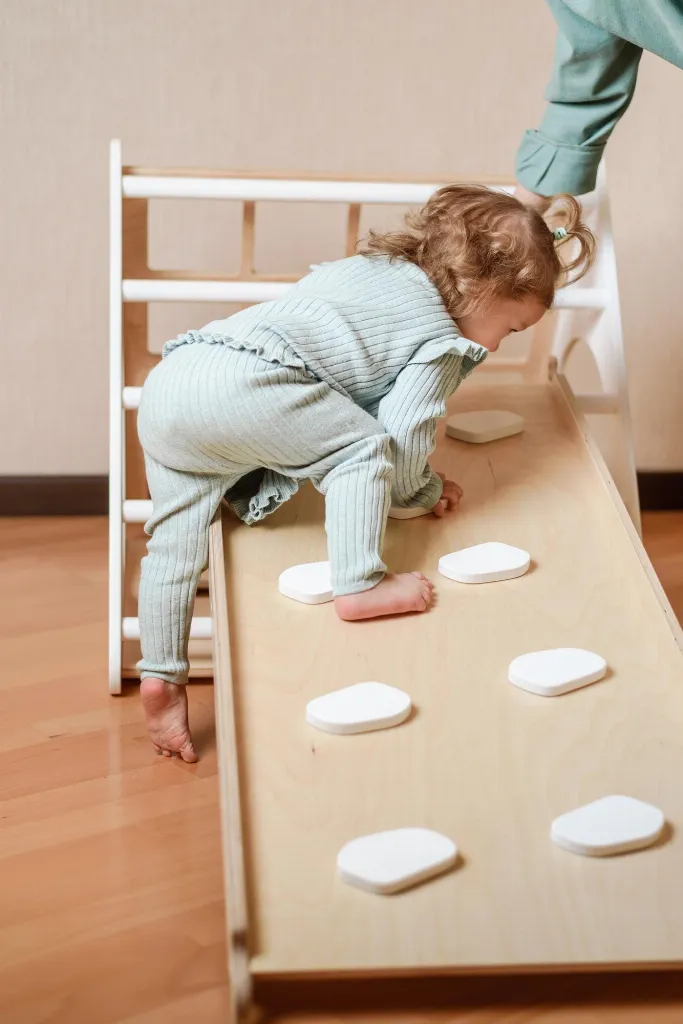
 Young children grow stronger and steadier when they move. This article helps child care providers and directors pick easy, safe activities that build #balance #coordination #strength #grossmotor #children. Read the quick ideas below and pick the ones that fit your space, staff, and schedule.
1) What simple activities give the biggest gains in balance, coordination, and strength?
- 🟠 Obstacle course: crawl under a table, step over cushions, walk a tape beam. This builds whole-body strength and planning (see ChildCareEd indoor/outdoor ideas).
- ⚽ Ball and beanbag games: toss, kick, roll to targets to boost hand-eye and foot-eye coordination (try beanbag and ball games).
- 🐻 Animal walks: bear crawls, crab walks, frog jumps build core and leg strength (easy to adapt for mixed ages).
- 🎯 Tape balance beam: lay painter’s tape on the floor for heel-to-toe walks, one-leg stands, or carrying a beanbag on the head.
- 🎈 Balloon or parachute play: gentle vestibular input, timing, and group cooperation (parachute play ideas at ChildCareEd).
Quick tip: repeat short rounds (2–5 minutes) many times a day. For more games, see 10 Gross Motor Games.
2) How do I adapt activities for different ages and abilities so every child can succeed?
- 🎯 Two-level choices: give an easier and a harder option (e.g., “hop OR step”). This keeps children engaged and lets you scaffold skills.
- 🤝 Buddy support: pair a child who needs help with a confident peer to model and cheer. Peer helpers boost social skills and confidence.
- 🪑 Seated versions: change jumps into arm pumps or seated marches for children with mobility limits. Many moves can be done seated with good outcomes.
- 🧩 Equipment swaps: use larger, softer balls, lighter beanbags, or shorter distances to make success likely. Homemade props (sock beanbags) work well.
- 📋 Visual supports: picture cards, tape lines, and step cues help children follow steps without long verbal directions (see free ChildCareEd resources).
Observe progress with simple checks: 1) a 1–2 item checklist (e.g., one-leg balance 5 sec, hop 3 times), 2) short observation notes, or 3) photos/videos with parent permission. If you suspect a delay, follow your program’s referral steps and consider OT/PT evaluation.
3) Where and how often should these activities happen in the day?
- 🕒 Sample daily plan:
- Morning: 5–8 min tape-beam or animal walks to wake up muscles.
- Before circle time: 2–3 min Freeze Dance or movement jar pull.
- Outdoor block: 15–30 min free play, obstacle course, or ball games.
- Afternoon: 5 min balance or beanbag relay before rest.
- 🌦 Indoor vs. outdoor: use outdoor time when weather and space allow. When inside, clear a movement zone and remove hazards (see indoor ideas at ChildCareEd).
- 👀 Supervision and signals: position adults to see all children and teach one stop signal (clap or bell) so transitions stay safe.
Short repeats across the day help children build stamina and focus. Use movement breaks as brain breaks to improve attention and behavior.
4) How do I keep children safe and avoid common mistakes?
Safety and good planning keep play productive. Below are common mistakes and fixes. Always follow your center’s safety plan—state requirements vary - check your state licensing agency.
- ❌ Too hard, too fast. ✅ Fix: Start simple and add one challenge at a time. Break tasks into steps and offer success options.
- ❌ Long lines and waiting. ✅ Fix: Use stations or small groups so children stay active and engaged (relay or rotation works well).
- ❌ Weak supervision. ✅ Fix: Place adults where they can see all children, model each move first, and practice your stop signal.
- ❌ Comparing children. ✅ Fix: Celebrate effort and progress for each child; use individual goals rather than peer comparison.
- ❌ Unsafe surfaces/equipment. ✅ Fix: Use mats, soft landings under climbing, and age-appropriate props; inspect equipment before use.
Common measurement tools: brief checklists, observation notes, and photos with permission. For vestibular and bilateral ideas that support balance and coordination, see OT Mom Learning Activities and beanbag games at OT Mom. For course-based resources and printable lesson plans, see ChildCareEd Gross Motor Games Buy Now $0.00.
Conclusion
Small, regular movement builds big skills. Use short activities every day, adapt to include all children, and watch for steady gains in #balance #coordination #strength #grossmotor #children. Keep safety first, document progress with simple checks, and share wins with families. You’re doing important work—these small actions lead to big results for kids’ play, learning, and confidence. For quick lesson plans and printable activities, start with ChildCareEd resources linked above. You can also pair movement sessions with short fine-motor craft stations to reinforce hand strength and finger coordination; seasonal examples and printable templates are available in these holiday craft ideas that boost fine motor skills.
Quick FAQ
- Q: How long are movement breaks? A: 2–10 minutes, several times a day.
- Q: What if space is tiny? A: Use tape lines, balloon games, seated marches, or beanbag tosses.
- Q: How do I track improvements? A: Use a 1–2 item checklist, observation notes, or photos with permission.
- Q: When to refer for help? A: If a child is far behind peers in balance, walking, hopping, or catching, document examples and follow referral steps for OT/PT.
- Moving About the Classroom: Effective Transitions for Everyday
- CDA Home Visitor Subject Area 2 Part 3 Birth to 5
- Beyond the Classroom: Connecting Families to Essential Services
- Balancing Physically Active Play in Child Care
- CDA: Special Needs: Understanding the Whole Child
- Emergent Learning & Development
- 45-Hour Infant and Toddler Curriculum
- Balancing Active Play in Child Care
- Moving About the Classroom: Effective Transitions for Everyday
- Bye Bye Winter: The Role of Outdoor Play in Early Childhood Development
- Montessori for Toddlers: Fostering Independence and Learning
- Exploring the Cognitive Benefits of Movement in Early Childhood Classrooms
- How motor skills shape child development and creative ways educators can foster them.
- Actividades de Motricidad Gruesa que Desarrollan el Equilibrio, la Coordinación y la Fuerza
- Indoor and Outdoor Gross Motor Activities for Kids
- Gross Motor Games for Preschool and Kindergarten
- Can simple indoor movement games teach listening and cooperation to preschoolers in Oklahoma?
- Gross Motor Skills Activities for Balance, Coordination, and Strength
- How can Michigan preschool programs build strong fine and gross motor skills?
- How can I build gross motor skills indoors and outdoors for the children in my program?
- How can I keep Children Active Indoors On Cold Days?
- What fun, practical activities help build fine and gross motor skills in early childhood classrooms?
- How Can Child Care Providers Support Gross Motor Development in Every Child?
- Which Outdoor Play Activities Best Boost Gross Motor Development?
- What Gross Motor Skills Should Children Develop at Each Age?
