Young children learn best when they touch, move, listen, and try things themselves. This article gives easy, low-prep ideas you can use right away with the #toddlers in your care. You will find quick activity choices, tips to fit them into a busy day, ways to include children with different needs, and steps for when you should talk with families or refer for help. These ideas are practical, tested in classrooms, and link to helpful ChildCareEd resources to expand each idea.
Why it matters: 1) Short, playful activities help brain connections and build strong hands and bodies. 2) Regular, simple play builds language, thinking, and social skills that make children ready for preschool. For background on milestones and daily ideas, see ChildCareEd's guide on What should my 1-year-old be doing?. Remember: state requirements vary - check your state licensing agency.
What simple activities help toddlers grow new skills?
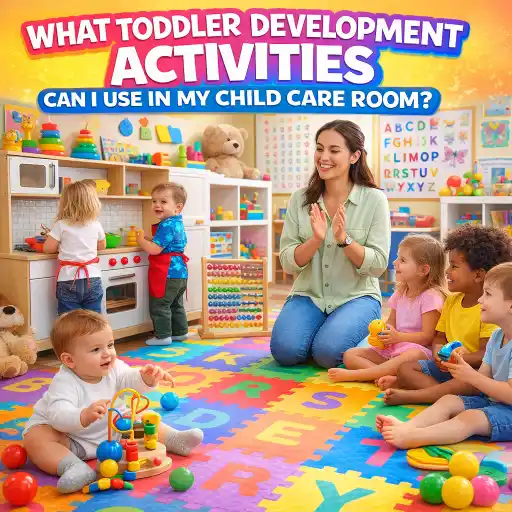
Pick 3–5 short invitations you can offer each day. Repeat them often. Here are easy choices, with how they help and links to more activities:
- 😀 Sensory bins (touch & smell) — Fill a tray with rice, dyed pumpkin seeds, or water and add scoops and small toys. Sensory play builds #development of touch and thinking. Try autumn and pumpkin ideas at ChildCareEd's Pumpkin Spice and Sensory Delight or messy recipes at Messy Little Monster.
- 📚 Read-alouds (language) — Read short books, pause for children to point or say a word, and repeat favorite pages. See tips in ChildCareEd's Reading Aloud in Child Care.
- 🧸 Gross motor games (big body skills) — Tape stepping stones, balloon keep-up, or bean bag walks to build balance and strength. Find simple games at ChildCareEd's Gross Motor Activities for Preschoolers. The CDC also lists movement standards for early care HIOPS for Physical Activity.
- 🔧 Fine motor tubs (small hands) — Offer threading, clothespin clips, playdough, stickers, or simple scooping to build finger strength. See 25 easy fine motor ideas at ChildCareEd: What are 25 easy fine motor activities?.
- 🧪 Simple STEM (curiosity & thinking) — Try walking-water cups, ramp races with toy cars, or frozen toy rescues. These teach cause and effect and early science; see ChildCareEd's 10 STEM Ideas for Preschoolers.
How can I fit toddler activities into a busy daily routine?
- Plan 1–2 teacher-led invitations daily (5–15 minutes each).
- Rotate 3–4 independent tubs or centers so children get choice and practice.
- Use transitions as mini-lessons: sing while washing hands, count during cleanup, or do 2-minute freeze dances before circle time.
- Schedule movement: toddlers need regular active play; the CDC suggests several active chances each day — see HIOPS.
- Document quickly: take a photo and jot one sentence about what you saw. Share wins in daily reports to families.
Common mistakes and quick fixes:
- ❌ Too many toys at once — Offer 2–4 items and rotate.
- ❌ Long adult monologues — Talk less, model more; use short questions ("What do you feel?").
- ❌ Skipping movement breaks — Swap one quiet minute for a 3–5 minute game; kids return calmer.
How do I adapt activities for different abilities and mixed-age groups?
- 🔁 Offer three difficulty levels in each tub: easy, medium, hard.
- 🧍♂️ Use peer buddies: pair children for sharing and modeling.
- 🖐️ Provide adaptive tools: bigger crayons, tongs, built-up handles, or steady chairs.
- 👀 Use visuals: picture cards, routine boards, and simple step cards so children know what comes next.
- 🧴 Give movement options: standing, sitting on a cushion, or pacing while listening to a short book.
How to avoid pitfalls: 1) Don’t let one approach fit all — offer choices. 2) Don’t wait to train staff — small coaching moments help. ChildCareEd offers courses like the 45-Hour Infant & Toddler Curriculum  Buy Now
 $399.00$275.00 and other trainings to build skills.
When should I be concerned and how do I refer for help?
Watching and documenting are your best tools. Look for these red flags and act early. For milestone checklists see ChildCareEd's 1-year milestone guide and the CDC's resources.
- 🚩 Developmental warning signs:
- Not using gestures or pointing by 12 months.
- Very limited words or loss of skills at any age.
- Poor eye contact or unusual reactions to sound or touch.
- Unusual repetitive movements or odd play (see early signs at UCSD Early Signs of Autism).
- Steps to refer:
- Document what you saw with dates, photos, and short notes.
- Share observations with the family with kindness and examples.
- Suggest the family talk with the pediatrician and ask about developmental screening or early intervention. For state services see CDC Find EI resources and remember: state requirements vary - check your state licensing agency.
- Make a professional referral if needed and follow up with the family.
FAQ (quick):
- Q: How long should an activity be? A: 5–15 minutes for teacher-led; 12–20 minutes for center rotations.
- Q: How often? A: Daily short practice plus many short repeat chances during routines.
- Q: Where to find more ideas? A: ChildCareEd has stacks of classroom-ready articles and lesson templates (see resources linked above). For two-year-old–specific activities and strategies to turn common "terrible twos" moments into teachable, playful opportunities, see Terrible Two's Can Be Terribly Fun!.
Conclusion: Small, regular, playful activities make a big difference. Start with 2 teacher-led invitations and 2 rotating tubs this week. Watch, note, and share wins with families. If you see concerns, act quickly — early help is best. For more lesson plans and downloadable checklists, visit ChildCareEd resources like milestones, movement games, and fine motor ideas. You are doing important work — keep it playful, documented, and inclusive.
Short and steady beats long and rare. Toddlers learn from many repeats. Use this numbered plan to make activities part of your day:Inclusion means changing the activity or the support so each child can join. Small changes help a lot. For practical guidance read ChildCareEd's Inclusive Care Strategies and the CSEFEL guide on inclusion (CSEFEL).- 45 Hour Child Growth and Development
- Bienvenido! Welcoming All Families
- 45 Hour Infant and Toddler Methods and Materials
- Pediatric RSV First Aid & CPR/AED
- Working Together: Teachers & Preschoolers
- CDA Bridge Bundle: Infant/Toddler without Portfolio Review
- Texas Director Credential
- Moving About the Classroom: Effective Transitions for Everyday
- Terrible Two's Can Be Terribly Fun!
- Lesson Planning for Infants and Toddlers
- 👶 ¿Cuáles son las proporciones y grupos requeridos en Dakota del Norte? 🏫
- How can I reduce classroom conflicts among toddlers?
- Proporciones de Cuidado Infantil y Tamaños de Grupo por Edad en Maryland (Guía Rápida para Centros y Hogares)
- A Simple Guide to Toddler and Preschool Lesson Plans
- How can New York childcare providers build self-confidence in toddlers?
- How Can North Dakota Providers Respond to Toddler Biting Without Shaming?
- 45-Hour Infant and Toddler Course: Training, Requirements, and Tips
- Celebrando la amistad en el cuidado infantil durante el Día de los Mejores Amigos
- What toddler development activities can I use in my child care room?
- Cómo simplificar la capacitación para sus empleados de daycare
- What should toddler development training teach my staff?
- Toddler Classroom Management: Routines, Behavior, and Big Feelings
- Mixed-Age Daycare Schedule: How to Plan a Day for Different Age Groups
- Why Is My Toddler Screaming in Daycare, and What Can Teachers Do?
- How Can Child Care Providers Plan a Balanced Summer Learning Routine for Young Children?
- Can Every Toddler Reach and Recognize Their Own Storage Space?
