Choosing toys starts with thinking about the play you want to make possible: building, pretending, investigating, or working together. Use the Classroom Supply Inventory Resource Guide Buy Now $1.49 to take stock of what you already have, then consider how those materials support children’s interests, abilities, and opportunities to play. ChildCareEd’s Using Toys to Support Learning  Buy Now $16.00 offers focused training on selecting age-appropriate materials and making them accessible to all children. Read on for ways to choose and arrange toys that invite meaningful exploration while leaving room for children’s own ideas.
Why does toy selection shape children’s play?
Materials do not teach by themselves, but they influence what children can attempt, imagine, and share. A toy with one prescribed function may invite brief repetition; a flexible collection of blocks, fabric, figures, and containers can support changing stories, designs, and questions. The goal is not to label one kind of toy as universally best. It is to intentionally offer materials that align with children’s interests, developmental abilities, and the kinds of play you hope to support.
Play is a context for development across cognitive, language, physical, and social-emotional domains. The American Academy of Pediatrics notes that toys can facilitate learning when they engage caregivers and peers in interaction, language, pretending, problem-solving, cooperation, and creativity. In practice, a set of toy animals might prompt sorting and comparison, then become characters in a shared story. The material’s value lies partly in the possibilities children discover with it.
Begin with a question: What do I hope children will be able to do here? If you want collaborative storytelling, offer figures, props, and blank signs. If you want construction inquiry, provide blocks, tubes, and safe connectors. When the intended play is clear, choosing #toys becomes less about buying more and more about thoughtfully arranging what you have.
How do you match materials to children’s development and interests?
Age guidance is a useful starting point, not a substitute for observing individual children. Children develop at different rates, and a material that is engaging for one child may frustrate or under-challenge another. NAEYC’s guidance on choosing toys by age and stage emphasizes matching materials to emerging abilities while recognizing variation. Watch children as they reach, manipulate, combine, move, communicate, and persist.
- Infants: Offer safe, easy-to-grasp materials such as textured balls, sturdy board books, rattles, and unbreakable mirrors. Notice what attracts their attention and how they explore.
- Toddlers: Provide large blocks, nesting objects, push-and-pull toys, simple puzzles, and pretend props. Repetition and active testing are meaningful play, not a sign that a child needs constant redirection.
- Preschoolers: Include construction materials, art tools, dramatic-play props, books, puzzles, and opportunities for active movement. Flexible materials can sustain complex, shared play.
Interests matter alongside age. Observe before purchasing or rotating: Which materials draw children in? What are they trying to figure out? A child’s recurring interest in ramps, caregiving, or sorting can guide a small, relevant addition. This is a responsive approach to #development: notice what children can do now, then offer a manageable next possibility.
Which materials invite rich, flexible play?
Open-ended materials can be used in multiple ways without prescribing a finished product. Blocks may become a bridge, a home, or a boundary for a game. Scarves, cardboard, containers, playdough, and natural objects can be recombined as children’s ideas shift. These materials support children in generating meanings rather than simply following a toy’s built-in script.
Loose parts—movable objects that children can carry, combine, arrange, and transform—are one useful category. The Education Hub describes how such materials can support exploration, creative construction, dramatic play, communication, and problem-solving. Offer them intentionally rather than dumping a large, unexplained assortment into the room. A small basket of fabric squares beside blocks, for example, may be enough to spark new structures and stories.
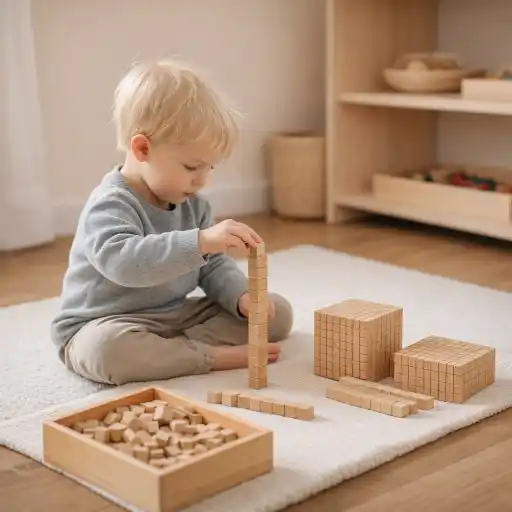
Balance open-ended choices with materials that offer a defined challenge. Puzzles, matching games, and simple cause-and-effect toys can encourage persistence, coordination, and focused problem-solving. The question is not “open-ended or structured?” but “What range of experiences will let children make choices, practice skills, and enjoy success?”
- Choose a manageable variety of materials rather than crowding every shelf.
- Make materials visible and reachable, with clear storage children can use independently.
- Connect props to children’s lived experiences and provide diverse representations in books, dolls, figures, and pretend play.
- 🧺 Reuse safe, clean everyday items—such as sturdy boxes and containers—when they fit children’s ages and your program’s safety practices.
Materials become an invitation when children can see what is available, access it, and decide what it might mean. That freedom is the heart of #creativity.
How can you make toy choices inclusive and safe?
Inclusive selection begins by asking whether every child can access, recognize, and use the materials in meaningful ways. Consider different abilities, sensory preferences, home languages, family structures, cultures, and interests. Diverse dolls, community figures, accessible tools, and varied pretend-play props can help children see themselves and others in the classroom. The Genius of Play’s discussion of play in diverse and inclusive classrooms underscores the value of materials that represent varied identities and abilities.
Adaptation can be simple: place materials within reach, offer larger grips or stable surfaces, use picture choices, or provide more than one way to participate—through speech, gesture, movement, drawing, or observation. Ask families about familiar routines and meaningful play themes; their insights can guide respectful choices without making a child responsible for representing an entire culture.
Safety is part of good selection, not a separate afterthought. Check age labels and manufacturer guidance, inspect toys regularly for broken pieces, sharp edges, loose parts, and damaged batteries, and clean materials according to program procedures. Keep choking hazards away from children who may mouth objects; the CPSC provides toy safety guidance, including age-related reminders. Supervision should reflect the material, children’s ages, and how the objects are being used. State requirements vary - check your state licensing agency.
What role should educators play as children use toys?
Thoughtful selection is only the beginning. Educators shape play through the time, space, access, and interaction they provide. Start by observing: What has captured children’s attention? What are they repeating or changing? Are peers joining? What barriers are keeping a child from participating? A brief note or photograph with a child’s words can help a team decide whether to maintain, adapt, or extend an invitation.
When children are engaged, give them time and avoid turning play into a string of adult questions. Instead, comment on what you notice, listen for children’s theories, and offer a question only when it genuinely opens a possibility: “What could help the ramp stay steady?” You might add a material that connects to their idea, then step back to see what they do with it. Responsive support preserves children’s agency while making new exploration possible.
Directors can make this approach sustainable by creating shared routines for inspecting, cleaning, storing, and reviewing materials. Invite staff to discuss which items support meaningful participation and which are rarely used. Rotate selectively in response to observation, not simply because a calendar says it is time. If you want a deeper professional learning experience, explore ChildCareEd’s The Best Promotion is Play Buy Now $24.00 for strategies related to play’s role in development and ways to support it in classroom practice.
What common toy-selection pitfalls can you avoid?
Well-intentioned choices can narrow play when adults focus too heavily on labels, quantity, or a predetermined result. “Educational” on a package is not proof that a toy will meaningfully support children’s learning. Consider what children can actually do with it and whether it encourages active exploration or interaction. The AAP cautions against assuming that digital toys offer the same developmental opportunities as shared, hands-on play; technology should not displace responsive human interaction.
- Buying for the label: Ask what skills, relationships, or ideas the toy makes possible in your specific classroom.
- Offering too many items: Reduce visual clutter and provide a focused selection children can explore deeply.
- Expecting one correct outcome: Avoid using models that turn an open-ended invitation into a copy-the-teacher task.
- Overlooking access: Check whether each child can reach, manipulate, understand, and join the play.
- Skipping inspection: Build regular checks into classroom routines and remove damaged or unsafe materials promptly.
Families may also wonder why children are playing with a box instead of the toy inside it. Share concrete observations: children planned, tested balance, negotiated roles, or invented a story. This makes learning visible without promising that a single material will produce a particular outcome. A thoughtful selection process is iterative: offer, observe, reflect, and adjust.
Conclusion: How can toy choices make the play you want possible?
Choosing toys for meaningful play is an ongoing act of professional judgment. Match materials to children’s developmental abilities and interests, offer a balanced mix of open-ended and focused experiences, and make sure choices are inclusive, accessible, and safe. The strongest play invitations do not dictate a single outcome; they provide enough structure for children to begin and enough flexibility for their ideas to grow.
For providers and directors, a practical cycle is simple: observe children, name the play you hope to invite, select a small set of appropriate materials, make access clear, and revisit the choice based on what children actually do. Safety checks and family knowledge belong in that cycle, too. Choosing toys that make the play you want possible means creating conditions for children’s curiosity, connection, and learning—and staying responsive as those possibilities evolve.
Five relevant ChildCareEd courses:
- Using Toys to Support Learning Buy Now $16.00
- The Best Promotion is Play Buy Now $24.00
- Beautiful Junk: Using Recycled Materials in the Classroom Buy Now $16.00
- Playful Spaces for Infants & Toddlers Buy Now $24.00
- From Play to Planning: Building Culturally Competent, Child-Centered Curriculum Buy Now $55.00
- 45 Hour Child Growth and Development
- You're Not My Friend Anymore: Learning Conflict Resolution
- Training Guide for Families from Diverse Language and Cultural Backgrounds
- Bienvenido! Welcoming All Families
- Training Guide for Families from Diverse Language and Cultural Backgrounds
- Setting the Stage: Story Time
- Texas Director Credential
- Supporting Breastfeeding Practices In Child Care
- CDA Certification en Español: Recursos y Consejos para Educadores Bilingües
- 💛🧩 ¿Cómo puedo hacer que mi enseñanza sea inclusiva para los niños con autismo?
- 10 Ejemplos de Cómo la Cultura Influye en el Desarrollo Infantil
- Capacitación Previa al Servicio para Proveedores de Cuidado Infantil en Dakota del Norte
- How can DC early childhood educators keep children safe from poisonous plants during outdoor play?
- How did Georgia’s "Play With Purpose" teacher event show the power of intentional play?
- Celebrando la amistad en el cuidado infantil durante el Día de los Mejores Amigos
- Canciones, juegos y preguntas de círculo para niños
- What Is Play-Based Learning in Preschool and How Do We Do It Well?
- Do Toys Come Alive: How Can Pretend Play Spark Creativity in Your Daycare?
- Should AI Toys Be in Your Daycare? What Providers Should Know
- Why Do Open-Ended Toys Beat Battery-Powered Ones?
- How Can Child Care Providers Create Effective Learning Centers in Small Spaces?
- What Can Providers Learn From the Toys Children Choose Repeatedly?
- When One Child Always Chooses the Same Pretend Play Role, What Should Educators Do?
- How Can Educators Help Children Negotiate When Pretend-Play Rules Change Midgame?
- What Should You Do When a Child Wants to Remove Their Contribution from Group Artwork?
- How Can Teachers Help Two Children Build Together When They Disagree on the “Right” Way?
- How Can You Choose Toys That Make the Play You Want Possible?
