A toy that looks harmless can become dangerous when it fits into a young child’s airway. This practical guide helps child care providers and directors use a small-parts test, interpret age recommendations, and build consistent inspection routines; for deeper preparation, explore Using Toys to Support Learning  Buy Now $16.00 to strengthen age-appropriate material selection and earn professional development hours.
Why does toy size matter so much in early care?
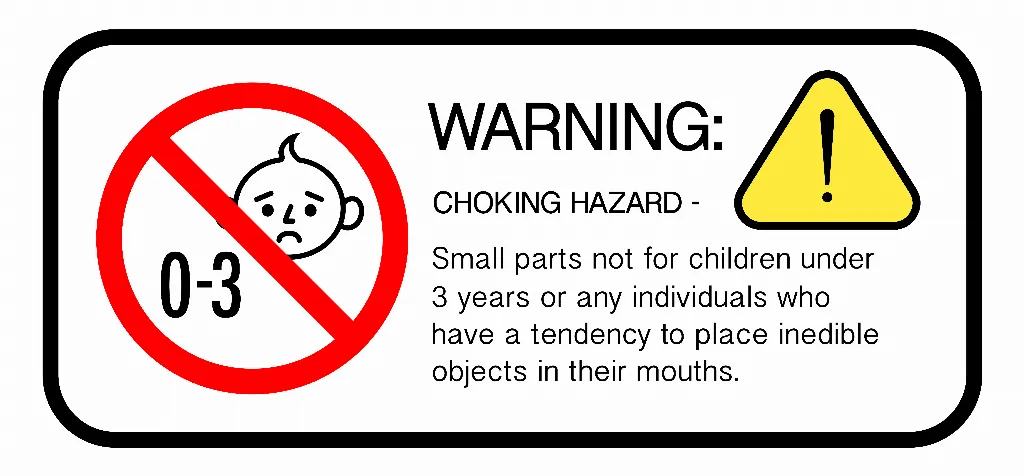
Young children investigate their environment through touch, grasping, mouthing, and chewing. Infants and toddlers are especially vulnerable because their airways are narrow, their protective coughing responses are still developing, and they may not understand the difference between a toy and an edible object. A small detached wheel, bead, button, or piece of plastic can therefore create an immediate airway emergency.
For providers, toy safety is not about eliminating exploration. It is about designing an environment in which exploration is developmentally appropriate and physically safe. The goal is to offer rich materials while anticipating foreseeable use: chewing, dropping, pulling, twisting, sharing, and combining pieces.
The Nemours toy-safety guidance emphasizes that age labels are based on safety considerations, not simply on a child’s intelligence or apparent maturity. A child who can complete an older child’s puzzle may still be unsafe with its small pieces.
- Use the child’s age, developmental behavior, and mouthing habits together.
- Inspect toys after heavy use, cleaning, storage, and classroom transitions.
- Separate materials whenever children of different ages share a space.
- Remember that state requirements vary - check your state licensing agency.
What is the small-parts or toilet-paper-roll test?
The most practical screening method is the small-parts tester, commonly called a choke tube. In the United States, the regulatory small-parts cylinder is approximately 1¼ inches (3 centimeters) in diameter and 2¼ inches (6 centimeters) long. Its dimensions approximate the size of an expanded throat for a young child.
Place the complete toy or detachable component into the cylinder without forcing it. If the item fits entirely inside, treat it as too small for children under three and remove it from areas used by infants and toddlers. A commercially manufactured small-parts tester is preferable for formal program procedures, but a clean, empty toilet-paper roll can serve as a preliminary classroom screen, as described by Nemours KidsHealth.
Test the part in every orientation. A long, narrow object may fit when turned diagonally even if it appears large at first glance. Test detached components as well as whole toys, because a toy that is initially large may release hazardous pieces when pulled, twisted, dropped, or chewed.
Important limitation: Passing the tube test does not make a toy automatically safe. It does not evaluate sharp edges, cords, magnets, button batteries, toxicity, durability, or the way children may misuse the material.
Which toy sizes and shapes are concerning by age?
Age grouping provides a useful starting point, but individual development and classroom context must guide the final decision.
- Birth to 12 months: Choose large, durable, washable toys made for infants. Avoid loose eyes, buttons, beads, small rattles, detachable rings, and anything that can break under chewing. Older siblings’ or preschoolers’ toys should remain inaccessible.
- 12 to 36 months: Continue to exclude objects that fit completely in the small-parts cylinder. Avoid marbles, coins, small balls, magnets, button batteries, deflated balloons, and toys with unsecured battery compartments.
- Three to five years: Do not assume that every three-year-old is ready for small parts. Continue supervision, follow manufacturer warnings, and keep small-piece construction sets away from younger children.
- Mixed-age classrooms: Use separate labeled containers, defined play zones, and a cleanup check before infants or toddlers enter the area.
Shape matters as much as measurement. Round objects can seal an airway, while long, narrow pieces can reach the back of the mouth. The Health Canada toy-safety guide also highlights the importance of durability and testing for reasonably foreseeable use.
How should providers inspect a toy beyond its size?
A responsible inspection considers what the toy becomes after repeated classroom use. Begin with the label, but do not stop there. Check the recommended age range, warnings, battery access, and manufacturer instructions. Then examine the toy’s physical condition.
- 🔍 Look for cracks, splits, sharp points, splinters, loose seams, missing screws, and exposed wires.
- Pull gently on eyes, noses, wheels, handles, knobs, and decorative parts that could detach.
- Check that battery compartments close securely and require a tool when appropriate.
- Inspect balloons, plastic packaging, ribbons, and cords; these are not suitable as casual play materials for young children.
- Remove toys that have been recalled or whose safety history cannot be verified.
Hand-me-downs require particular attention. Older products may not meet current safety standards, may contain worn components, or may have incomplete labels. The Consumer Product Safety Commission recommends checking recall information, and Nemours advises discarding or repairing broken toys promptly.
Document inspections using a simple log: date, room, item, concern, action taken, and staff initials. This creates accountability without turning safety into an overwhelming administrative task. A quick daily scan combined with a more thorough weekly inspection is a practical rhythm for many programs.
 How can directors turn the test into a reliable classroom system?
A single test is useful; a shared system is safer. Directors can establish a toy-screening protocol that every employee, substitute, and volunteer understands. Include the protocol in orientation and revisit it after donations, holidays, classroom transitions, and new enrollments.
- Screen before purchase: Review age labeling, small-parts warnings, construction quality, and battery design.
- Screen before use: Test detachable parts and assess whether the material belongs in the assigned age group.
- Organize by access: Store small-part materials in closed, labeled containers above the reach of younger children.
- Supervise intentionally: Position adults so they can see, hear, and quickly reach children during play.
- Remove and document: Quarantine questionable items, notify the director, and record the disposition.
- Communicate with families: Explain why age labels and small-parts rules apply even when a child appears advanced.
Pair toy safety with broader infant and toddler hazard-prevention training Buy Now $24.00 so staff can connect object size with supervision, room arrangement, and predictable routines. Training should also include emergency readiness; the Pediatric Blended First Aid & CPR/AED course Buy Now $85.00$80.00 includes choking protocols and hands-on skills verification. Course suitability and licensing acceptance should always be confirmed locally.
What common mistakes should child care programs avoid?
Most toy-related risks arise not from carelessness, but from reasonable assumptions that do not account for children’s behavior. Correcting those assumptions strengthens practice.
- “The label says three-plus, so every three-year-old is ready.” Age labels are a baseline. Consider mouthing, impulsivity, developmental differences, and whether younger children can access the toy.
- “The whole toy is large, so it cannot choke a child.” Test detachable parts and inspect after use-and-abuse conditions such as pulling, twisting, dropping, and chewing.
- “The toy passed the tube test, so it is safe.” Continue checking batteries, magnets, sharp edges, cords, durability, and recalls.
- “We only need to inspect new toys.” Wear creates hazards. Include familiar favorites, donated materials, and seasonal items in routine checks.
- “Older children can manage small parts responsibly.” They may, but younger children can still find dropped pieces. Use boundaries, supervision, and cleanup procedures.
If a child is choking, follow current hands-on first-aid training. A child who can cough or cry should generally be encouraged to cough while being closely observed; do not sweep blindly into the mouth. If the child cannot breathe, speak, or cry, activate emergency services and use age-appropriate choking-response procedures learned from a qualified pediatric first-aid course. After a significant choking episode, seek medical evaluation and follow program reporting requirements.
Summary: How do you test whether a toy is too small?
Place the toy or detachable part into a small-parts tester without forcing it. If it fits completely inside a cylinder approximately 1¼ inches wide and 2¼ inches long, it should not be available to children under three. A toilet-paper roll can provide a preliminary screen, but it is not a substitute for comprehensive safety evaluation.
The strongest answer combines measurement with judgment: read age warnings, consider the child’s developmental behavior, inspect durability, secure batteries, check recalls, supervise actively, and separate small-part materials from younger children. These practices protect children while preserving the joyful, hands-on exploration that makes play meaningful.
For a practical professional learning pathway, consider Using Toys to Support Learning Buy Now $16.00, Expect the Unexpected: Infants and Toddlers Buy Now $24.00, Pediatric Blended First Aid & CPR/AED Buy Now $85.00$80.00, Success in Safety for Babies Buy Now $24.00, and Effective Supervision in Child Care Buy Now $25.00. Together, these options support safer material selection, stronger #supervision, and more confident #safety practices for #infants, #toddlers, and #preschoolers.
Frequently asked questions
Can I use a toilet-paper roll instead of a small-parts tester?
It can be used as a preliminary screening tool, but a regulated small-parts tester is more precise for formal safety procedures.
Does the tube test apply to food?
No. Food safety requires age-appropriate texture, shape, preparation, seating, and active supervision. Follow CDC choking-prevention guidance.
What if a toy is labeled for children over three but a toddler can reach it?
Remove it from the toddler’s environment. Access and actual child behavior matter more than a label alone.
How often should toys be inspected?
Use a quick daily scan and schedule a documented, thorough inspection at least weekly and after heavy use or new donations.
Are magnets and button batteries just choking hazards?
No. If swallowed, they can cause severe internal injury or chemical burns. Keep them inaccessible and remove toys with unsecured battery compartments.
- 45 Hour Child Growth and Development
- 45-Hour School Age Curriculum
- CDA Family Child Care Credential with Portfolio Review
- Pediatric RSV First Aid & CPR/AED
- 45 Hour School Age Methods and Materials
- Texas Director Credential Renewal
- Texas Director Credential
- 45 hour Growth and Development Birth-age 12 ONLINE
- Qué capacitación se requiere para ser director de cuidado infantil en Texas?
- Requisitos Para Ser Maestra Principal En Un Daycare: Lo Que Necesitas Para Empezar
- Que es Título 22 en California?
- ¿Cuáles son los pasos, los requisitos y las opciones en línea para la certificación de 90 horas para cuidado escolar en Maryland?
- Regulaciones de Licenciamiento de Cuidado Infantil en California para Centros y Hogares de Cuidado Infantil Familiar
- Proporciones de Cuidado Infantil y Tamaños de Grupo por Edad en Nueva Jersey (Guía Rápida para Centros y Hogares)
- Lista para Abrir una Guardería en Casa en Georgia: Cómo Empezar
- Lista para Guardería en Casa en Texas: Cómo Iniciar una Guardería en el Hogar
- Retraso del Habla en la Guardería: Cómo Pueden Ayudar los Proveedores
- Cómo Trabajar en el Cuidado Infantil en California: Requisitos y Pasos
- Capacitación Previa al Servicio para Proveedores de Cuidado Infantil en Dakota del Norte
- Celebrando la amistad en el cuidado infantil durante el Día de los Mejores Amigos
- How do I choose age-appropriate toys and materials for my Minnesota program?
- How can Michigan child care providers prevent choking and deliver basic first aid?
- How Do You Test Whether a Toy Is Too Small? A Choking Hazard Size Guide by Age
- What’s Happening Outside? Fall Science Adventures for Preschoolers
- What Can Float vs. Sink Sorting Teach Preschoolers About Science?
- How Can Sink-or-Float Water Play Become a Meaningful Science Investigation for Preschoolers?
- How Should Providers Review Loose Parts Before They Enter a Toddler Play Area?
- Where Does a Bridge Bend First—and How Can Children Spot Structural Weaknesses?
