Visual learning means using pictures, photos, icons, and simple symbols to help children understand what will happen and how to do things. This guide is for New York child care providers and directors who work with toddlers. You will find easy ideas, step-by-step lists, and links to helpful resources you can use today. Remember: state requirements vary - check your state licensing agency.
Why does visual learning matter for toddlers in my program?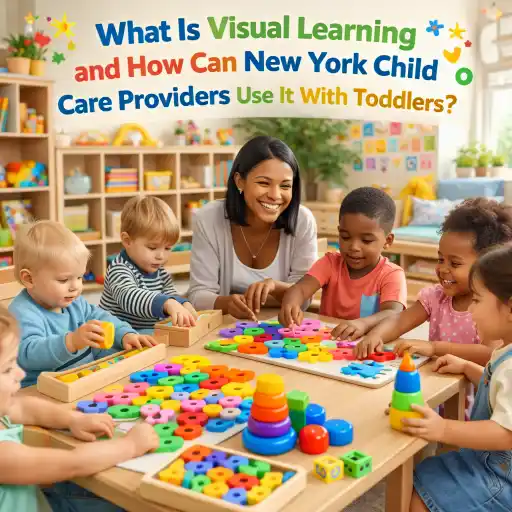
1) Visuals help toddlers make sense of the day faster than long words. 2) A predictable day lowers worry and helps children join activities. 3) Visual tools help children try tasks on their own and build #independence.
Why it matters:
1. Toddlers are learning language and memory. Pictures and photos give clear clues about routines and choices. See why visuals calm transitions in How can visual schedules help preschool classrooms run more smoothly?.
2. Visual learning supports children who speak different languages or who need extra help with talking. For ideas on language supports with very young children, see Language Modeling With Dual Language Learning Toddlers Buy Now $0.00.
🌐 Supporting dual language learners: For staff working with toddlers who speak different languages at home, ChildCareEd's Building Bridges for Dual Language Learners  Buy Now $16.00 is a 2-hour online course covering how to use visuals, gestures, and language modeling strategies to support communication and learning for children navigating two languages — a natural complement to the visual schedule and choice board tools described in this guide.
3. Visuals are low-cost and fit most classrooms. They also follow safe, evidence-based practice.
What does visual learning look like in a toddler classroom?
1) Visual schedule: A simple chart showing the order of the day with photos or icons at child eye level. Use a pocket chart, flip book, or a clipboard with a photo of the group routine. For templates and printable visuals, visit Visuals for class schedule and activities Buy Now $0.00.
2) Choice boards and First–Then supports: These show two steps—what happens first and what comes next. They are great for waiting and small transitions. See ideas in Resources for Managing Behaviors.
3) Real photos and objects: Use pictures of your room, your sink, and the children doing tasks. Real images are easier for little learners to match to the real place or item.
4) Labels with pictures: Put photo labels on cubbies, bins, and shelves so children can find and return items by themselves. This builds #visual skills and helps with clean-up.
5) Learning corners: Arrange zones with clear pictures for each area (reading, blocks, art). Good room design supports attention and calm; read tips at Designing Learning Spaces that Inspire Curiosity, Not Chaos.
How do I make and teach visual supports that actually work?
- 📸 Choose the scope: whole day, part of day, or a simple task chart.
- ✂️ Use real photos when possible. If not, clear icons or pictures are fine. Keep the number short: 6–8 main parts for a toddler day.
- 🔧 Make it changeable: Velcro, magnets, or binder rings let you swap activities quickly.
- 😊 Teach it: Model checking the chart, give 5- and 1-minute warnings, and let children move the card when an activity is done.
- 🔁 Repeat daily: Practice at the same time each day until it becomes routine for the children and staff.
Simple teaching script you can use:
- Provider: "We start at circle." (point to the picture) 5 minutes later: "Five more minutes until circle." (point again)
- When done: Provider and child move the card together and say, "Circle done. Blocks next."
Tip: Train all staff to use the same short phrases and gestures. Consistent language helps toddlers connect pictures, words, and actions—see general ideas about learning styles and multiple ways to teach at Learning Styles. Keep your notes simple and collect one number each day (for example, how many times a child used the schedule) to see progress.
How do I work with families, follow New York rules, and avoid common mistakes?
1) Partner with families:
- 🤝 Start with strengths: Share one positive observation first (e.g., "Lina smiled when she moved her card").
- 📷 Send a photo of the schedule or a quick picture of the day home so families can use the same visuals.
- 📞 Ask what calms the child at home and add those ideas to the plan.
2) Follow rules and safety: State systems differ—state requirements vary - check your state licensing agency. Use national safety guidance like Caring for Our Children when planning spaces and storage.
3) Common mistakes and how to avoid them:
- 🛑 Mistake: Too many pictures. Fix: Keep 6–8 clear steps for toddlers.
- ⚠️ Mistake: Different words from different staff. Fix: Pick one short phrase per routine and train the team.
- 🔁 Mistake: Not practicing. Fix: Model the chart for 2–3 minutes each day and praise attempts.
4) Measure success in 3 steps:
- Pick one skill (e.g., child moves their card at transition).
- Count occurrences each day for 2 weeks.
- Share results with staff and families; keep what works.
📋 Developmental screening and progress tracking: To help staff connect visual learning observations to broader developmental goals, ChildCareEd's Developmental Screening in Early Childhood Buy Now $16.00 is a 2-hour online course covering how to observe, document, and communicate developmental progress to families and specialists — directly supporting the measure-success steps and family partnership approach outlined in this article.
FAQ
- Q: How many pictures should a toddler schedule have? A: 6–8 main parts of the day.
- Q: Where should I place the schedule? A: At child eye level in a consistent spot.
- Q: Which pictures are best? A: Real photos of your room and routines work best for toddlers.
- Q: What if a child ignores the schedule? A: Teach it in short practice sessions and pair it with praise or a small reward.
- Q: Do visuals help children with special needs? A: Yes—visuals support many learners, including Dual Language Learners and children with autism. See PECS resources like the Indiana guide at What is PECS?.
Conclusion
Visual learning is an easy, practical way to help toddlers feel safe, join activities, and build skills. Start small: one simple picture schedule, real photos, and consistent, short words. Train staff, share with families, and collect one quick number each day to watch progress. For ready-made visuals and how-to tips, use ChildCareEd resources such as visual schedule how-to and printable visuals Buy Now $0.00. You are doing important work—small, steady steps will help your toddlers feel safer and more able to learn. #visual #toddlers #schedules #communication #independence
- Birth to Five CDA Credential with Portfolio Review
- CDA Bridge Bundle: Preschool
- Pediatric RSV First Aid & CPR/AED
- CDA Infant/Toddler Credential with Portfolio Review
- CDA Bridge Bundle: Family Child Care
- CDA Bridge Bundle: Family Child Care without Portfolio Review
- CDA Bridge Bundle: Infant/Toddler without Portfolio Review
- CDA Bridge Bundle: Preschool without Portfolio Review
- CDA Bridge Bundle: Infant/Toddler
- Texas Director Credential
- Proporciones de Cuidado Infantil y Tamaños de Grupo por Edad en Maryland (Guía Rápida para Centros y Hogares)
- Proporciones de Cuidado Infantil y Tamaños de Grupo por Edad en Virginia (Guía Rápida para Centros y Hogares)
- What age-appropriate learning activities should we use for infants, toddlers & preschoolers in New York?
- How can reading aloud build literacy in New York toddler rooms?
- How can New York childcare providers build self-confidence in toddlers?
- What Is Visual Learning and How Can New York Child Care Providers Use It With Toddlers?
- How can New York childcare workers help children build a strong sense of identity in a big city?
- What Should We Do When a Child in New York Daycare Arrives Exhausted Every Day?
- How can I support a child in New York childcare who refuses to speak to any adult?
- What are the best infant care practices for New York child care providers?
- What Does New York’s Free 2-K Rollout Mean for Child Care Providers and How Can You Prepare?
- How can we help Two-Year-Olds and Families Adjust to Year-Round 2-K in New York?
- How can New York providers bridge the summer gap with year-round learning?
- How Can New York Providers Support Health, Family, and Learning Together?
- How can New York child care providers safely celebrate National Ice Cream Day with fun activities?
- How can New York child care providers use the science of reading to boost early literacy?
- How can I build a nature-based curriculum for my New York program?
- How can we manage nap and rest time in small New York child care spaces?
- What Does the CoComelon Debate Mean for Providers — How Should We Manage Screen Time for Toddlers?
