Developmentally Appropriate Practice (DAP) is a simple idea that helps teachers plan learning that fits each child. DAP means choosing activities that are right for a child’s age, their own needs, and their family culture. Use DAP to guide daily choices about play, routines, and how you respond to behavior. For a clear overview and practical tips, see What Is Developmentally Appropriate Practice in Modern Classrooms? from ChildCareEd.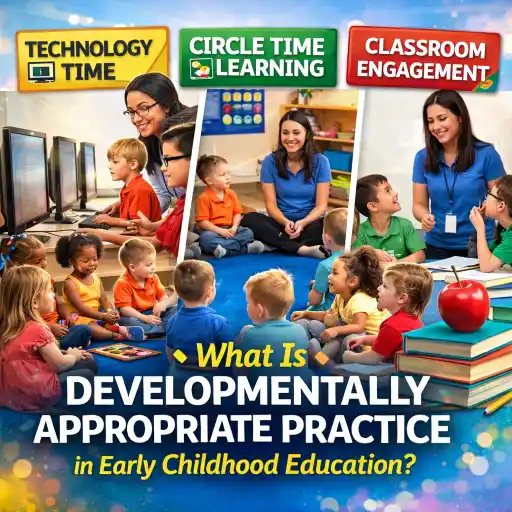
This article is for child care providers and directors. It uses short lists and clear steps you can use today. You will see links to helpful lessons and trainings from ChildCareEd and trusted resources like the NAEYC overview and the OECD report. Remember: state requirements vary - check your state licensing agency.
Key words to remember: #DAP #children #play #inclusion #assessment
How do we decide what is "developmentally appropriate"?
Deciding what is appropriate means thinking about three things. Use these steps each time you plan:
- Age-appropriate: Ask, "What can most children this age do?" (For tools and age guides, see Mastering DAP.)
- Individual-appropriate: Observe each child. What are their interests, strengths, and needs? Use quick notes or photos to keep track.
- Culturally-appropriate: Ask if activities match families’ languages and traditions. Add books, songs, and foods that reflect children’s homes (see Inclusive Practices).
Try this short routine when you choose an activity:
- 😊 Observe for 5–10 minutes to find interests.
- Set 1–2 clear goals (language, social skills, motor).
- Plan 2 ways to join: easier and harder so several ages can play together.
Use assessment tools that fit everyday play. For example, the DRDP helps record progress and plan next steps (DRDP (2015)).
How do I plan lessons and set up the room using DAP?
Planning with DAP is practical and flexible. Follow these steps to make your classroom welcoming and learning-focused:
- Observe first: Watch what children choose and how they play. These observations guide your plan. See How to Create Developmentally Appropriate Lesson Plans for templates.
- Set small goals: Pick 1–2 skills for the week (example: new words or taking turns).
- Design centers: Arrange areas for blocks, art, books, dramatic play, and a sensory table. Rotate materials to keep interest.
- Offer choices: Same activity, different roles for mixed ages. See DAP for Family Child Care
 Buy Now $16.00 for mixed-age tips.
Room setup quick list:
- 📚 Cozy reading corner with bilingual books.
- 🧱 Open block area with clear floor space.
- 🎨 Art table with loose parts and different tool sizes.
- 🌿 Outdoor or active zone for gross motor play.
Use play as your main teaching tool. Research shows play builds language, thinking, and social skills — both free play and guided play work well. For the evidence and ideas, see What Does Research Really Say About the Power of Play?.
Why does DAP matter for children and your program?
Short answer: DAP helps children learn more, feel safer, and get a better start in school. Here are the main reasons it matters:
- Better learning: Children stay engaged when activities match their level and interests. High-quality early learning links to better school outcomes (OECD).
- Strong relationships: DAP encourages warm teacher-child interactions. This builds trust and helps behavior and learning (NAEYC background).
- Equity and inclusion: Thoughtful DAP narrows gaps for children from different backgrounds and abilities. Use inclusive practices and small adaptations so every child can join (Inclusive Practices).
- Staff confidence and program quality: Training and clear practices help staff make consistent choices. Professional development that supports attitudes, skills, and classroom practice leads to better teaching (Whole Teacher approach).
Why this matters to your center leader or director:
- 🧭 DAP gives staff a shared approach for planning and assessment.
- 📈 High-quality DAP links to stronger child outcomes and program reputation.
How do I handle behavior, inclusion, assessment, and avoid common mistakes?
Use DAP-friendly strategies for behavior and inclusion. Here are clear steps and common pitfalls to avoid.
Behavior and guidance (prevention first):
- Organize the room to prevent problems: clear centers, duplicates of popular toys, and visual labels (Behavior Management Techniques).
- Set routines and give warnings for transitions. Use songs, visuals, and short choices to reduce stress.
- Use positive reinforcement: praise specific actions ("You waited your turn—thank you!").
- Offer calm-down corners instead of harsh time-outs.
Inclusion tips:
- 🙂 Same activity, different access: bigger crayons, adaptive scissors, quiet spots.
- 🙌 Partner with families—ask what works at home and include home languages in the classroom (Inclusive Practices).
Assessment and documentation:
- Use short, regular observations: notes, samples, and photos. Link them to goals.
- Choose an appropriate tool like the DRDP for clear ratings and planning (DRDP (2015)).
- Review progress with staff weekly and share with families.
Common mistakes and fixes:
- ❌ Skipping observation. ✅ Fix: schedule a 10-minute observation window daily.
- ❌ Too many goals. ✅ Fix: focus on 1–2 goals each week.
- ❌ Letting screens replace play. ✅ Fix: use tech as one tool, not the core activity.
Quick FAQ:
- Q: How many goals per week? A: 1–2 clear goals work best.
- Q: Can mixed-age groups use the same activity? A: Yes—offer layered roles and materials.
- Q: How do we train staff in DAP? A: Short coaching, peer reflections, and ChildCareEd courses such as DAP for Preschool Buy Now $24.00 and DAP for Family Child Care Buy Now $16.00.
- Q: Where to find evidence to share with families? A: Use ChildCareEd summaries and big reviews like OECD and RAND.
Conclusion
Developmentally Appropriate Practice is a practical way to plan for every child’s growth. Start small: observe, pick one goal, and design play-based activities that let children succeed. Use simple assessments, partner with families, and train staff with focused courses. For ready-to-use tools and lessons, explore ChildCareEd articles and trainings like DAP Delight, The Power of Play, and Behavior Management. Small, steady steps make big differences for children, families, and your team. Remember: state requirements vary - check your state licensing agency.
- 45 Hour Preschool Methods and Materials
- DAP for Preschool
- Children at the Wheel: Emergent Curriculum
- CDA Bridge Bundle: Family Child Care without Portfolio Review
- CDA Bridge Bundle: Infant/Toddler without Portfolio Review
- CDA Bridge Bundle: Preschool without Portfolio Review
- Play, Learn, Grow
- Texas Director Credential
- DAP for Family Child Care
- Every Moment Matters: Schedules and Transitions
- Advocacy for Children
- The Vital Role of the CDA Credential for Virginia's Early Childhood Educators
- CDA Certification en Español: Recursos y Consejos para Educadores Bilingües
- Teaching with Purpose
- Growing Bright Futures: Early Childhood Education in Oklahoma🌟
- Regulaciones de Licenciamiento de Cuidado Infantil en California para Centros y Hogares de Cuidado Infantil Familiar
- Cómo Ser Maestra de Preescolar en Illinois
- Can Early Childhood Programs Use Technology Responsibly to Enhance Learning?
- MyFlorida Child Care Training: How to Find Your Required DCF Courses
- What Certification Do You Need to Teach Pre-K? Public School vs. Child Care Requirements
- What Is the Difference Between Early Childhood Education and Child Development?
- Early Childhood Development Classes: Which Training Hours Do You Actually Need?
- Are You Ready to Be a Lead Teacher? 7 Signs You’re Prepared to Step Up
- Preschool Teacher Requirements in Florida: Do You Need a CDA, FCCPC, or College Degree?
- Special Needs Training for Early Childhood Educators: Which Course Should You Take?
- How Can Child Care Providers Support Healthy Brain Development in Young Children?
- What Should a Useful Early Childhood Lesson Plan Include?
