Introduction
Developmentally Appropriate Practice helps teachers meet children where they are and help them grow. For child care leaders and directors, DAP is a way to plan learning that fits a child’s age, family, and interests. In simple terms, it means using what we know about child #development to make smart choices in the classroom. Learn more from Mastering DAP for a clear overview.
Why it matters:
- Young children learn best through warm relationships and hands-on play.
- Using DAP improves classroom quality and helps children build real skills for school and life, as shown by research and policy guides like the OECD Early Childhood review.
- It supports staff, families, and children to work together to meet goals.
This article uses practical steps, short lists, and examples so you can apply DAP in modern classrooms that include mixed ages, technology, and diverse families. Remember: state requirements vary - check your state licensing agency.
What is DAP and why does it matter?
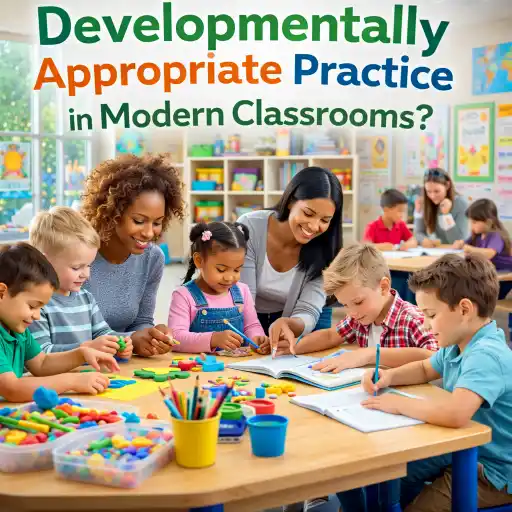
DAP stands for Developmentally Appropriate Practice. It asks us to think about three things when we teach:
- Age-appropriate: What can most children of this age do?
- Individual-appropriate: What does this child need or like?
- Culturally-appropriate: Does this fit the child’s home and family?
Why it matters to your program:
- Better learning: Children stay engaged when activities match their level (ChildCareEd DAP overview).
- Stronger relationships: Teachers who use DAP build trust and help children feel safe.
- Long-term gains: Policy and research show early quality leads to better school outcomes (OECD).
In short, DAP is not one lesson or rule. It’s a guide that helps your team plan the right mix of play, routines, and challenge for every child. Use courses like DAP for Preschool  Buy Now $24.00 to train staff and build shared practice.
How do I design DAP lesson plans and classrooms today?
Designing with DAP means planning clear goals and flexible ways to reach them. Follow these steps:
- Observe first: Watch what children choose and how they play. Use those interests to plan activities (lesson planning guide).
- Set 1–2 clear goals for the week (social, language, or motor skills).
- Plan activities that include play and teacher support.
Try this simple routine when you plan:
- Theme or focus (e.g., gardens).
- Materials list (safe and inviting).
- Three activity options so children at different levels can join.
Examples:
- 😊 Sensory table: water + scoops (toddlers explore textures).
- 🎨 Art station: open-ended collage (preschoolers practice fine motor skills).
- 📚 Story corner: related books in home languages (culturally responsive).
Use space and labels so children can choose and return materials. For more on using play as the foundation for learning, see The Power of Play. Make sure you include mixed-age modifications, as in DAP for Family Child Care Buy Now $16.00.
How do I assess progress and support each child?
Assessment in DAP means noticing, recording, and using what you learn about each child to plan next steps. Use authentic tools—observations, photos, samples of work—and share results with families.
- Observe often: Watch children in natural play. Write short notes or take photos.
- Use simple forms: Checklists and anecdotal notes help you spot patterns (CompSAT observation guidance).
- Choose a reliable tool: Tools like the DRDP help document growth and plan instruction (Benefits of the DRDP).
Steps to turn data into action:
- Review notes weekly with staff.
- Pick 1–2 children to plan individualized supports for (adapt materials, change groupings).
- Share observations with families and ask for their ideas.
Why this helps: Assessment that focuses on strengths leads to better planning and inclusion. For training on identifying learning goals for ages 3–5, try Emergent Learning & Development Buy Now $24.00.
How do I handle behavior, inclusion, and technology using DAP?
Modern classrooms have new challenges: diverse learners, screens, and complex behavior. DAP gives practical, respectful ways to respond.
- Prevent problems by designing the room for success: clear centers, duplicate toys, and visual labels reduce fights and confusion (behavior management).
- Use positive guidance: praise specific actions ("You waited your turn—thank you!"). Avoid harsh time-outs; try calm-down corners instead.
- Support inclusion: adapt activities, work in small groups, and collaborate with families and specialists (Preschool Inclusion resources; Inside an Inclusive Classroom).
- Use technology carefully: choose interactive, educational apps and set limits. Read research summaries like Tech for Tots to guide family conversations.
Common mistakes and how to avoid them:
- 🤔 Relying on one teaching style. Fix: offer choices and layered activities for different ages.
- 😕 Skipping observation. Fix: set a 10‑minute daily observation time.
- 📱 Letting screens replace play. Fix: use tech as one tool among many, not the main activity.
FAQ
- Q: How many goals should I plan each week?
A: 1–2 clear goals work best—focus on quality, not quantity. - Q: Can mixed-age groups use the same activity?
A: Yes—offer different roles or materials so each child is challenged appropriately. - Q: How do I help staff learn DAP?
A: Use short team reflections, in-house coaching, or courses like Mastering DAP. - Q: What if a parent prefers academic drills?
A: Share evidence about play-based learning and show children’s work to illustrate growth (Power of Play).
Conclusion
Developmentally Appropriate Practice is a practical, research-based way to plan programs that help young children thrive. Use observation, simple assessments, play-based activities, and family partnerships. Train staff with short, focused learning and keep policies up to date. For more tools, ChildCareEd offers courses and guides on DAP, lesson planning, behavior, and inclusion—see ChildCareEd.
Key ideas to remember: plan with the child’s strengths in mind, document growth through #assessment, design invites to #play, include every child through #inclusion, and keep learning about #DAP and #development. Small changes each week make a big difference for children and your team.
- Lesson Planning for Preschoolers
- 45 Hour Preschool Methods and Materials
- Children at the Wheel: Emergent Curriculum
- 24 Hour Texas Pre-Service
- CDA Bridge Bundle: Family Child Care without Portfolio Review
- CDA Bridge Bundle: Infant/Toddler without Portfolio Review
- CDA Bridge Bundle: Preschool without Portfolio Review
- Texas Director Credential
- CDA Infants/Toddlers: Stages of Development
- DAP for Family Child Care
- CDA Certification en Español: Recursos y Consejos para Educadores Bilingües
- 😅❌ ¿Cómo Puedo Manejar a un Niño que Dice “¡NO!” a Todo en el Aula?
- 😤💬 ¿Qué Le Digo a un Niño que Acaba de Morder a Otro?
- Que es Título 22 en California?
- ¿Cómo solicito la licencia para una guardería en California?
- Regulaciones de Licenciamiento de Cuidado Infantil en California para Centros y Hogares de Cuidado Infantil Familiar
- Cómo Trabajar en el Cuidado Infantil en California: Requisitos y Pasos
- What Are DAP Guidelines in Early Childhood Education?
- DAP Training for Early Childhood Educators
- How do we build developmentally appropriate programs for young children?
- What Is the Difference Between Early Childhood Education and Child Development?
- Training for Preschool Teachers: What Should You Take After You Meet the Minimum Requirements?
- How Can Child Care Programs Build Meaningful School Readiness?
- Which Positive Guidance Strategies Actually Work in Child Care?
- How Can Child Care Providers Set Clear Classroom Rules and Expectations?
- How Can Positive Guidance Transform Early Childhood Classrooms?
- How Can Child Care Providers Teach Children to Solve Conflicts With Each Other?
- How Can Child Care Programs Build an Effective Social-Emotional Curriculum?
