Cleanup time is rarely just about putting toys away — it’s a rich, teachable moment where children practice sequence, teamwork, and self-regulation. If you want cleanup to be a predictable skill-building routine rather than a daily battle, consider pairing simple classroom strategies with targeted training like Moving About the Classroom: Effective Transitions for Everyday Buy Now $35.00 and practical hygiene training such as Shoo, Germs! Don't Bother Me!  Buy Now $24.00. These courses help you turn brief cleanup moments into measurable learning while meeting health expectations and improving classroom flow.
Why does cleanup time matter — and what invisible skills are at work?
When children put away blocks or wipe a tiny table, you’re watching more than neatness: you’re watching emerging executive skills. Cleanup taps working memory (remembering steps), inhibitory control (stopping play to start a job), fine and gross motor planning, and social skills like turn-taking and helping. These moments also teach practical life skills — responsibility, care for the environment, and basic #hygiene — that support long-term #children outcomes. Because cleanup intersects with health practices, it’s wise to link routines to formal guidance like Health and Safety Orientation Buy Now $55.00 so your team uses safe products and clear sanitation steps.
How can I structure cleanup so it becomes intentional learning?
Make cleanup a mini-lesson: teach 3 clear steps, model once, give child-sized tools, and then step back. Use visuals (photo labels, one-step cards) and rotate helper roles so every child practices planning and sequencing. A short, consistent cue (song, clap pattern) signals the shift and protects time for reflection. Integrate counting, categorizing, or sorting tasks to add measurable learning — for example: “Pick up 4 blue blocks” becomes counting practice while cleaning. These strategies align with transition-focused training such as Every Moment Matters: Schedules and Transitions Buy Now $55.00, which helps you intentionalize brief moments across the day. Remember: state requirements vary - check your state licensing agency when you set cleaning schedules or choose disinfectants.
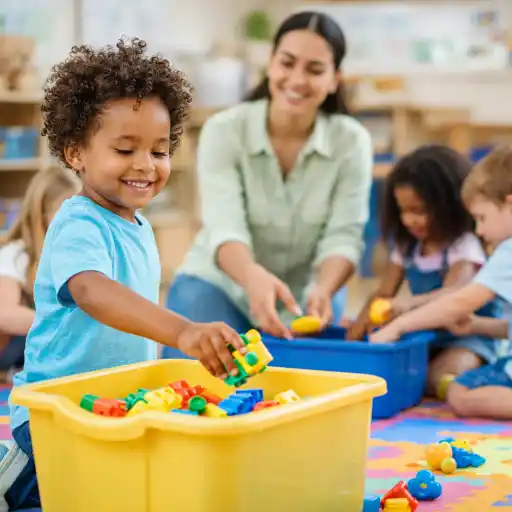
What teaching scripts and games turn cleanup into executive function practice?
Use short, playful formats that build memory and self-control. For example:
- Color Crew: assign each child a color; they return only that color's items — builds sorting and sustained attention.
- Count & Carry: ask children to carry exactly 3 items to a bin — practices working memory and counting.
- 🔔 Cleanup Freeze: play music for tidy movement; stop the music and everyone freezes in place (inhibitory control).
These 1–5 minute games are low-prep, scalable, and strengthen #independence while keeping cleanup predictable. If you want to deepen staff practice about linking transitions and learning goals, the Moving About the Classroom workshop offers classroom-tested activities you can adopt directly (course page Buy Now $35.00).
How do we teach safe, developmentally appropriate cleaning tasks?
Safety first: adults handle strong disinfectants; children use damp cloths, child-sized brooms, or a spray bottle of water. Teach a short health message — "We wipe to keep friends healthy" — to show purpose. Embed 20-second scrubbing practice into handwashing routines and follow CDC cleaning guidance for when to sanitize vs. disinfect (pair these practices with relevant health courses such as Health & Safety Requirements for Childcare Providers Buy Now $79.00). For specific infectious-disease control steps and child-friendly teaching materials, see Shoo, Germs! Don’t Bother Me!. Keep tasks age-appropriate: toddlers can match socks and put blocks in bins; preschoolers can sort, fold, and check a one-item checklist. State requirements vary - check your state licensing agency for approved products and documentation rules.
How can directors avoid common mistakes and make cleanup fair for staff?
Common mistakes include vague directions, asking children to do unsafe tasks, and expecting teachers to deep-clean during child contact time. Avoid these pitfalls by:
- Making written schedules and checklists for daily vs. deep-clean tasks.
- Assigning staff cleaning time during non-child contact hours or rotating duties fairly.
- Training staff on safe product use and supervision (see Health and Safety Orientation Buy Now $55.00 and related courses).
When cleanup plans are explicit and practiced, they become routine learning rather than unpaid labor. Directors can protect staff time while still involving children in meaningful tasks that build #routines and pride.
Conclusion: What should I try tomorrow?
Pick one small experiment: teach one 3-step cleanup task, add a visual label, and practice it for a week. Use a simple game (Color Crew or Count & Carry) and notice one skill change — more waiting, cleaner shelves, or faster transitions. If you want ready-to-use lesson ideas, classroom scripts, and health connections, explore Moving About the Classroom Buy Now $35.00, Every Moment Matters Buy Now $55.00, and Shoo, Germs! Buy Now $24.00 for practical, staff-ready support. Cleanup time is a tiny slice of the day with outsized developmental returns — teacher planning plus a few focused practices will help your children grow real, lasting skills in small, joyful steps. #cleanup #independence #hygiene #routines #children
Selected ChildCareEd courses linked in this article:
- CDA Home Visitor Subject Area 2 Part 3 Birth to 5
- Positive Attention: Interactions and Supervision of Infants and Toddlers: For Workforce Solutions
- From Tantrums to Triumphs: Equipping Preschoolers with Self-Regulation Skills
- Setting the Stage: Story Time
- Pediatric RSV First Aid & CPR/AED
- Positive Attention: Interactions & Supervision for Infants & Toddlers
- Texas Director Credential
- CDA: Stand With Respect and Professionalism
- Every Moment Matters: Schedules and Transitions
- CDA Certification en Español: Recursos y Consejos para Educadores Bilingües
- Recursos en Español sobre el Sueño Seguro del Bebé
- ¿Cómo pueden los equipos de cuidado infantil practicar habilidades rápidas de primeros auxilios en situaciones reales?
- Capacitación en Salud y Seguridad Preventiva en Línea para Proveedores de Cuidado Infantil
- Lista para Guardería en Casa en Illinois: Cómo Iniciar una Guardería en el Hogar
- Capacitación Previa al Servicio para Proveedores de Cuidado Infantil en Dakota del Norte
- Celebrando la amistad en el cuidado infantil durante el Día de los Mejores Amigos
- Canciones, juegos y preguntas de círculo para niños
- What 'Invisible' Skills Do Children Learn During Cleanup Time?
- Preschool Classroom Schedule: A Full-Day Example from Arrival to Pick-Up
- How Can Child Care Directors Use Glow and Grow Feedback With Staff?
- Preschool Schedule That Works: When to Plan Centers, Circle Time, and Outdoor Play
- Childcare Skills for Resume: Turn Everyday Classroom Tasks Into Strong Bullet Points
- How Can Child Care Providers Create a Preschool Schedule That Supports Learning and Well-Being?
- How Can Preschool Routines Create Calmer, More Independent Classrooms?
- How Can Child Care Providers Prepare Children for Invisible Transitions?
- How Does Cleanup Time Reveal Hidden Learning in Early Childhood Classrooms?
- What Are 7 Printable Tools That Save Child Care Teachers Time?
- How Can Child Care Providers Strengthen Food Safety Practices?
- How Can Child Care Providers Help Families See the Learning Hidden Inside Messy Play?
