When preschool routines feel rushed or unpredictable, both children and educators carry the stress. A thoughtful routine can protect play, strengthen #independence, and make daily care more teachable; ChildCareEd’s Every Moment Matters: Schedules and Transitions  Buy Now $55.00 course offers practical professional development for designing smoother transitions and more organized classroom practice. Providers who want a focused companion on self-help skills can also explore Supporting Children’s Independence Buy Now $24.00.
Both courses can help you translate routine challenges into intentional teaching opportunities while building knowledge that may support training goals. State requirements vary - check your state licensing agency.
Why do preschool routines matter beyond keeping the day on schedule?
Preschool routines are repeated learning experiences, not merely systems for adult convenience. Arrival, cleanup, handwashing, meals, toileting, rest, and departure give children opportunities to practice language, motor coordination, memory, cooperation, emotional regulation, and self-help skills. When children know what generally comes next, they can devote more attention to play, relationships, and inquiry.
Research-based guidance consistently connects predictable schedules and routines with security, engagement, autonomy, and reduced confusion. NAEYC describes routines and transitions as essential elements of a supportive classroom, while the CSEFEL guidance on routines and classroom schedules emphasizes balancing activities, considering children’s attention spans, and using choices and visual cues.
Predictability should not become rigidity. A developmentally appropriate routine has dependable anchors but allows educators to respond to weather, staffing, children’s interests, cultural practices, and individual needs. The goal is a rhythm children can recognize—not a clock that controls every interaction.
- Build the day around consistent anchors such as arrival, meals, outdoor play, rest, and departure.
- Balance active and quiet experiences, child-led and teacher-guided learning, and whole-group and small-group opportunities.
- Plan transition time explicitly rather than treating it as invisible labor.
- Observe whether the routine supports children’s participation, not just adult efficiency.
How should providers design a preschool routine that is predictable and flexible?
Begin with the broad sequence of the day. A schedule describes major experiences; a routine describes the steps children follow within those experiences. For example, “snack” is part of the schedule, while washing hands, finding a seat, serving food, talking with peers, clearing dishes, and wiping the table form the routine.
The Virtual Lab School identifies free-choice time, outdoor time, large-group activities, small-group activities, transitions, and routines as important elements of an effective preschool schedule. Protect extended play periods whenever possible. Children need enough uninterrupted time to select materials, develop an idea, solve a problem, and return to it after interruption.
A practical full-day rhythm might include:
- Arrival, greeting, belongings, and calm table choices
- Brief morning meeting with songs, movement, and a preview of the day
- Extended centers with teacher observation and small-group invitations
- Cleanup, hygiene, and snack
- Outdoor play or indoor gross-motor play
- Lunch, rest, and quiet alternatives
- Afternoon centers, movement, snack, and family-centered departure
Use time ranges rather than overly precise promises. A schedule that says “centers from 9:00–10:15” can accommodate meaningful play, while a rigid minute-by-minute plan may force children to stop just as learning becomes rich. Review the routine with children at arrival and explain changes in advance whenever possible.
How can visual supports make routines easier for preschoolers to follow?
Young children often understand sequence through concrete experience and images before they understand written schedules or clock time. A picture schedule makes the day visible: children can see what is happening now, what comes next, and when a preferred activity will return. Visual supports can be especially useful for children learning English, children with language or memory differences, and children who experience transitions as stressful.
To create a useful visual schedule, begin with four to eight major activities. Use photographs of the actual classroom when appropriate, or select simple icons and pair them with words. Post the schedule at children’s eye level in a consistent location. Add a movable marker, such as a star or clothespin, so children can identify the current activity.
- Introduce each image and model how to check the schedule.
- Point to the schedule before and after major activities.
- Invite children to move a card or mark an activity as complete.
- Use a First–Then board when a child needs a shorter, individualized sequence.
- Prepare a change card or brief explanation for unexpected events.
ChildCareEd’s guide on creating and implementing a visual schedule recommends clear symbols, a consistent location, regular review, and flexibility. Avoid overloading the board with every small step. A three- to five-picture sequence is often more useful than a crowded display.
Which teacher strategies make transitions calmer and more instructional?
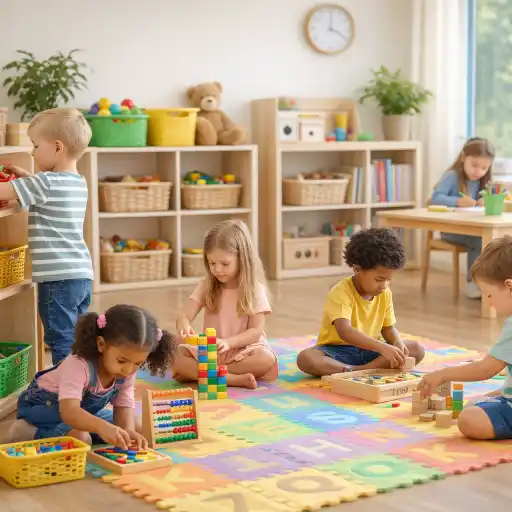
Transitions can be challenging because children must stop meaningful activity, shift attention, remember several steps, and often wait. These demands are substantial for developing self-regulation. Rather than interpreting difficulty as defiance, ask whether the transition is sufficiently taught, visually supported, and paced for the group.
Use the same short sequence each day:
- Give a five-minute warning and name the next activity.
- Give a one-minute cue and point to the visual schedule.
- Use one familiar song, bell, rhyme, or movement pattern.
- Assign small jobs such as shelf checker, basket carrier, or schedule helper.
- Move children in small groups when safe instead of creating long waiting periods.
- Describe the specific behavior you notice: “You checked the picture, returned the blocks, and walked safely.”
Transitions become more successful when children have something meaningful to do. Count objects while cleaning, carry a message to another educator, practice animal movements, or sing a song connected to the next experience. These strategies preserve learning while reducing idle time.
🔔 A child who rings the transition bell or moves the schedule marker is practicing responsibility, sequencing, and community participation—not merely helping an adult.
When a transition repeatedly breaks down, examine the environment and the plan. Are materials labeled? Are shelves reachable? Is the direction too long? Are children waiting while adults complete tasks? The Head Start classroom-transitions resource provides planning materials that teams can use for reflection and staff discussion.
How can routines promote independence while honoring individual differences?
Independence develops through supported participation. Children should have genuine opportunities to attempt tasks, but expectations must match their developmental abilities, physical access, communication styles, and emotional readiness. A child who needs extra time, a visual prompt, adaptive equipment, or a bilingual cue is not receiving an unfair advantage; that support creates a fair opportunity to participate.
Break routines into small, observable steps. For handwashing, children might turn on the water, wet hands, use soap, scrub, rinse, turn off the faucet, and dry hands. Teach one or two steps at a time, model them, offer a brief prompt, and gradually reduce assistance. Specific encouragement is more informative than general praise: “You looked at the picture and found the towel.”
- Use low hooks, reachable shelves, labeled bins, step stools, and child-sized tools.
- Offer two meaningful choices instead of a long list.
- Provide individual picture schedules or First–Then boards when needed.
- Respect children who observe before joining an activity.
- Coordinate routine language with families and colleagues.
- Document progress through brief, strengths-based observations.
Family partnership strengthens consistency. Ask what helps a child manage dressing, meals, sleep, or separation at home. Share a short picture sequence or one practical suggestion rather than sending a lengthy directive. Also remember that state requirements vary - check your state licensing agency when adapting schedules, supervision plans, rest practices, or documentation procedures.
What common mistakes make preschool routines less effective?
Many routine problems are design problems rather than child problems. When adults rush, change cues frequently, or expect children to remember procedures that have not been taught, frustration is predictable. A reflective team can adjust the environment and adult practice before adding consequences.
- Too many expectations at once: Choose one or two priority routines and teach them explicitly.
- Long explanations: Replace lectures with modeling, pictures, rehearsal, and brief reminders.
- Inconsistent adult language: Agree on common phrases for cleanup, waiting, help-seeking, and transitions.
- Too much waiting: Stagger handwashing, offer quiet choices, and assign helper roles.
- Rigid timing: Preserve the sequence while adjusting the length of an activity when children need more time.
- Doing everything for children: Pause, provide one prompt, and allow a reasonable opportunity to try.
- Using a calm area as punishment: Teach it as a voluntary regulation space with supportive materials.
Use observation to identify patterns. If children struggle before lunch, consider hunger, crowded pathways, insufficient transition buffers, or unclear hygiene steps. If one child struggles at arrival, explore separation stress, sensory overload, language differences, or a need for a more individualized welcome.
Directors can support implementation through brief staff huddles, shared scripts, visual examples, and regular review. The question is not whether the routine looks perfect on paper; it is whether children and adults can follow it with dignity, safety, and reasonable calm.
Conclusion: How can preschool routines create calmer, more independent classrooms?
Effective preschool routines combine predictability with responsiveness. Anchor the day with familiar experiences, protect long periods of play and outdoor learning, teach each routine through modeling and practice, and use visual supports so children can anticipate what comes next. Make transitions brief, purposeful, and consistent across adults.
Most importantly, treat routines as curriculum. Children are learning to communicate, cooperate, regulate emotions, care for their bodies, solve problems, and contribute to a community. When educators provide accessible environments, realistic expectations, specific encouragement, and family partnership, small daily actions gradually become confident participation.
For continued professional learning, consider ChildCareEd’s Every Moment Matters: Schedules and Transitions Buy Now $55.00, Supporting Children’s Independence Buy Now $24.00, Moving About the Classroom: Effective Transitions for Everyday Buy Now $35.00, Classroom Setup for Child Care Buy Now $24.00, and Student Success: Expectations & Independence Buy Now $16.00. Each offers a different entry point for strengthening classroom practice.
Quick FAQ
- How many activities should a preschool visual schedule show? Begin with approximately four to eight major parts of the day and add detail only when children need it.
- What should teachers do when the schedule changes? Explain the change briefly, show a replacement picture or symbol, and identify what will happen next.
- How long should transition warnings be? A five-minute warning followed by a shorter cue is a useful starting point, but adjust to the group and activity.
- What if a child refuses a routine? Co-regulate first, offer two small choices, reduce the task to one achievable step, and try again without shame.
- How can directors improve consistency? Develop shared scripts, practice routines during staff meetings, observe implementation, and revise the plan collaboratively.
- CDA Preschool Credential
- Lesson Planning for Preschoolers
- CDA Preschool Credential with Portfolio Review
- Building Equity: Inclusionary Practices in Preschool
- From Tantrums to Triumphs: Equipping Preschoolers with Self-Regulation Skills
- CDA Bridge Bundle: Preschool
- Emergent Learning & Development
- Texas Director Credential
- 45 hour Growth and Development Birth-age 12 ONLINE
- Every Moment Matters: Schedules and Transitions
- What Makes Me Special: An Overview of Autism and ADHD
- 10 Ejemplos de Cómo la Cultura Influye en el Desarrollo Infantil
- How can preschool teachers use simple classroom management techniques that really work?
- Canciones, juegos y preguntas de círculo para niños
- How can we develop classroom routines that preschoolers can follow?
- How Can Early Childhood Providers Help Young Children Build Real-World Social Skills?
- How do you build a classroom that encourages independent thinking?
- Is the Lost Art of Letting Children Figure It Out Worth Rediscovering?
- How Can Early Childhood Educators Teach Gratitude in Authentic, Age‑Appropriate Ways?
- Why Do Classroom Management Strategies Fail With 3-Year-Olds—and What Works Instead?
- Preschool Classroom Routines: What Should You Teach During the First Week?
- How Can Child Care Providers Create a Preschool Schedule That Supports Learning and Well-Being?
- How Can Preschool Routines Create Calmer, More Independent Classrooms?
- What Are the Best Print-and-Play Activities for Substitute Teachers?
- How Can Visual Schedules Make Early Childhood Classrooms More Predictable and Inclusive?
- Which Printable Activities Belong in Every Preschool Classroom?
- What Should a 3-Year-Old Be Learning at Preschool?
- What Is Positive Reinforcement in Early Childhood Education?
- How Can a Classroom Sound Map Reveal Unexpected Noise Hotspots?
