A child’s favorite corner, toy, or pretend scenario can offer clues about how they explore ideas, communicate, and connect with others. Use Make Parent Communication Easy: All About My Preschooler Buy Now $1.49 to gather family insights about favorite toys and activities, then compare those details with what you observe during classroom play. For guidance on documenting observations and using them to plan responsive experiences, explore Observing & Assessing in Child Care  Buy Now $16.00. Role of Play in Learning Buy Now $16.00 offers a broader foundation for understanding learning through play. Read on for ways to use children’s preferences as starting points for exploration while staying open to changing interests.
Why do play preferences matter for teaching?
Play choices are meaningful evidence, but they are not a complete profile of a child. What children choose may reflect curiosity, prior experience, available materials, relationships, cultural context, temperament, or a desire for a particular kind of challenge. Looking at repeated choices over time gives educators a richer basis for understanding what holds a child’s attention and how they approach learning.
Research has explored connections between favored play and the emotional and cognitive dimensions of learning. Gmitrova, Podhajecka, and Gmitrov reported that children’s preferred pretend-play experiences may be useful contexts for engaging learning, while also identifying group patterns in their particular study. Those findings should not become gender-based expectations: individual children’s interests vary, and classroom opportunities influence what children can explore.
Observation helps teachers move beyond assumptions. NAEYC’s guidance on using observation to guide teaching emphasizes watching and listening intentionally, documenting what children do, and using evidence to adjust teaching strategies and design experiences. The goal is not to label a child as “a builder” or “a pretend-play child,” but to ask what their current play might be telling us.
- Notice what captures attention, invites persistence, or brings visible enjoyment.
- Consider the setting, materials, peers, language, and adult interactions around the play.
- Use preferences as a starting point for responsive planning—not a limit on future learning.
What can different kinds of play reveal?
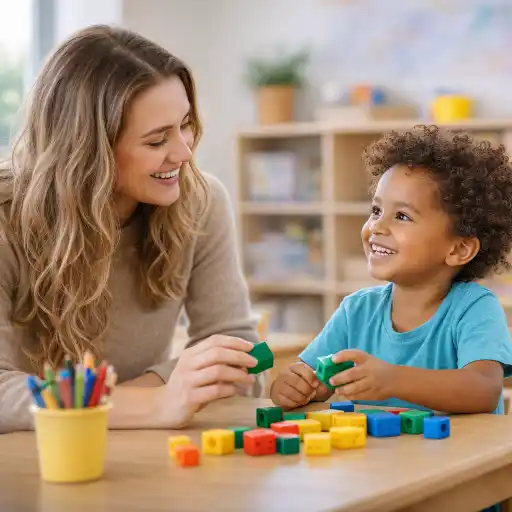
Different forms of play make different kinds of thinking easier to observe. In construction play, children may compare sizes, test stability, plan sequences, solve problems, and negotiate shared designs. In dramatic play, they may use language to assign roles, develop narratives, represent familiar events, and practice perspective-taking. Research on pretend play identifies links with social, linguistic, and cognitive processes, while recognizing that the precise nature of those relationships remains an area of study.
Art, sensory, movement, and object play also offer valuable clues. A child repeatedly pouring and transferring materials may be exploring cause and effect, coordination, or volume. A child who creates songs while playing may be experimenting with rhythm, memory, and expression. These are possibilities to investigate, not conclusions to reach from one episode.
Keep observation specific and neutral. Instead of writing, “Ari loves science,” record: “Ari returned to the water table three times, filled two containers, poured them into a narrow tube, and said, ‘This one goes faster.’” That description preserves useful evidence and leaves room for additional interpretations.
- Construction play may reveal planning, spatial reasoning, persistence, or collaboration.
- Pretend play may reveal symbolic thinking, storytelling, role negotiation, and social knowledge.
- Repeated sensory or movement play may reveal questions about materials, physical sensations, or action and outcome.
How can teachers observe preferences without making assumptions?
Look across several days and contexts. A single choice may be shaped by who is present, what materials are available, a recent experience, or the child’s energy that day. Researchers studying early interest development note that a child’s activity patterns over time can offer a more useful picture than time spent in a single area on one occasion. Track recurring interests, but remain alert to new ones.
Choose a focused question before observing, such as “How does this child enter peer play?” or “What strategies does this group use when a structure falls?” Record the date, setting, materials, actions, exact words when possible, and relevant interactions. Brief anecdotal notes are often sufficient; documentation should support teaching rather than take attention away from children or active supervision.
Interpret notes as hypotheses, not verdicts. “Did not join the game” does not necessarily mean “not social”; the child may be watching, unsure of the rules, or waiting for a familiar peer. Consider communication in home languages, gestures, movement, and quiet participation. Invite a colleague’s or family’s perspective when context is unclear. NAEYC’s discussion of planning for individuality highlights observation and family relationships as ways to understand children’s strengths, interests, and experiences.
- Look for patterns across times, play areas, and social groupings.
- Write what you saw or heard before adding an interpretation.
- Ask families what the child enjoys or talks about at home, while respecting privacy and family preferences.
- Do not treat a play choice as a diagnosis or a fixed description of ability.
How can a play preference inform responsive planning?
Once you have noticed a recurring interest, you can enrich the environment without taking ownership away from the child. If children repeatedly build roads, add maps, signs, clipboards, vehicles, and pictures of bridges. If a group returns to a pretend restaurant, provide menus, order pads, containers, and books connected to food and community roles. These additions create openings for new vocabulary, early mathematics, collaboration, and inquiry while keeping the play meaningful.
Think of planning as a cycle: observe, document, interpret, offer a thoughtful extension, and observe again. A classroom inquiry into a child’s interest should not become a rigid script. Educators can introduce one or two materials or open-ended prompts, then follow the children’s ideas. The Eastern Connecticut State University account of following children’s interests illustrates how children’s spontaneous music play developed into a collaborative classroom project.
Preferences can also help teachers create bridges between children. A child who usually builds alone might find a comfortable invitation to collaborate when construction materials are placed near a peer’s play. A child who enjoys pretend scenarios may bring peers into a shared story. NAEYC describes how thoughtful materials and room arrangement can support socialization and cooperative play while honoring individuality.
- Offer open-ended materials that deepen an existing investigation.
- Connect play to books, language, counting, drawing, movement, or family knowledge where the connection feels natural.
- Provide different ways to participate: talking, pointing, building, observing, drawing, or joining a role.
- Notice whether the extension sustains curiosity; adapt or remove it if children take the play elsewhere.
How can teachers honor individual, cultural, and developmental differences?
Children’s preferences develop within relationships and environments. Home experiences, culture, language, access to materials, disability, temperament, and previous opportunities can all shape what feels familiar or inviting. A classroom that offers varied, inclusive materials gives children more ways to express existing interests and discover new ones. Representation matters: dramatic-play props, books, dolls, and images should reflect varied cultures, identities, abilities, and family structures without reducing any child to a token example.
Make participation flexible. A child may prefer to watch before trying, play alongside peers rather than directly with them, communicate through gestures, or return to a familiar activity for comfort. These patterns deserve curiosity, not pressure. Offer invitations and supports—visual choices, adapted tools, a familiar peer, or additional time—while recognizing each child’s agency. If a preference seems unusually narrow or is accompanied by concerns about participation or development, document observations across contexts and follow program procedures for partnering with families and seeking appropriate guidance. Do not diagnose from play alone.
Providers and directors can make responsive practice sustainable by giving staff time to share concise observations and plan small environment adjustments. State requirements vary - check your state licensing agency when curriculum, assessment, or documentation rules apply. For additional professional learning, explore Children at the Wheel: Emergent Curriculum Buy Now $25.00, Preschool Assessments & Observations Buy Now $24.00, and The Best Promotion is Play Buy Now $24.00.
What common pitfalls should educators avoid?
Following children’s interests is thoughtful teaching, not simply providing whatever a child asks for or abandoning curriculum goals. A strong response connects children’s ideas with developmentally appropriate opportunities while preserving choice. Several common missteps can narrow what play preferences help us learn.
- ⚠️ Avoid turning one favorite activity into a permanent label; preferences change and children benefit from varied experiences.
- Do not infer ability, motivation, or emotion from a single choice. Record observable evidence and revisit your interpretation.
- Do not use research group averages to predict an individual child’s interests or to reinforce gender stereotypes.
- Do not steer play toward an adult’s intended outcome so quickly that the child’s question disappears.
- Do not document only difficulties; include curiosity, joy, competence, persistence, and peer connection.
- Do not let note-taking compromise supervision, confidentiality, or children’s uninterrupted play.
When play moves in an unexpected direction, pause before calling the plan unsuccessful. The shift may reveal a more compelling question or a different way children are making meaning. Discuss observations with colleagues, compare interpretations, and make one manageable adjustment. A strengths-based approach treats the teacher as a careful listener and responsive partner—not the sole author of the learning.
Conclusion: What can preschool teachers learn from play preferences?
Play preferences can help preschool teachers notice children’s emerging questions, strategies, relationships, communication, and sources of motivation. Their meaning becomes clearer when educators observe patterns across time and contexts, record specific actions and words, and interpret evidence with humility. What a child chooses is an invitation to learn more, not a label or a limit.
Use what you notice to make thoughtful adjustments: add materials, offer an open-ended prompt, create a welcoming way to join peers, or connect play to a child’s home and community experiences. Then observe again and let children’s responses guide the next step. By combining intentional observation with flexible, inclusive planning, providers and directors can turn everyday play into a richer understanding of each child—and more meaningful classroom experiences.
- 45 Hour Child Growth and Development
- Bienvenido! Welcoming All Families
- Pediatric RSV First Aid & CPR/AED
- CDA Bridge Bundle: Family Child Care without Portfolio Review
- Art from the Heart for Preschoolers: Open Ended Art Projects that Build Self-Esteem
- CDA Bridge Bundle: Infant/Toddler without Portfolio Review
- CDA Bridge Bundle: Preschool without Portfolio Review
- CDA Home Visitor Credential Birth to 5
- Texas Director Credential
- 10 Ejemplos de Cómo la Cultura Influye en el Desarrollo Infantil
- Celebrando la amistad en el cuidado infantil durante el Día de los Mejores Amigos
- Toddler Classroom Schedule: A Full-Day Example from Drop-Off to Pick-Up
- Dr. Seuss Book List for Teachers: Easy Ways to Use It for Story Time and Learning
- First Week of Pre-K Activities That Help Children Feel Comfortable
- First Week of Pre-K Lesson Plans: What Can You Learn About Your New Class?
- How Can Child Care Providers Help Families Understand Play-Based Learning?
- How Can Child Care Providers Design Learning Centers That Support Play and Development?
- How Can Child Care Programs Make Physical Activity a Daily Practice?
- How Can Child Care Providers Help Families See the Learning Hidden Inside Messy Play?
- What Should a 2-Year-Old Be Learning at Daycare?
- How Can Preschool Teachers Recognize and Respond to Sensory Overload in the Classroom?
- What Questions Should You Ask Families Before a Preschooler’s First Day?
- How Can Child Care Providers Support Kindergarten Emotions on the First Day of School?
- Getting to Know Toddlers: The Questions That Help Teachers Support Their Needs
- How Can Children’s Preferences Encourage Early Reading?
- How Can You Plan Developmentally Appropriate Activities for Preschoolers?
- When Families and Teachers Mean Different Things by “A Good Day,” How Can They Find Common Ground?
- What Are Loose Parts, and How Can Teachers Use Them Safely?
- What Can Preschool Teachers Learn from a Child’s Play Preferences?
