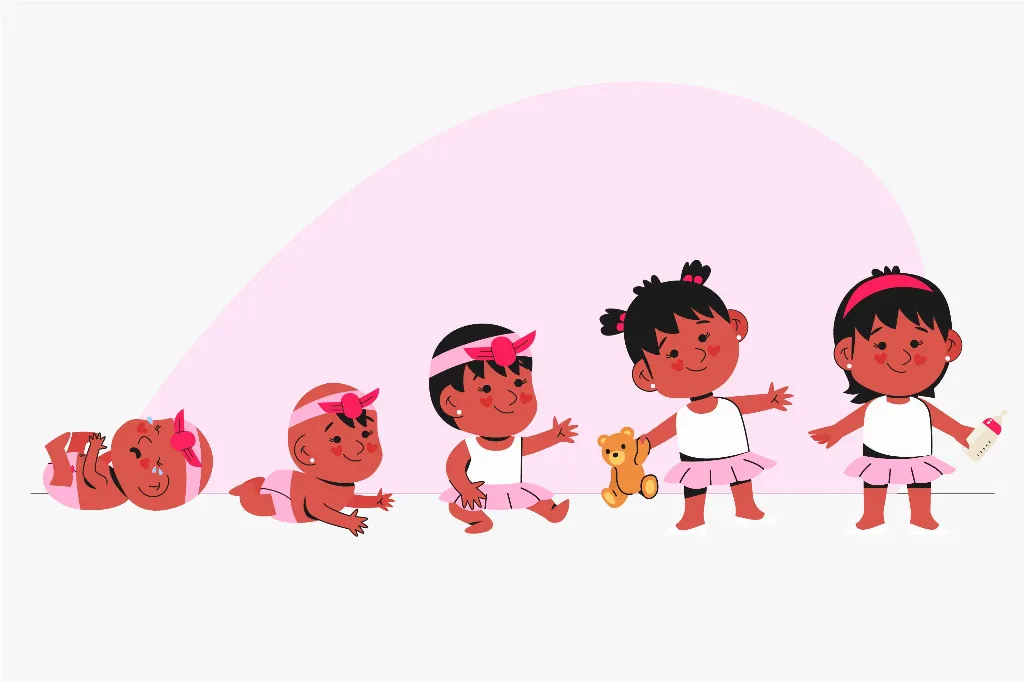
 Understanding child development helps teachers notice children’s strengths, support learning, and talk with families in a caring way.
In early childhood, children grow at different speeds, but there are still common milestones that help us know what is usually expected. When a child’s growth seems very different from what is typical, it may be a sign that the child needs extra support.
This article explains the difference between typical and atypical development, what warning signs to watch for, and what child care providers should do next. #ChildDevelopment #Milestones #EarlyIntervention
What is the difference between typical and atypical child development?
Typical development means a child is learning skills within the usual range for their age. These skills may include walking, talking, playing, learning, and getting along with others. Not every child does everything at the exact same time, so a range is normal. ChildCareEd’s age-based milestones articles explain that typical development is about patterns over time, not one perfect age for every skill.
Atypical development means a child’s growth looks very different from what is expected. This may look like delayed speech, little interest in other people, loss of skills, unusual movement, or very limited play. Atypical does not mean a child is “bad” or “wrong.” It means the child may need closer observation, added support, or a screening by a professional. ChildCareEd’s Typical & Atypical Development in ECE course is built around helping providers understand these differences and know when to refer a child for more help.
A good reminder is this: milestones are guides, not labels. They help teachers notice concerns early, but they do not replace a medical diagnosis.
What warning signs should child care providers watch for?
It is important to look for patterns, not just one hard day. A child may be tired, upset, or having an off day. What matters more is what happens again and again over time.
Here are some examples of red flags by age:
- Infants: not smiling, not responding to sounds, very stiff body, or very floppy body
- Toddlers: very few words, no pointing or gestures, loss of words or skills, or very repetitive play
- Preschoolers: speech that is hard to understand, little interest in playing with others, or slow progress with self-help skills like dressing or toileting
One very important warning sign is losing skills a child already had. That should always be taken seriously. Your draft highlighted this clearly, and it is one of the strongest points in the article.
You do not need to panic when you notice a concern. The goal is to stay calm, observe carefully, and gather facts.
How can teachers observe and document concerns clearly?
Observation is one of the most helpful tools in child care. Good notes can make family conversations easier and can help a doctor or specialist understand what is happening.
A strong observation note should include:
- the date and time
- where the behavior happened
- what the child did
- what happened before and after
- how often it happens
Try to write facts, not labels. For example, write:
- “Mila did not respond when her name was called four times during circle time.”
Do not write:
- “Mila is ignoring the teacher.”
Fact-based notes are clearer and kinder. ChildCareEd’s Preschool Assessments & Observations  Buy Now $24.00 course teaches providers how to make objective observations, choose assessment tools, and notice signs that may lead to a referral. The Observing & Assessing in Child Care Buy Now $16.00 course also focuses on tracking development and using observations to support learning plans.
A helpful ChildCareEd resource for this topic is: Developmental Milestones. All Ages Buy Now $0.00
This resource explains milestones across ages and shows how milestones can help caregivers notice possible delays or disorders and give the right support.
How should you talk to families about a possible concern?
These talks can feel hard, but they matter. Families deserve honest and caring communication. It is best to start with strengths, then share specific observations, and then talk about next steps.
You might say:
- “Ella is so curious and loves books.”
- “I have also noticed she is not using as many words as other children her age.”
- “I wanted to share that with you and ask what you are seeing at home.”
This kind of conversation helps families feel supported instead of judged. Keep your words simple. Avoid diagnosing. Stay focused on what you have seen.
Helpful tips for family talks:
- begin with something positive
- share 2–3 clear examples
- ask what the family sees at home
- avoid labels or scary language
- offer resources and a next step
A related ChildCareEd article that fits well here is:
Typical vs. Atypical Child Development
It explains the difference between typical and atypical development and how providers can support children’s growth and early intervention.
What should you do if you think a child may need extra help?
If concerns keep showing up, take small, clear steps. You do not need to diagnose the child. Your role is to observe, document, support, and refer.
A simple plan looks like this:
- keep dated notes for several weeks
- compare your notes to milestone guidance
- talk with the family in a caring way
- suggest the family speak with the child’s doctor
- encourage a developmental screening if needed
- keep supporting the child in the classroom
This matters because early help can make a big difference. Your original draft focused on taking action early instead of waiting too long, and that is exactly the right message.
Which ChildCareEd courses fit this topic best?
If you want training that directly matches this topic, these ChildCareEd courses are strong choices:
- Typical & Atypical Development in ECE Buy Now $16.00
This course teaches providers how to understand typical development from birth to age 5, spot possible delays, and learn about referrals and inclusive support. - Preschool Assessments & Observations Buy Now $24.00
This course focuses on objective observation, assessment tools, and recognizing signs that may mean a child needs referral services. - Observing & Assessing in Child Care Buy Now $16.00
This course teaches how to observe children’s growth, document what you see, and work with families to support development.
These courses are a good fit because they stay focused on milestones, assessment, observation, and support for children with possible delays.
What are common mistakes to avoid?
Even caring providers can make mistakes in this area. Common ones include:
- waiting too long to share concerns
- using labels instead of facts
- talking only about problems and not strengths
- failing to follow up after the first conversation
- thinking one difficult day means there is a delay
The better choice is to stay calm, keep notes, and work with families step by step. #Inclusion #Observation #FamilyPartnership
- CDA Home Visitor Subject Area 3 Part 3 Birth to 5
- Teacher-Child Interactions for Stronger CLASS® Outcomes
- CDA Home Visitor Subject Area 2 Part 3 Birth to 5
- CDA Subject Area 8
- The Science of Growing Up: Typical and Atypical Development
- Baby Steps to Milestones ONLINE
- CDA Infants/Toddlers: Brain Development and Gene Expression
- CDA Infants/Toddlers: Stages of Development
- CDA Home Visitor Subject Area 8 Part 1 Birth to 5
- Identifying Developmental Milestones in Children
- CDA Certification en Español: Recursos y Consejos para Educadores Bilingües
- 🔍 ¿Qué ves cuando observas a un niño aprender?
- ¿Cuáles son los pasos, requisitos y opciones en línea para la certificación de 90 horas en cuidado de Infantes/Toddlers en Maryland?
- ¿Cómo solicito la licencia para una guardería en California?
- Regulaciones de Cuidado Infantil en Maryland para Centros y Hogares de Cuidado Infantil Familiar
- Lista para Guardería en Casa en Texas: Cómo Iniciar una Guardería en el Hogar
- Retraso del Habla en la Guardería: Cómo Pueden Ayudar los Proveedores
- Cómo Trabajar en el Cuidado Infantil en California: Requisitos y Pasos
- Cómo Ser Maestra de Preescolar en Maryland
- How Typical and Atypical Development Differ in Preschoolers
- How Can Child Care Providers Understand Typical and Atypical Child Development?
- How can child care providers tell typical from atypical child development and act early?
- Typical Development Meaning: Why Milestones Are Ranges, Not Deadlines
- Is This Development Typical? When Child Care Providers Should Watch, Document, or Refer
- What Developmental Milestones Should Teachers Know From Birth to Age 5?
- How Can Early Childhood Teachers Distinguish Typical from Atypical Development?
- How Can Teachers Recognize Developmental Red Flags Early?
- When Should a Child Care Provider Be Concerned About Development?
- When Is a Child’s Behavior a Developmental Concern?
