Need a joyful Labor Day activity that is simple enough for toddlers and meaningful enough for your program? These low-prep crafts build fine-motor coordination, language, gratitude, and community awareness without demanding perfection; for deeper guidance on planning age-appropriate experiences, explore Playful Learning: Infant & Toddler Activities Buy Now $25.00, a practical course that can strengthen your activity planning and help you create engaging experiences for children with varied abilities.
Why do simple Labor Day crafts matter for toddlers?
Labor Day can be introduced to toddlers through concrete, familiar ideas: people work together to help families and communities. Young children do not need a detailed history lecture. They can notice the work of a cook preparing meals, a bus driver transporting people, a teacher caring for children, or a sanitation worker keeping neighborhoods clean.
Crafts make this concept visible while supporting several developmental domains at once. Tearing paper strengthens hand muscles, pressing stickers develops coordination, and naming colors expands vocabulary. When children create a card or mural for a community helper, they also practice gratitude and belonging.
The goal is not a uniform finished product. A toddler’s uneven stripes, unexpected color choices, or abundant glue are evidence of exploration. The process-art approach encourages providers to value decision-making, experimentation, and persistence alongside the final display.
How can providers prepare a toddler-friendly craft station?
Preparation should reduce waiting, crowding, and unnecessary frustration. Choose one clear invitation, place materials within reach, and demonstrate only the essential action. A small group of two to four children often allows meaningful conversation and responsive support.
- Use washable, non-toxic paint, chunky crayons, glue sticks, large stickers, and sturdy paper.
- Pre-cut shapes and strips before children arrive; toddlers can tear, press, dab, and arrange.
- Offer a smock or washable surface and keep wipes, towels, and a labeled drying area nearby.
- Provide a visual model without requiring children to copy it.
- Include a quiet alternative, such as drawing or placing stickers, for children who dislike messy textures.
- 🧼 Teach cleanup as part of the activity: “We put the paper here, then wash our hands.”
Before using small pieces, review developmental readiness and supervision needs. Avoid loose parts that could present a choking risk, especially for children who mouth materials. Always follow program policies; state requirements vary - check your state licensing agency.
Which easy Labor Day crafts work especially well for toddlers?
These crafts require limited preparation and can be adapted for different motor abilities. Connect each activity to one short message: “People help our community,” or “We can say thank you.”
- Community Helper Thank-You Card: Fold cardstock and invite children to add stickers, scribbles, or fingerprints. Adults can write the child’s words, such as “Thank you for helping.”
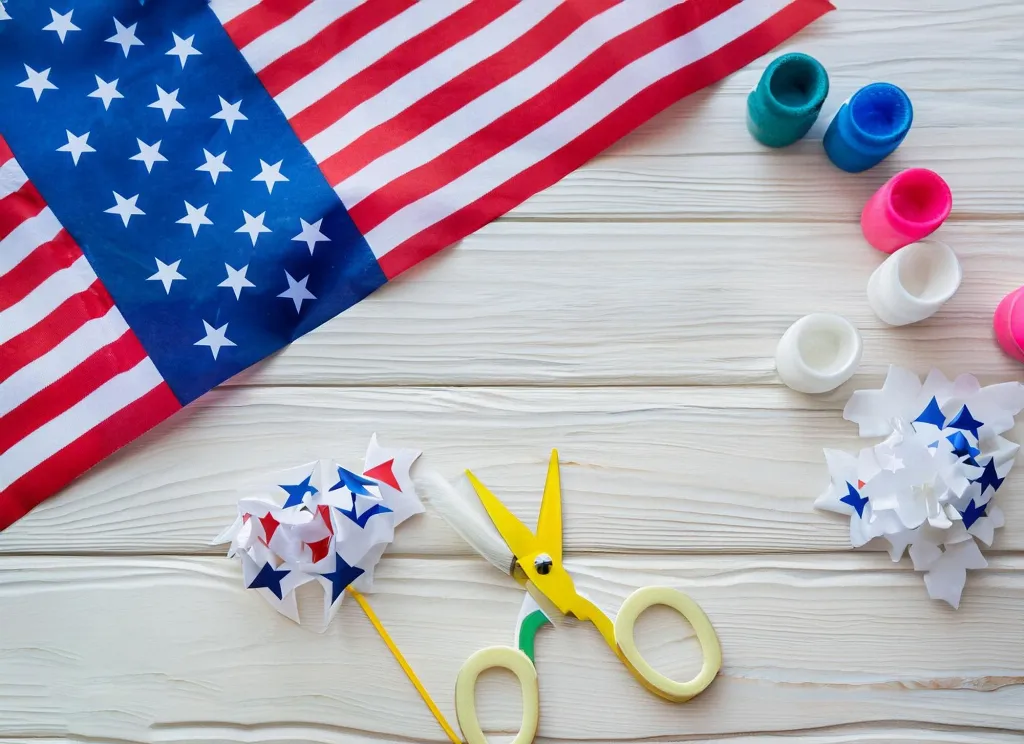
- Red, White, and Blue Collage: Provide large paper pieces in the three colors. Children tear, crumple, or glue them onto cardboard. Ask, “Which color will you choose?”
- Footprint Fire Truck or Bus: Use washable paint to make one footprint, then add large paper shapes after it dries. The adult may complete details while the child names the vehicle.
- Helper Tool Prints: Let children stamp paint with large sponges, cardboard tubes, or toy tools. Discuss the marks and the jobs associated with tools.
- Community Mural: Each child decorates one section with a worker, tool, building, or color. Assemble the sections into a shared display.
These ideas echo the community-helper crafts and footprint-vehicle suggestions in ChildCareEd’s Labor Day celebration guide while keeping the steps appropriate for younger children.
How can crafts support development and conversation?
A craft becomes richer when providers observe carefully and use responsive language. Rather than asking, “What is it?”—which can imply that every mark must represent something—describe what you see: “You pressed the sticker firmly,” or “You chose two blue pieces.” Then invite communication with open but manageable prompts.
- Fine motor: “Can you pinch the sticker and place it here?”
- Language: “Tell me about your helper.” Accept gestures, home-language responses, and single words.
- Social-emotional learning: “How does this person help?” and “How can we show thanks?”
- Early mathematics: “You used three stars. Shall we count them together?”
- Science and sensory learning: “The sponge makes a dotted mark. What happens when you press lightly?”
Allow children to work beside one another without demanding that they share every material immediately. Model turn-taking with concrete language: “You are using the blue paper. Maya will have a turn when you are finished.” A shared mural can encourage cooperation while preserving individual choice.
For providers seeking additional support in connecting activities to developmental goals, CDA Subject Area 2  Buy Now $80.00 addresses physical and intellectual development, including creative arts and active learning.
How can providers make Labor Day crafts safe, inclusive, and manageable?
Safety begins with material selection, active supervision, and realistic expectations. Inspect supplies before use, remove damaged items, and keep paint, glue, and tools away from mouths and eyes. Children should be supervised closely throughout the experience, particularly when several stations are operating.
Inclusion means offering more than one way to participate. A child may paint with a thick sponge, point to a picture, use adaptive scissors with adult help, or watch before joining. Provide larger materials and reduce the number of steps for children who need additional motor support. Respect sensory preferences: some children may prefer dry collage materials, while others may enjoy finger painting.
Common mistakes are easy to prevent:
- Too many steps: reduce the craft to one or two actions.
- Correcting children’s designs: describe and encourage rather than redesign.
- Using tiny decorations: reserve small parts for developmentally appropriate, closely supervised groups.
- Forcing participation: offer observation, movement, or a quiet art choice.
- Ignoring family context: use inclusive language and invite families to share community roles and traditions.
For additional guidance on supervision, Effective Supervision in Child Care Buy Now $25.00 reviews watching, listening, interacting, and monitoring as active professional responsibilities.
How can a provider turn one craft into a complete Labor Day experience?
A short, predictable sequence can make the celebration feel intentional without overwhelming toddlers. Begin with a two-minute picture talk about a familiar worker. Introduce one craft and one safety expectation. Allow approximately ten minutes for exploration, then invite children to help clean up. Close with a song, movement activity, or brief sharing circle.
A sample plan might look like this:
- Welcome: Show photos of a cook, teacher, driver, gardener, or custodian.
- Connect: Say, “People do different jobs to help our community.”
- Create: Make thank-you cards or a collaborative helper mural.
- Reflect: Ask each child to point to a color, tool, or helper.
- Celebrate: Sing a simple “Thank You, Helpers” song and display the work at child eye level.
Document learning with a photograph and one observation: “Jordan pressed three stickers and said, ‘Bus driver.’” Share the observation with families, along with an invitation to talk about the jobs people do at home. This approach turns a festive craft into a meaningful experience in #community, #gratitude, #creativity, #toddlers, and #fine-motor development.
Conclusion: How can toddlers snip, stick, and celebrate successfully?
The best Labor Day crafts for toddlers are brief, flexible, and rooted in children’s real experiences. Choose large, safe materials; focus on process rather than identical products; connect art to community helpers; and use simple conversation to support language, cooperation, and appreciation.
Begin with one activity—a thank-you card, color collage, footprint vehicle, tool print, or shared mural. Observe what children discover, adapt the materials to their needs, and celebrate their ideas. When providers keep the invitation manageable and inclusive, toddlers can explore confidently while learning that every person’s contribution helps a community work together.
Quick FAQ
- How long should a toddler craft last? About 8–15 minutes, with flexibility for individual engagement.
- Can infants join? Yes, through supervised observation, large safe materials, sensory exploration, and adult narration; avoid small parts.
- What if children do not want messy art? Offer stickers, crayons, dry collage materials, or a chance to watch.
- Should every child make the same design? No. A shared theme can support learning while each child’s process remains individual.
References: Labor Day Activities; Community Helpers: Labor Day, Social/Emotional Skills Activity Ideas; Labor Day Classroom Activities Buy Now $0.00; Increasing Fine Motor Skills in the Early Childhood Education Classroom; Open-Ended Art Activities That Build Confidence in Preschoolers; Labor Day Crafts Kids Can Make; The Holiday Zone: Arts and Crafts for Labor Day; Paper Plate Flag Craft Idea; 4th of July Fine Motor Skills Activities; Outdoor Art Activities for Your Preschool Curriculum.
Which additional ChildCareEd courses can support this work?
- Baby Play: Planning Infant and Toddler Activities Buy Now $16.00
- Open Heart, Open Art Buy Now $16.00
- Power of Art: Building Self-Esteem & Positive Behavior for All Abilities ONLINE Buy Now $24.00
- Meaningful Lesson Planning for Infants/Toddlers Buy Now $24.00
- Safe Supervision in Child Care: Birth to School Age Buy Now $24.00
- 45 Hour Child Growth and Development
- CDA Infants/Toddlers: Abuse and Neglect Reporting Requisites
- 45 Hour Infant and Toddler Methods and Materials
- Pediatric RSV First Aid & CPR/AED
- 45 Hour School Age Methods and Materials
- CDA Bridge Bundle: Infant/Toddler without Portfolio Review
- Texas Director Credential
- CDA Infants/Toddlers: Health and Safety
- CDA Infants/Toddlers: Smart Nutrition & Feeding
- Labor Day Activities
- 💛🧩 ¿Cómo puedo hacer que mi enseñanza sea inclusiva para los niños con autismo?
- 👧 ¿Cómo iniciar y abrir una guardería en Texas? Lo que necesitas saber
- Recursos en Español sobre el Sueño Seguro del Bebé
- ¿Cuáles son los pasos, requisitos y opciones en línea para la certificación de 90 horas en cuidado de Infantes/Toddlers en Maryland?
- Proporciones de Cuidado Infantil y Tamaños de Grupo por Edad en Virginia (Guía Rápida para Centros y Hogares)
- Cómo Ser Maestra de Preescolar en Maryland
- Labor Day Activities for Kids at Home or in the Classroom
- Labor Day Activities for Kids: Crafts, Games, and Learning Ideas
- Juneteenth Activities for Kids: Crafts, Books, and Learning Ideas
- Father’s Day Activities Students Can Make and Share
- How can North Dakota classrooms build toddler fine motor skills with simple activities?
- Celebrando la amistad en el cuidado infantil durante el Día de los Mejores Amigos
- Diversión fresca de verano: actividades del Día Nacional del Helado para niños
- Canciones, juegos y preguntas de círculo para niños
- Cómo simplificar la capacitación para sus empleados de daycare
- Easy Glitter Crafts for Toddlers and Preschoolers
- Snip, Stick, Celebrate! What Easy Labor Day Crafts Can Toddlers Make?
- Made by Me! Labor Day Crafts for Preschoolers That Celebrate Hard Work
- Labor Day Crafts for School-Age Kids That Go Beyond Coloring Pages
