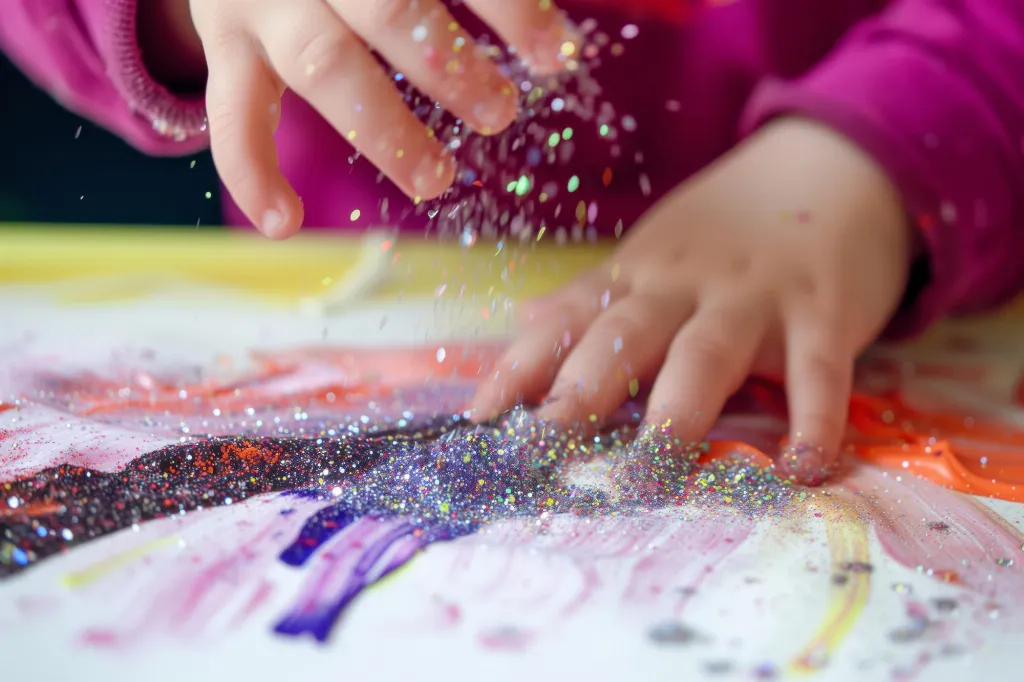
 Glitter crafts are bright, fun, and loved by many children. This short guide gives child care providers quick, safe, and useful ideas to add sparkle to your day. You will find simple project ideas, tips for skill-building, safety and cleanup advice, and ways to include glitter in lesson plans.
For licensing or program rules, remember: state requirements vary - check your state licensing agency.
What simple glitter crafts work best for toddlers and preschoolers?
Here are easy, low-prep crafts that work in group or small settings. Each idea is practical for busy classrooms and gives clear learning goals.
- ✨ Glitter Sensory Bottles
Why: calming and safe for toddler hands. How: Fill clear bottles with water, a little clear glue or oil, and a small pinch of glitter. Seal well. See ideas like glitter sensory bottles for inspiration. Benefits: visual tracking, self-regulation, and quiet table time.
- 🎨 Glitter Paint Collage
Why: art plus #finemotor practice. How: Mix a little washable glue into tempera paint, add glitter, and set out paper, stickers, and simple shapes. Children paint and add glued decorations. This approach builds hand strength and color play.
- 🧼 Mess-Free Glitter Ornament (adapted)
Why: great for toddlers or parent gifts. How: Use double-sided tape or sealed pouches of glitter so loose sparkles are limited. Try a mess-free method like those shown in projects such as mess-free glitter ornaments. These mess-free approaches pair especially well with seasonal hand- or footprint gifts—see Father's Day footprint art ideas for simple, gift-ready projects that minimize sparkle mess.
- 🧪 Glitter Slime (small group only)
Why: sensory science and teamwork. Use a tested recipe and run in small supervised groups. ChildCareEd's classroom slime post gives a simple formula: DIY glitter slime. Note: monitor for allergies and hand washing.
- 🌿 Nature + Glitter Collage
Why: combines outdoor exploration with sparkle. After a walk, glue leaves or petals on paper and add a small sparkle accent. This links nature play and art. You can also tie this activity to ocean themes—see our World Oceans Day activities for simple ocean crafts and age-appropriate ways to teach about marine life.
How do glitter crafts build skills — and why does that matter?
Glitter crafts are not just about sparkle. When chosen with purpose they support key learning areas for young children.
- Fine motor and hand strength
Activities like squeezing glue bottles, sprinkling glitter carefully, and peeling stickers practice the pincer grasp and control. Use thick glue bottles or glitter glue for early learners. ChildCareEd highlights fine motor benefits in craft-focused posts such as fine motor winter activities.
- Sensory and self-regulation
Watching glitter swirl in a bottle or mixing glitter paint gives visual input that helps children calm and focus. Sensory tools can be part of an intentional calming corner.
- Language and choices
Ask children to describe colors, textures, or steps. This builds vocabulary: "sparkly," "smooth," "sticky." Use open questions to encourage speech and thinking.
- Creativity and self-expression
Glitter makes children excited to create. Small, child-sized choices (color, tool, placement) promote independence and self-esteem. For Montessori-style invitations that combine sparkles and skill-building, see Montessori craft ideas.
Why it matters: these skills help children with later tasks like writing, dressing, and social play. Crafting is play-based learning that makes practice joyful.
How can I reduce mess and stay safe (and avoid common mistakes)?
Managing glitter projects is about planning and small changes that cut cleanup and risk. Here are practical steps and common pitfalls to avoid.
- Plan and limit materials
Use small trays, placemats, or muffin tins to keep supplies contained. Offer one sparkle color per child to reduce cross-contamination.
- Choose safer glitter alternatives
Consider biodegradable or plant-based glitter to lessen environmental impact and the microplastic concern described in posts like The Glitter Conundrum. You can also make non-plastic glitter substitutes (colored salt) as a low-cost option—see a homemade method like homemade glitter.
- Hygiene and supervision
Always supervise glitter use. Teach children not to touch eyes or mouths during craft time. Provide hand-washing stations and wipes after activities.
- Use mess-free techniques
Try glue-within-frames, sealed bottles, or double-sided tape to limit loose glitter. Mess-free projects are useful for group settings and reduce time spent cleaning—see ideas like mess-free ornaments.
- Common mistakes and fixes
- Using tiny loose pieces with toddlers — fix by using glued or sealed materials.
- Not checking allergies — fix by sharing materials list with families and monitoring reactions.
- Overfilling centers — fix by rotating small groups or stations to limit crowding.
Remember: state requirements vary - check your state licensing agency for sanitation and material rules. Keeping good records and parent communication helps avoid misunderstandings.
How do I include glitter crafts in lesson plans and manage materials day-to-day?
Turn glitter projects into learning invitations with clear goals. Below are simple steps to plan, run, and document glitter craft times in a child care setting.
- Set a learning goal
Examples: practice scissor cutting, work on line tracing, or encourage cooperative play. Write the goal on your lesson plan and post it at the table for teachers to reference.
- Prepare a materials station
Numbered trays and labeled tubs keep things tidy. Keep a supply of child-safe glue, pre-cut shapes, and a small amount of glitter glue per child. Use our program resource pages like ChildCareEd crafts hub for idea lists and printable supports.
- Rotate and group children
Run glitter activities in 1–3 small groups per day to reduce mess and keep supervision tight. Younger #toddlers may need teacher help, while older #preschoolers can be more independent.
- Assess and document
Take quick photos, note skills observed (color ID, squeezing glue, sharing), and add to portfolios. Use craft time as an informal assessment moment for #finemotor and language goals.
- Communicate with families
Share a short note or photo about the activity and include the materials list. Offer alternatives for families who prefer no glitter; many parents appreciate eco-friendly options.
Quick FAQ (common questions from teachers):
- Q: Can toddlers handle glitter? A: Use sealed or glue-mixed glitter and close supervision.
- Q: Which glitter is safest? A: Biodegradable or large-particle glitter reduces environmental and inhalation concerns. See background in the glitter conundrum.
- Q: How do I limit cleanup? A: Use trays, aprons, and a dustpan routine; keep hand wipes nearby.
- Q: What if a child has sensory issues? A: Offer alternatives like glitter bottles, textured paper, or colored sand in a bin. Independent sensory activities ideas are available at Independent Sensory Activities. Another low-mess, high-creativity option is a scratch art activity, which supports fine-motor control and color exploration and works well for children who are sensitive to tactile input.
Conclusion
Glitter can be a joyful part of your classroom when used thoughtfully. Quick checklist before you start:
- ✔ Choose child-safe or sealed materials.
- ✔ Set a clear learning goal for the activity.
- ✔ Use trays, small groups, and easy cleanup tools.
- ✔ Offer alternatives and communicate with families.
- ✔ Document learning and celebrate each child’s sparkly success.
For more craft ideas and lesson supports, see ChildCareEd posts like Montessori glitter ideas, DIY glitter slime, and general craft resources at ChildCareEd Crafts. You’re doing important work—small sparkles can light big learning moments. Keep experimenting, stay safe, and enjoy the smiles.
- CDA Infant/Toddler Renewal
- CDA Family Child Care Credential
- 24 Hour Texas Pre-Service
- CDA: Special Needs: Understanding the Whole Child
- Art from the Heart for Preschoolers: Open Ended Art Projects that Build Self-Esteem
- 45-Hour Infant and Toddler Curriculum
- CDA Preschool Renewal
- Texas Director Credential
- CDA Infants/Toddlers: Brain Development and Gene Expression
- CDA Infants/Toddlers: Stages of Development
- Reminder for Mother's Day
- Ice Cream and Asteroids!
- How to Make Your Own Sensory Bottles!
- How to boost fine motor skills: Holiday Edition
- DIY Snow Globes: The Fine Motor Craft That’ll Keep Kids (and Adults) Busy for Hours
- Apoyo en Español para Capacitaciones Grupales Presenciales y por Zoom en Cursos Selectos
- ¿Cuáles son los pasos, requisitos y opciones en línea para la certificación de 90 horas en cuidado de Infantes/Toddlers en Maryland?
- Actividades de Motricidad Gruesa que Desarrollan el Equilibrio, la Coordinación y la Fuerza
- Actividades de Otoño Fáciles para Preescolares esta Temporada
- Cómo Ser Maestra de Preescolar en Maryland
- Teaching Kids About Memorial Day Through Crafts and Activities
- Fourth of July Craft Ideas for Preschool and Child Care
- Autumn Activities for Toddlers and Preschoolers
- Calabazas, hojas y manzanas: actividades de otoño para preescolares
- Cultural Activities for Toddlers: Music, Food, Art, and Stories
- Easy Glitter Crafts for Toddlers and Preschoolers
- Summer Crafts and Activities for Preschool Classrooms
- Toddler Glitter Crafts: Fun, Safe, and Easy Ideas
- Hello, Fall! Cozy Activities to Help Babies Explore the Season
- Snip, Stick, Celebrate! What Easy Labor Day Crafts Can Toddlers Make?
