Young children learn to listen little by little. This article gives clear, kind, and practical steps you can use in your preschool program today. Use small routines, short phrases, and steady practice. Remember: state requirements vary - check your state licensing agency.
What simple routines build strong listening skills?
Why it matters: kids learn best when routines are short and predictable. Routines teach children when to watch, wait, and follow directions. Good routines make your #classroom calmer and help #preschoolers practice #listening every day.
- Start with 3 short cues you use all day. Examples:
- 👂 "Eyes on me."
- 👏 "1-2-3 — eyes here!" (call-and-response)
- 🔔 A gentle bell or chime before instructions
- Use short, consistent phrases:
- "First __, then __."
- "Show me listening."
- Make listening a job. Give 1 child the role of "listening helper" each day so peers model attention.
Quick tips: keep cues short, teach them with modeling and practice, and praise kids when they respond. These small habits build big gains for #children.
How can I teach listening step-by-step in the classroom?
Teach listening like a short lesson you repeat often. 1–5 minute mini-lessons work best for young attention spans.
- Model the skill:
- 🎭 Show what listening looks like: sit at eye level, quiet voice, hands still.
- Practice with games:
- 🎵 Musical freeze, Simon Says, and sound scavenger hunts are quick and fun. See activity ideas at 10 Listening Activities.
- Use read-alouds:
- Pause, ask predictions, and invite children to make sound effects. Both print and quality digital stories help comprehension (NYU study).
- Give one clear direction at a time and allow wait time (3–5 seconds). If a child needs English support, use visuals and simple words — see DLL listening tips at Desired Results: Listening.
- Track small wins and praise specifics: "You listened the first time—thank you!"
Montessori-style language activities and sound games can deepen listening, vocabulary, and comprehension. For more Montessori ideas see Montessori: Enhancing Listening. Use these steps daily to grow #listening skills.
How do I support children who struggle to listen and avoid common mistakes?
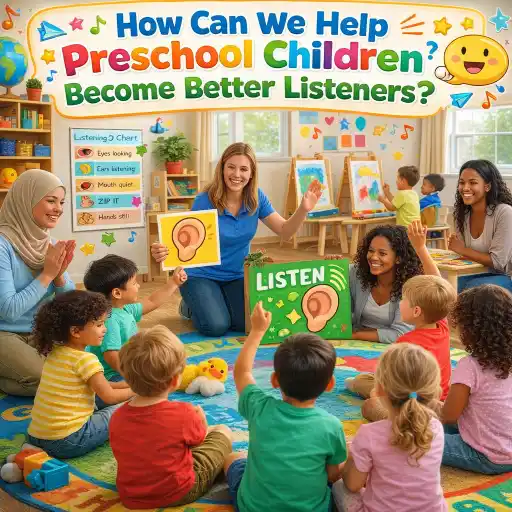
Some children need extra help. First, check if the problem is the environment, a language need, or a hearing/processing issue.
- Rule out hearing or processing concerns:
- 🔎 If a child often misunderstands in noisy rooms, consider a referral or screening. Resources on auditory processing help explain signs: Auditory Processing Disorder.
- Use gentle redirection and short choices:
- 🧭 "You can sit on the cozy chair or take three deep breaths." (See scripts at Redirection Ideas.)
- Support Dual Language Learners:
- 🗣️ Use the home language, gestures, and visuals to build comprehension—recommendations at Desired Results: DLL Listening.
- Common mistakes and fixes:
- Talking too much: keep directions one step.
- Different staff scripts: agree on one set of phrases and practice them.
- Too noisy or cluttered room: simplify the space (see Less Is More Playroom ideas).
When you notice persistent trouble, document examples, talk with the family, and follow screening or referral steps. Small supports and consistent language across staff and families help every child improve.
How can families and staff work together to grow listening skills?
Partnerships make progress faster. Families can practice the same short phrases at home and celebrate wins with you.
- Share 1 short plan with families:
- 📣 Example note: strength + simple step + one idea for home. ChildCareEd suggests quick family scripts in Active Listening in Early Childhood.
- Train and coach staff:
- 🧑🏫 Have a 5-minute huddle each morning to name the listening cue of the day. Use role-play in staff meetings and consider short courses like CDA: Communication
 Buy Now $16.00.
- 🧑🏫 Have a 5-minute huddle each morning to name the listening cue of the day. Use role-play in staff meetings and consider short courses like CDA: Communication
- Communicate wins:
- 📸 Send a photo or one-sentence note about a listening success. Families respond when you share positives more than only concerns.
- Make routine home-school connections:
- 🔁 Use the same two phrases at drop-off and pick-up so children hear consistent language from adults.
Working as a team—staff + families—creates predictable cues, more practice, and better outcomes for your #children and the program.
Conclusion & FAQ
Summary: Pick 3 short cues, teach them with modeling and games, support children who need extra help, and partner with families. Small, steady steps help children learn to listen.
- Q: How long should listening practice be? A: 2–5 minutes, several times a day.
- Q: What if a child still can’t follow directions? A: Check environment, try visuals, consult families, and consider screening.
- Q: Can digital stories help? A: Yes—quality digital read-alouds can support comprehension along with live reading (NYU).
- Q: Should staff use the same phrases? A: Yes—consistency is key.
Keep practicing, celebrate small wins, and share progress with families. You are building the foundation for later language and learning.
- 45 Hour Child Growth and Development
- CDA Home Visitor Subject Area 3 Part 3 Birth to 5
- 45 Hour Preschool Methods and Materials
- Easy Steps to Resume and Interview Success
- Pediatric RSV First Aid & CPR/AED
- 45 Hour School Age Methods and Materials
- CDA Bridge Bundle: Preschool without Portfolio Review
- Texas Director Credential
- CDA Certification en Español: Recursos y Consejos para Educadores Bilingües
- Requisitos Para Ser Maestra Principal En Un Daycare: Lo Que Necesitas Para Empezar
- Proporciones de Cuidado Infantil y Tamaños de Grupo por Edad en Virginia (Guía Rápida para Centros y Hogares)
- Cómo Trabajar en el Cuidado Infantil en Carolina del Norte: Requisitos y Pasos
- Cómo Ser Maestra de Preescolar en Illinois
- Cómo Ser Maestra de Preescolar en Wisconsin
- Cómo Ser Maestra de Preescolar en California
- Cómo Ser Maestra de Preescolar en Maryland
- Cultural Influences on Child Development: Examples for Families
- Celebrando la amistad en el cuidado infantil durante el Día de los Mejores Amigos
- What can the National Mall teach us about building a classroom where every child has a voice?
- What Can the Golden Gate Bridge Teach Preschoolers About Connection?
- Canciones, juegos y preguntas de círculo para niños
- Dr. Seuss Book List for Teachers: Easy Ways to Use It for Story Time and Learning
- How Can Sound Bingo Sharpen Listening Skills in Preschoolers?
- How Can Songs and Rhymes Build Young Children’s Language Skills?
- How Can Puppets Support Communication and Literacy in Early Childhood?
- What Speech and Language Milestones Should Child Care Providers Know?
- How Can Child Care Providers Teach Beginning Sounds with Tracing, Pictures, and Repetition?
- How Can Child Care Providers Help Children Describe an Imaginary Place Their Listener Cannot See?
