Choosing the right toys and materials helps children learn, play, and stay safe. This short guide is for child care providers and directors in #Minnesota who want practical steps for picking items that match age, development, culture, and safety rules. You will find clear tips, numbered checklists, quick links to helpful ChildCareEd resources, and safety reminders (state requirements vary - check your state licensing agency). For local activity ideas, see What are age-appropriate learning activities for infants, toddlers,s and preschoolers in Minnesota?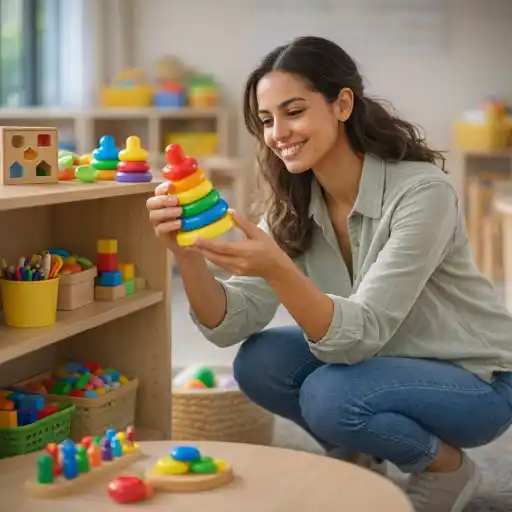
Why does choosing age-appropriate #toys and materials matter for our Minnesota program?
1) Safety: young children explore with their mouths and hands. Picking safe sizes and durable materials lowers choking and injury risks. Use the ChildCareEd guide on choking hazards. What are the choking hazards by age for foods and toys? and Nemours safety tips Choosing Safe Toys.
2) Program quality and family trust: clear choices show families you know how to teach and protect children. Document why you chose items and how they meet goals — ChildCareEd’s course Using Toys to Support Learning  Buy Now $16.00 can help staff learn the criteria.
3) Equity & inclusion: choose materials that reflect families and allow adaptations (see Adaptations that support children's learning) so all children can join. For developmental checklists, use the CDC Developmental Milestones. Why this matters: thoughtful choices make play more powerful and safer for every child. #safety #children #development
How do I match toys to age and developmental goals?
- 🧸 Start with 3 quick observations:
- Watch for 5–10 minutes to see interests.
- Note one skill to support (language, fine motor, gross motor, social).
- Pick one material that invites the practice of that skill.
- Use age-guides:
- Infants (0–12 months): high-contrast books, soft rattles, mirrors — simple, sensory, safe. See infant ideas at ChildCareEd Minnesota activities.
- Toddlers (1–3 years): push-pull toys, shape sorters, large blocks for stacking. Repetition builds skill — read Smart Toys for Every Age.
- Preschoolers (3–5 years): open-ended blocks, dramatic-play props, simple STEM trays to grow problem-solving and language.
- Layer challenges (3 levels):
- Level 1: adult help or simpler pieces.
- Level 2: guided attempt with hints.
- Level 3: independent open-ended use.
- Document one short learning note (photo + one sentence) each time materials are used. ChildCareEd gives templates and example lesson plans at How can I create engaging learning centers.
How do I keep toys and materials safe, clean, and compliant in Minnesota?
- 🔍 Inspect for loose parts, chips, sharp edges, broken seams, or exposed batteries. Remove broken items immediately.
- 🧪 Check labels and safety standards: look for ASTM or CPSC guidance and the toy’s age recommendation. For standard references, see ASTM F963 and recall info at CPSC sites linked in ChildCareEd resources.
- ⚠️ Use the toilet-paper-roll test: if a part fits through the tube, it’s too small for infants/toddlers (advice echoed in Nemours).
1) Cleaning & sanitizing:
- Follow CDC cleaning steps: clean, then sanitize or disinfect by surface type — see How To Clean and Disinfect ECE Settings.
- Sanitize items that go in mouths after each use (infant feeding items, mouthed toys).
2) Choking and food safety: follow the ChildCareEd checklist on choking hazards and the CDC lists on risky foods. For details,s see Choking hazards by age and the CDC pages.
3) Licensing and documentation: keep records of inspections, cleaning logs, and staff training. Remember: state requirements vary - check your state licensing agency and Minnesota program guides like the local ChildCareEd Minnesota posts.
How do I include children with disabilities and avoid common mistakes?
1) Choose adaptable materials:
- 🧩 Use flexible tools: thicker crayons, adapted scissors, button frames, and switch-adaptable toys. See practical adaptation ideas at Adaptations that support children's learning and adaptive toy ideas at Adaptive Toys for Children with Disabilities.
- 🔁 Offer choices so children join at their level: same play invitation, different access (example: hand-over-hand, larger grips, or visual cues).
2) Common mistakes and fixes (quick list):
- 😕 Mistake: Too many small pieces in a mixed-age bin. Fix: Separate by age or use larger pieces for group areas.
- 😬 Mistake: Over-directing play. Fix: Model briefly, then observe and ask one open question to extend learning.
- 😩 Mistake: Skipping cleaning or inspection. Fix: Add a weekly checklist and a quick shift-change scan.
3) Staff training & family partnership:
- 📚 Train staff in safe selection, #CPR, choking response, and adaptations. Use ChildCareEd courses like Using Toys to Support Learning Buy Now $16.00.
- 🤝 Ask families about language, culture, and home routines so materials reflect children’s lives and strengthen inclusion.
Conclusion
1) Use a simple 1-2-3 routine every time you add materials:
- Observe for 5–10 minutes and pick one goal.
- Choose a safe, age-appropriate material and plan 2 levels of support.
- Document one photo/note, sanitize, and store with labels.
2) Helpful links: ChildCareEd’s practical pages on age-appropriate activities, DAP, centers, adaptations, and safety are good starting places (see links earlier in this article). For broader safety and cleaning standards, check the CDC cleaning guidance and toy safety pages like Nemours Choosing Safe Toys.
3) Final reminder: state requirements vary - check your state licensing agency. Small, consistent choices make play safer and richer for children. Your thoughtful selections turn toys into powerful tools for learning. #Minnesota #toys #safety #children #development
Quick FAQ (4 questions)
- Q: How often should we rotate materials? A: Every 1–3 weeks or when interest drops. See center rotation ideas in ChildCareEd center articles.
- Q: Can families donate toys? A: Yes — but inspect, clean, and test for age-appropriateness first. During gift-giving seasons, also screen donated and new toys for seasonal hazards, recalls, and age-label accuracy using a holiday toy-safety checklist to keep children safe.
- Q: How many goals per activity? A: 1–2 small goals work best.
- Q: Where to get training? A: ChildCareEd courses and local MN trainings; search All ChildCareEd Courses.
- 45-Hour School Age Curriculum
- 45 Hour Preschool Methods and Materials
- Using Toys to Support Learning
- Training Guide for Families from Diverse Language and Cultural Backgrounds
- 45 Hour School Age Methods and Materials
- 24 Hour Texas Pre-Service
- Family Child Care Health Essentials
- Texas Director Credential Renewal
- Texas Director Credential
- 10 Reasons this Summer to Take Pediatric First Aid and CPR with ChildCareEd
- 👶 ¿Cuáles son las proporciones y grupos requeridos en Dakota del Norte? 🏫
- Recursos en Español sobre el Sueño Seguro del Bebé
- Capacitación en Salud y Seguridad Preventiva en Línea para Proveedores de Cuidado Infantil
- Cómo Iniciar el Proceso de Obtención de la Licencia de Cuidado Infantil
- Proporciones de Cuidado Infantil y Tamaños de Grupo por Edad en Maryland (Guía Rápida para Centros y Hogares)
- Proporciones de Cuidado Infantil y Tamaños de Grupo por Edad en Nueva Jersey (Guía Rápida para Centros y Hogares)
- Proporciones de Cuidado Infantil y Tamaños de Grupo por Edad en Virginia (Guía Rápida para Centros y Hogares)
- Lista para Abrir una Guardería en Casa en Virginia: Cómo Empezar
- Lista para Abrir una Guardería en Casa en Carolina del Norte: Cómo Empezar
- Lista para Guardería en Casa en Illinois: Cómo Iniciar una Guardería en el Hogar
- Lista para Guardería en Casa en Texas: Cómo Iniciar una Guardería en el Hogar
- Cómo Ser Maestra de Preescolar en Maryland
- Which Minnesota training bundle is right for my child care team?
- Can Minnesota Childcare Directors Complete Their 40-Hour Requirement Entirely Online?
- Cómo simplificar la capacitación para sus empleados de daycare
- How do I choose age-appropriate toys and materials for my Minnesota program?
- How can childcare programs effectively prevent lead exposure in their environments?
- Reglas y regulaciones de guarderías en Minnesota 2026: Requisitos actuales y próximos cambios
- Are Donated Classroom Materials Worth the Time and Cost?
