Introduction
Choking can happen fast. As a child care provider, you watch many little mouths and busy hands. Knowing which foods and toys are risky for each age helps you keep kids safe. This article explains common choking hazards by age, how to prevent them, and what to do if a child chokes. You will see easy steps you can use in your #preschoolers room and in every snack or playtime.
Why it matters: A blocked airway can stop oxygen to t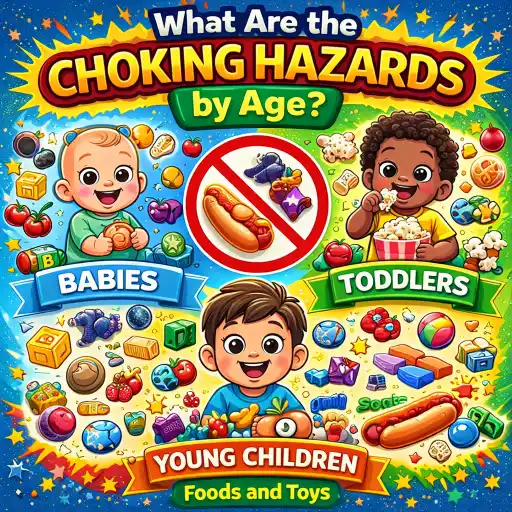 he brain in minutes. Young children explore with their mouths and have smaller airways, so they are more at risk. Teaching staff, checking toys, and changing how foods are served make a big difference for #safety and confidence in your program.
Quick resources to check: the CDC has lists of risky foods and how to prepare them (CDC Choking Hazards), and ChildCareEd offers center-focused guides and training about choking and first aid (ChildCareEd: Choking First Aid, ChildCareEd: Why Be Prepared, ChildCareEd: Pediatric First Aid & CPR Buy Now $95.00).
What foods are choking hazards at different ages?
Answer: Foods become safer as children grow and develop chewing skills. Use these age-based rules and examples to plan snacks and meals.
- Under 12 months (infants)
- Offer mashed, pureed, or very soft foods only. Avoid whole pieces. See CDC guidance on how to prepare foods for babies (CDC: When to introduce solids).
- Do not give honey, unpasteurized foods, or whole cow's milk before 12 months (CDC: Foods to avoid).
- 12–36 months (toddlers)
- Cut or mash: grapes, cherry tomatoes, hot dogs, sausages, hard fruits, and raw vegetables. The CDC suggests cutting grapes and other round foods into quarters (CDC guidance).
- Avoid: whole nuts, popcorn, hard candy, marshmallows, large chunks of meat or cheese, spoonfuls of sticky nut butter, and raw corn kernels (CDC: Choking Hazards).
- 3–5 years (preschool)
- Kids get better at chewing but still need supervision. Avoid small, round foods that fit a child’s airway (grapes, whole cherry tomatoes, large berries) unless cut appropriately (Food safety tips).
- Limit candies, gum, and chewy snacks; these caused many ER visits for kids in national studies (Top choking foods).
Always supervise eating, have kids sit down, and keep meals calm. For details on food texture and portion prep see the CDC pages above and the AAFP guidance on toddler nutrition (CDC: Foods and Drinks 6–24 months, AAFP: Nutrition in Toddlers).
Which toys and small items are choking hazards by age?
Answer: Toy risk is about size, parts, and durability. Follow these simple checks for each age group.
- Infants (0–12 months)
- Give only large, unbreakable toys made for babies. Avoid toys with small parts, loose eyes, or buttons that can be pulled off (Nemours: Choosing Safe Toys).
- Check labels for age recommendations and ASTM or CPSC safety notes. If a part fits through a toilet-paper tube, it’s too small (Nemours guidance).
- Toddlers (1–3 years)
- Avoid marbles, coins, small balls, magnets, button batteries, and balloons (deflated pieces are dangerous) (Canada: Toy safety).
- Look for toys that are at least 1.25 inches (3 cm) in diameter and 2.25 inches (6 cm) long, or labeled "not for children under 3." Check for secure battery compartments (Nemours).
- Preschool and older (3+ years)
- Some toys for older kids still have small parts. Keep toys for older children out of reach of younger ones and inspect for wear and broken pieces (CPSC safety check-up).
- Report recalled or unsafe toys and check regular recall lists (CPSC).
Keep a routine to inspect toys, discard broken items, and store small parts out of reach. For holiday or novelty items, be extra careful with small ornaments, tinsel, and candy-like decorations (ChildCareEd: Holiday Hazards).
How can childcare providers prevent choking and be ready to respond?
Answer: Prevention, staff training, and clear policies keep children safer. Use this 1-2-3 plan in your program.
- Food and meal practices
- 🍎 1) Cut round foods (grapes, cherry tomatoes) into quarters; slice hot dogs lengthwise then into small pieces (CDC prep tips).
- 🍽 2) Make children sit while eating; supervise closely; keep mealtimes calm and distraction-free (CDC: Meals and snacktime).
- Toys and environment
- 🔍 3) Inspect toys weekly, remove broken pieces, secure batteries, and keep small items out of reach. Use a toilet-paper roll test for small parts (Nemours).
- 🧸 4) Separate toys by age groups and store older-kids toys away from toddlers (Canada toy safety).
- Training and drills
- 👥 5) Train all staff in pediatric first aid, #CPR, and choking response. Consider ChildCareEd or Red Cross classes for hands-on practice (ChildCareEd course Buy Now $95.00, Red Cross course).
- 📆 6) Run monthly choking drills and post emergency roles so everyone knows what to do. Remember: state requirements vary - check your state licensing agency.
Common mistakes and how to avoid them
- ❌ Don’t leave children unsupervised while eating or playing with small parts. Prevent by assigning staff and using calm meal rules (ChildCareEd guide).
- ❌ Don’t reach blindly into a child’s mouth — you can push an object deeper. Only remove visible items you can safely reach (KidsHealth: What to do).
- ❌ Don’t ignore toy labels or recalls — check CPSC recall lists regularly (CPSC).
What should staff do if a child chokes right now?
Answer: Act fast, stay calm, and follow age-specific steps. If you are trained, start the rescue. If not, get help and call 911.
- If the child can cough or cry:
- 1) Stay with the child and encourage coughing. Do not hit their back or reach into the mouth unless you see the object and can safely remove it (KidsHealth).
- If the child cannot breathe, talk, or is turning blue (complete blockage):
- 2) For infants under 1 year: give 5 back blows, then 5 chest thrusts (use two fingers). Repeat until object clears or infant becomes unresponsive (Red Cross).
- 3) For children over 1 year: give 5 back blows followed by 5 abdominal thrusts (Heimlich). Repeat until the object is out or the child becomes unresponsive (ChildCareEd steps).
- If the child becomes unresponsive:
- 4) Call 911 immediately, start CPR if trained, and check the mouth for visible objects before rescue breaths. Continue until help arrives (KidsHealth).
After any major choking event, take the child for medical evaluation — persistent cough, drooling, or breathing changes need a check-up (KidsHealth, Drugs.com).
Conclusion
Choking prevention is part planning, part training, and part watching closely. Use these steps:
- Prepare food the right way by age and supervise every bite (#foods).
- Choose age-appropriate #toys and inspect them often.
- Train staff in #CPR and choking response and practice drills regularly.
- Keep small items, batteries, and balloons away from little ones.
Every center can build a strong safety plan. For center tools, training, and checklists, see ChildCareEd’s resources on choking and emergency readiness (ChildCareEd: Be prepared, ChildCareEd courses Buy Now $95.00). Check recalls at the CPSC site and keep families informed about your policies. Remember: state requirements vary - check your state licensing agency. With small changes, you can prevent many choking incidents and be ready to save a life. Stay calm, stay prepared, and put safety first for every child in your care.
- Basic Health & Safety and Breastfeeding Awareness
- Health and Safety Orientation
- Nutrition Essentials for Child Care Providers
- Pediatric RSV First Aid & CPR/AED
- Family Child Care Health Essentials
- Texas Teacher 24 hours Annual Renewal 2nd Year
- Texas Director Credential
- Family Child Care: Building, Premises, and Outdoor Safety
- CDA Certification en Español: Recursos y Consejos para Educadores Bilingües
- ¿Cuáles son los pasos, los requisitos y las opciones en línea para la certificación de 90 horas para cuidado escolar en Maryland?
- Regulaciones de Licenciamiento de Cuidado Infantil en California para Centros y Hogares de Cuidado Infantil Familiar
- Proporciones de Cuidado Infantil y Tamaños de Grupo por Edad en Maryland (Guía Rápida para Centros y Hogares)
- Proporciones de Cuidado Infantil y Tamaños de Grupo por Edad en Wisconsin (Guía Rápida para Centros y Hogares)
- Proporciones de Cuidado Infantil y Tamaños de Grupo por Edad en Nueva Jersey (Guía Rápida para Centros y Hogares)
- Retraso del Habla en la Guardería: Cómo Pueden Ayudar los Proveedores
- How can we create safe environments for infants and toddlers?
- How can Georgia infant and toddler classrooms use the Watermelon Wake-Up Call to prevent choking?
- How can food safety training protect children in my child care program?
- How Do We Keep Infants Safe in the Classroom?
- How do I choose age-appropriate toys and materials for my Minnesota program?
- How can Michigan child care providers prevent choking and deliver basic first aid?
- How can childcare programs prevent choking and keep mealtimes safe?
- How can child care programs prevent choking and apply first aid quickly and confidently?
- Online Babysitting Classes: Learn the Skills to Care for Children Safely
- How Do You Test Whether a Toy Is Too Small? A Choking Hazard Size Guide by Age
- Nursery Snack Ideas by Age: What Can Babies, Toddlers, and Preschoolers Safely Eat?
- What Should Child Care Providers Look For in Fine Motor Skills by Age?
- What Should You Check During a Daily Child Care Toy Inspection?
