Arrival, snack, handwashing, and cleanup do not have to compete with learning—they can become the moments where children practice language, independence, social skills, and early reasoning. Explore practical ways to build teaching into the day you already have, and consider Teacher-Child Interactions for Stronger CLASS® Outcomes  Buy Now $24.00 for focused strategies to extend children’s thinking and make everyday interactions more intentional. The course can help you strengthen classroom practice while building relevant professional knowledge; keep reading for ideas you can try right away.
Why do everyday routines matter for children’s learning?
Routines are more than the steps that keep a classroom moving. They are familiar, repeated contexts where children can practice skills with trusted adults and peers. Predictability helps children feel secure and understand what comes next; that sense of security can free their attention for exploration, relationships, and learning. Head Start guidance notes that consistent schedules and step-by-step routines support children’s confidence, participation, and engagement.
Because routines happen frequently, small interactions add up. During a meal, children may ask for help, describe a taste, count servings, or wait for a turn. During cleanup, they can sort objects, cooperate, and take responsibility. A caregiver can support all of this without turning each moment into a formal lesson. The key is to remain responsive: notice what a child is doing, add a useful word or question, and allow time for the child to respond.
Routines also offer a meaningful bridge between care and curriculum. Embedded learning opportunities—short interactions that support a functional skill within a familiar activity—can be planned for individual goals while preserving the natural rhythm of the day.
How can educators notice and extend a learning moment?
Intentional teaching starts with observation, not a script. Pause to see what has captured a child’s attention: a tightly closed container, a friend’s drawing, a repeated action, or a hesitation at the sink. These everyday cues can suggest what the child is ready to try. A brief exchange is often enough; the purpose is to support the child’s effort, not interrupt every activity with questions.
A simple teaching loop is notice, name, invite, and respond:
- Notice: Observe the child’s focus, attempt, or question.
- Name: Describe the action, object, feeling, or relationship in clear language.
- Invite: Offer a manageable prompt or choice that encourages participation.
- Respond: Acknowledge the child’s attempt, add a small next step, and give time to try again.
For example, if a child is working to open a snack container, you might say, “That lid is tight. Which side could you try?” Then wait. If the child turns it, recognize the strategy and offer only the help needed. When children use a word or gesture, respond by expanding it naturally: “Cup” can become “You chose the blue cup.” This builds #language while honoring the child’s contribution.
Brief notes can help a team plan without adding burdensome paperwork. Record what the child attempted, what support helped, and one possible next opportunity. ChildCareEd’s guide to creating meaningful learning moments offers additional examples of noticing and extending children’s interests.
Which skills can be woven into care routines?
Meals, handwashing, dressing, toileting, and rest routines combine close relationships with actions children encounter repeatedly. Providers can narrate what is happening, name objects and sensations, and invite children to take part. During handwashing, for instance, children can follow a sequence, notice water temperature, and practice words such as “first,” “next,” and “rinse.” During dressing, a child can try a zipper or choose a hat for outdoor play.
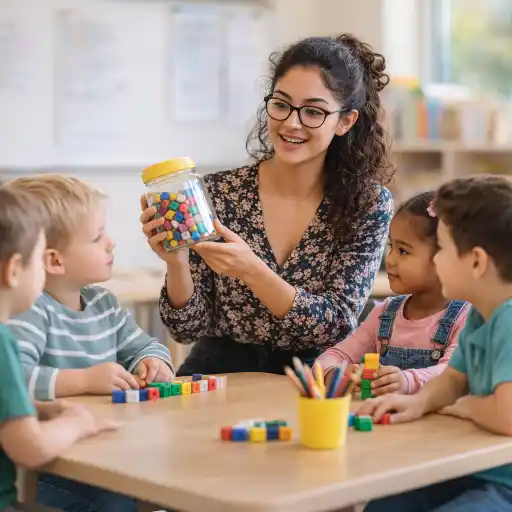
Everyday moments also provide authentic ways to explore early mathematics. Stanford’s DREME project describes how transitions and routines can offer opportunities to talk about counting, patterns, measurement, and spatial relations. Try these prompts:
- Count plates, steps, or children as part of a real task.
- Compare quantities: “Do we need more napkins or fewer?”
- Use position words: “Put the basket beside the shelf.”
- Notice shapes and patterns in food, clothing, or classroom materials.
- Invite children to estimate, sort, or measure with familiar objects.
Social and emotional skills fit naturally too. Greeting each child supports belonging; passing cups creates opportunities to connect with peers; cleanup invites cooperation and responsibility. Offer choices where possible and allow enough time for children to act. Independence does not mean leaving children to manage alone—it means providing just enough scaffolding for them to participate meaningfully.
Children’s abilities, temperaments, home languages, and family practices vary. Learn from families about routines and preferences, and adapt supports so every child can participate. For infants and toddlers, follow individual cues and flexible rhythms rather than expecting every child to follow an identical schedule.
How can transitions become purposeful teaching windows?
Transitions can feel demanding because children are asked to stop, shift attention, and begin something new—sometimes while adults are managing several needs at once. Thoughtful planning reduces waiting and gives children clear, reassuring information. NAEYC identifies routines and transitions as important parts of a supportive early childhood setting; predictable cues and developmentally appropriate timing can help children participate more successfully.
Before changing a transition, ask whether every child needs to move at once and whether the transition is necessary. Small groups, staggered handwashing, or a longer play period with a small-group option may reduce avoidable waiting. Then teach the transition just as you would teach any routine:
- Give a brief advance warning, such as “In two minutes, we’ll put the blocks away.”
- Use a consistent song, gesture, visual schedule, or timer.
- Assign meaningful jobs, such as carrying a book basket or checking the picture schedule.
- Embed a tiny learning task: count the steps, find a shape, or follow a two-part direction.
- Model the steps, practice them together, and gradually reduce prompts.
🕒 Keep children engaged while others finish: offer a short rhyme, a helper role, or a simple observation prompt rather than asking them to wait without a purpose.
Some children need extra processing time, individualized visuals, movement, or sensory adjustments. A child who finds it hard to leave block play might benefit from a clear warning, a photo of what comes next, and a final task such as placing the last three blocks in a basket. For more focused professional learning on planning schedules and transitions, explore Every Moment Matters: Schedules and Transitions Buy Now $55.00 or the practical workshop Moving About the Classroom: Effective Transitions for Everyday Buy Now $35.00.
How can the classroom environment encourage independence?
The classroom environment can make routine steps easier to understand and carry out. Low, accessible shelves, clear storage locations, and picture-and-word labels help children see where materials belong and what they can choose. Use labels that match the actual objects in the room, and make sure children can safely reach the tools they are expected to use. A well-arranged environment supports autonomy while allowing adults to maintain appropriate supervision.
Consider these practical adjustments:
- Place frequently used materials in consistent, reachable locations.
- Use a short visual sequence for handwashing, arrival, meals, or cleanup.
- Offer a manageable number of choices to help children focus.
- Provide child-sized tools, such as small pitchers, trays, or cloths, when appropriate.
- Teach how to use and return materials through modeling and practice.
Build extra time into routines when children are learning new steps. If a child is trying to put on a coat, resist taking over too quickly. You might hold the coat steady while the child finds a sleeve, then acknowledge the effort. Small successes build confidence and make participation more likely over time.
Plan for inclusion from the beginning. Children may need adapted tools, alternate communication supports, additional visual cues, or a different pace to take part. Consult families and relevant specialists when helpful, and protect each child’s dignity and agency. Room arrangement changes should preserve visibility and safe supervision.
How can teams make these practices consistent?
Children benefit when adults use familiar cues and respond in supportive, reasonably consistent ways. Directors can help by choosing one or two routines to improve first, rather than asking staff to redesign the entire day. A short team huddle can identify the skill focus, agree on language and visuals, and give educators a chance to rehearse the routine together.
Use a small improvement cycle:
- Choose: Select a routine, such as arrival or snack, and a skill to support.
- Plan: Decide on a cue, a child role, and one interaction strategy.
- Try: Model and practice the routine with children and colleagues.
- Notice: Observe whether children participate, communicate, or complete more steps independently.
- Adjust: Keep what works and change the timing, materials, or support where needed.
Keep documentation simple and useful. A tally of children who independently return a material, or a note about a child’s new request, can help staff recognize progress and choose a next step. Share observations respectfully with families and invite their knowledge; home routines can offer valuable insight into a child’s preferences, culture, and emerging skills.
Avoid turning every routine into a test. Rapid-fire questions, unrealistic expectations, overly complex visuals, and adult takeover can make ordinary moments feel stressful. Follow the child’s lead, keep directions brief, and allow pauses. The aim is not perfect performance but meaningful participation. For a broader foundation in observation, curriculum, and responsive interactions, Early Childhood Education Buy Now $99.00 offers comprehensive professional learning.
Conclusion: What can you try this week?
Everyday routines become learning opportunities when providers combine predictability with responsive interaction. Familiar experiences help children feel secure; thoughtful narration, choices, small responsibilities, and just-right support allow them to practice communication, early math, self-help, cooperation, and self-regulation. Learning does not require a new lesson for every part of the day—it grows through repeated, meaningful moments.
Start small. Choose one routine, identify one skill children can practice, and decide on a simple adult prompt or visual cue. Observe what happens, celebrate effort, and adjust the support for individual children. Partner with families and coach one another as a team. State requirements vary—check your state licensing agency when changing schedules, supervision practices, or classroom arrangements. With a little planning and a lot of noticing, the routines already in your classroom can become dependable opportunities to connect, teach, and learn.
- Moving About the Classroom: Effective Transitions for Everyday
- From Tantrums to Triumphs: Equipping Preschoolers with Self-Regulation Skills
- The ABCs of Behavior: Turning Challenges into Learning Opportunities
- Pediatric RSV First Aid & CPR/AED
- CDA Bridge Bundle: Family Child Care without Portfolio Review
- CDA Bridge Bundle: Infant/Toddler without Portfolio Review
- CDA Bridge Bundle: Preschool without Portfolio Review
- Texas Director Credential
- Moving About the Classroom: Effective Transitions for Everyday
- CDA Certification en Español: Recursos y Consejos para Educadores Bilingües
- 🎈 Better Together: Why Little Friends Make a Big Difference in Early Childhood
- 💛🧩 ¿Cómo puedo hacer que mi enseñanza sea inclusiva para los niños con autismo?
- 🤯 ¿Por qué este niño está teniendo un comportamiento difícil de repente?
- Proporciones de Cuidado Infantil y Tamaños de Grupo por Edad en Virginia (Guía Rápida para Centros y Hogares)
- Celebrando la amistad en el cuidado infantil durante el Día de los Mejores Amigos
- Canciones, juegos y preguntas de círculo para niños
- How can everyday play build number sense in young children?
- How can everyday routines be turned into intentional learning opportunities?
- How Can Child Care Providers Recognize "Learning in Disguise" During Everyday Activities?
- How Can Child Care Providers Teach Friendship Skills Through Everyday Classroom Activities?
- How Can Child Care Providers Turn Everyday Routines into Learning Opportunities?
- How Can Child Care Providers Teach Young Children About Fairness and Equity?
- What Should a 2-Year-Old Be Learning at Daycare?
- How Do Visual Routines Support Independence at Home?
- How Can Infant Family Support Goals Become Part of Everyday Care?
- How Can You Turn Everyday Classroom Routines Into Learning Opportunities?
- How Can Infant Care Routines Become Everyday Learning Opportunities?
- How Can Toddlers Contribute to Classroom Jobs Without Turning Them into Rewards?
- How Can You Help a Preschool Group Include the Child Who Is Often Left Out?
