Fall play can turn a handful of leaves, blocks, or pretend pumpkins into a lively shared story—but joining an already busy group can feel daunting for young children. Explore practical ways to make entry welcoming and teachable, and use ChildCareEd’s Let’s Play Together: Cooperative Play Words and Activities for Preschool Buy Now $1.99 for ready-to-use words and activities that support turn-taking and shared play. For a deeper look at building relationships, community, and peer problem-solving, explore the Supporting Social Learning: Creating Classrooms that Care  Buy Now $24.00 course.
Why does joining group play deserve intentional teaching?
Entering an established play episode is a complex social task. A child has to notice what peers are doing, understand the play’s story or rules, identify a possible role, communicate an idea, and handle the group’s response. If a child grabs a prop or interrupts, that behavior may be an attempt to connect without yet having a reliable way to enter—not evidence that the child does not want to cooperate.
Peer play gives children authentic opportunities to practice communication, negotiation, turn-taking, flexible thinking, and problem-solving. The Hanen Centre notes that even typically developing children do not successfully enter peer play every time; persistence and trying another approach are part of learning. These skills emerge unevenly, so a child who watches first or plays beside peers may be taking a meaningful step toward shared play.
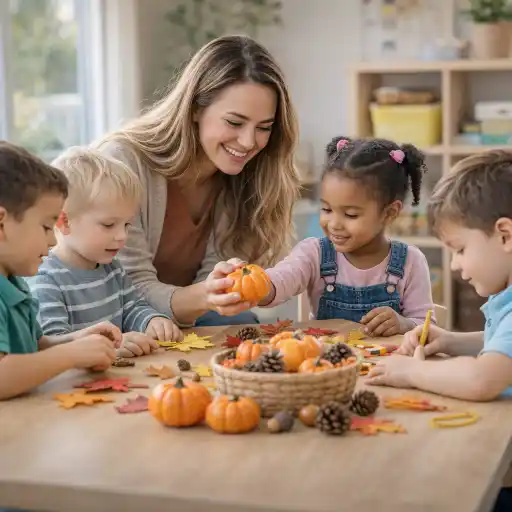
Fall themes offer a common starting point: a pretend orchard, leaf-raking crew, pumpkin stand, or neighborhood walk. Treat seasonal ideas as invitations rather than assumptions. Children’s family traditions and experiences differ, and a welcoming play theme leaves room for each child’s ideas.
- Choose one social skill to practice at a time, such as inviting, asking for a role, or offering a material.
- Make participation possible through words, gesture, signs, pictures, home languages, and observation.
- Notice small steps toward connection, not only whether a child joins immediately.
How can you prepare fall play so children can enter?
A thoughtfully arranged environment can make the play story easier to understand and offer newcomers a natural place to contribute. Set up a defined space for two to four children, keep pathways clear, and provide open-ended props that can support more than one role. For example, a pretend farm stand might include baskets, play produce, signs, and a simple shopping list. A block-area neighborhood might have small boxes, toy people, and paper for signs.
Plan enough complementary materials to reduce unnecessary competition. Instead of providing only one basket, add a second basket or introduce roles such as grower, shopper, sign maker, or delivery helper. Role cards or picture cues can be useful, but they should be optional supports—not assignments that lock children into a part. Leave room for children to alter the story or invent a new one.
Inclusive design also means considering sensory and communication access. A busy dramatic-play center may need a quieter nearby option, a smaller group, or extra time for a child to watch before participating. NAEYC’s discussion of inclusive environments describes how physical, social, and temporal adjustments can support meaningful engagement. Small changes—accessible materials, clear visual cues, or a less hurried schedule—can open up participation.
- Arrange props where children can see and reach them independently.
- Use pictures, signs, and familiar words to make roles and materials understandable.
- Protect unhurried play time when possible so children have time to observe, enter, and extend the story.
What simple routine can children use to join the play?
Teach a short joining routine during a calm moment, before children face the pressure of a busy center. Puppets, toy animals, or a quick demonstration can make each step visible. Keep the routine flexible; children may communicate an idea in different ways, and not every play situation requires the same approach.
- Look: Notice what the children are doing and what the play might be about.
- Move closer: Find a comfortable place to see or hear without disrupting the group.
- Watch and wait: Look for a pause, an open role, or a material that could create an entry point.
- Offer an idea: Ask a question or suggest a specific contribution.
- Try another option: Play nearby, ask about a different role, return later, or choose another activity if the group is not ready.
Practice short, usable scripts in different fall scenarios: “Can I help plant?” “What are you making?” “Can I be the customer?” or “Can I add a sign?” Children can also point to a picture, offer a prop, use a sign, or communicate in a home language. Praise the attempt specifically: “You watched first and found a way to ask for a job.” CSEFEL guidance supports teaching social skills directly through modeling, rehearsal, and opportunities to use the skill during everyday play.
How can educators coach without taking over?
Adults can bridge the gap between a child’s interest and the group’s play while keeping children in charge of the story. First, pause and observe: Is the child already finding a way in? Is there a role the group could realistically add? What communication method is comfortable for the child? Then offer the smallest support likely to help and give children time to respond.
A brief cue may be enough: “Watch, then ask,” or “I see a farm stand—what could you offer?” If a child needs more support, model a phrase or point to a visual. You might ask the group, “Could someone use a delivery helper?” Then step back. Too many questions, adult-directed roles, or speaking for a child who can communicate independently can interrupt the play rather than support it.
Teach children already playing how to respond respectfully, too. They might say, “You can be the shopper,” “You can build beside us,” or “You can have the next turn.” They may also need to protect an ongoing story or a structure they are building. Inclusion is reciprocal: seek a realistic opening while respecting everyone’s agency.
- 🧩 Use one calm prompt, allow processing time, and fade support when children begin interacting.
- Name helpful actions: “You made room for another builder and kept your idea going.”
- If a group is not ready, acknowledge disappointment and help the child consider another choice without framing it as personal rejection.
Which fall activities invite collaboration and meaningful roles?
Choose a shared idea that can grow through children’s contributions rather than a product that must look a certain way. Begin with an accessible invitation, then let children shape the story. Fall materials—real or pretend leaves, blocks, baskets, fabric, paper, and toy vehicles—can support cooperative play without requiring elaborate preparation.
- Build a neighborhood: Children make homes, a park, or a market from blocks and boxes. Offer roles such as builder, road planner, or sign maker.
- Create a leaf collage: Place a large sheet of paper at the table and invite children to add, sort, or arrange leaves together. Ask how their pieces might connect.
- Open a pretend orchard or farm stand: Provide baskets, pretend apples or pumpkins, and optional roles such as grower, shopper, and cashier.
- Plan a leaf-delivery route: Use lightweight pretend leaves and baskets; children can decide where deliveries go and how to carry them safely.
- Tell a group story: Start with a prompt about a windy day or a lost pumpkin. Each child can add a word, gesture, sound, drawing, or action.
Fall preschool activity examples include dramatic-play settings, block-area themes, and group collages. Adapt the theme to the children’s interests and family contexts; seasonal play does not need to center on a holiday. When disagreements arise—two children want the same basket, for example—name the shared problem and invite safe options: take turns, find another container, or carry it together. Let the children help decide when they are ready.
How can you notice progress and avoid common pitfalls?
Progress may look quieter than a successful, sustained group game. A child might watch from nearby, imitate a peer, offer a prop, accept a role, or return after an unsuccessful attempt. These behaviors show growing awareness and participation. Brief, objective notes can help staff notice patterns: record the play context, the child’s approach, the support offered, peers’ responses, and what might help next time.
Avoid forcing participation or treating spoken language as the only valid way to join. Do not take over a child-led story, assign a child the “helper” role every time, or praise only a finished project. If a child is repeatedly left out, consider group size, noise, available roles, communication access, and peer dynamics. Share strengths-based observations with families and ask what approaches, interests, or words work well at home.
- Notice attempts, persistence, helping, listening, and repair—not only immediate entry.
- Accept gestures, visuals, sign, home languages, and assistive communication as valid ways to participate.
- Reflect as a team on which environmental changes make entry easier and which prompts can be faded.
Keep supervision and safety central when arranging group activities or using natural materials. State requirements vary - check your state licensing agency when adapting supervision, grouping, or documentation procedures.
Conclusion: How can children learn to join fall-themed group play?
Children learn to join group play through welcoming environments, clear practice, responsive coaching, and repeated opportunities to try. Prepare a flexible fall-themed play space with accessible materials and meaningful roles; teach children to look, move closer, observe, and offer an idea; then use brief prompts that leave the play in children’s hands. Accept different communication styles and recognize watching, trying, and returning as meaningful progress.
The goal is not perfect social performance or a finished seasonal display. It is greater access, confidence, and shared enjoyment. Choose one fall invitation this week—a neighborhood build, leaf collage, or pretend orchard—and notice how children begin to connect. For classroom-ready cooperative-play language and activities, revisit Let’s Play Together: Cooperative Play Words and Activities for Preschool Buy Now $1.99; to extend your professional learning about relationships and social problem-solving, consider Supporting Social Learning: Creating Classrooms that Care Buy Now $24.00.
- Pumpkin Spice and Sensory Delight: Easy Autumn Sensory Bins for Early Learners
- 💛🧩 ¿Cómo puedo hacer que mi enseñanza sea inclusiva para los niños con autismo?
- 10 Ejemplos de Cómo la Cultura Influye en el Desarrollo Infantil
- Cute Fall Picture Ideas Teachers Can Try in the Classroom
- Autumn Activities for Toddlers and Preschoolers
- Celebrando la amistad en el cuidado infantil durante el Día de los Mejores Amigos
- Small Group Activities for Preschoolers: Play, Learn, and Grow
- Canciones, juegos y preguntas de círculo para niños
- Preschool Circle Time Ideas for Learning and Connection
- Baby’s First Fall: Simple Ways to Explore the Season Through Play
- Hello, Fall! Cozy Activities to Help Babies Explore the Season
- How Can Preschool Teachers Use Fall Activities to Strengthen Family Engagement?
- How Can Simple Fall Activities Support Kindergarten Readiness Through Play?
- How Can Fall Movement Games Rescue Rainy Recess in a Small Child Care Classroom?
- When Fall Decorations Overwhelm the Classroom, How Can You Create a Calmer Seasonal Environment?
- How Can You Refresh Fall Learning Stations Without Buying New Materials?
- How Can You Teach Children to Join Fall-Themed Group Play?
- How Can Preschool Plant-Care Jobs Bring the Garden Indoors in Late Fall?
- How Can You Plan Fall Celebrations Every Child Can Follow, Including Children With Different Hearing Needs?
- How Can Woodland Mail Make Fall Dramatic Play a Meaningful Writing Experience?
