Fall celebrations can be joyful without making sound the price of admission: children should be able to see, understand, and join in, whether they use spoken language, sign, hearing technology, or a combination. Start by exploring ChildCareEd’s Supporting Children with Hearing Loss  Buy Now $16.00 course for focused strategies to support communication and participation. For broader preschool activity planning, Inclusive Lessons for Preschoolers Buy Now $16.00 can help you adapt materials and lessons so every child has a meaningful way to take part.
With thoughtful preparation, autumn gatherings can build connection and curiosity instead of leaving a child to watch from the sidelines. The practical steps below help providers create celebrations that are engaging, accessible, and welcoming to families.
Why does accessible celebration planning matter?
Celebrations often bring together several demanding conditions at once: unfamiliar routines, excited voices, music, group directions, and busy rooms. For a child who is Deaf or hard of hearing, access may depend on clear sightlines, the child’s communication approach, a quieter place to listen or regroup, and enough time to follow what is happening. A child who misses directions may appear disengaged or unsure; the difficulty may be access, not interest.
Planning access benefits the whole group. Visual schedules, clear turn-taking, hands-on materials, and predictable transitions help children understand expectations and feel secure. Shared participation also supports friendships: cooperative activities create natural opportunities for children to communicate with one another rather than simply attend the same event.
Remember that children’s hearing, language, devices, and communication preferences differ. Some use sign language, some use spoken language or listening technology, and some combine approaches. Ask the family what works for this child and collaborate with the child’s support team as appropriate. The CDC notes that intervention plans vary by child and family and may involve communication professionals, devices, and other supports. Keep the focus on access, belonging, and each child’s strengths.
How can you prepare the room and schedule so children can follow along?
Start with the environment. Arrange the group in a circle or open semicircle so children can see the facilitator and one another. Make sure faces are well lit; avoid placing the speaker in front of bright windows. Reduce competing noise where practical by lowering background music, closing a noisy window, and moving the activity away from vents or loud centers. As the DRDP Access Project guidance emphasizes, visual access, seating, reduced distractions, and daily checks of amplification technology can support participation and observation for children who are Deaf or hard of hearing.
Make the sequence visible before the celebration begins. A picture schedule might show arrival, welcome, activity stations, snack, and goodbye. Use a visual cue for transitions and give a brief warning before changing activities. Introduce new vocabulary or the activity theme ahead of time with objects, photos, or picture cards.
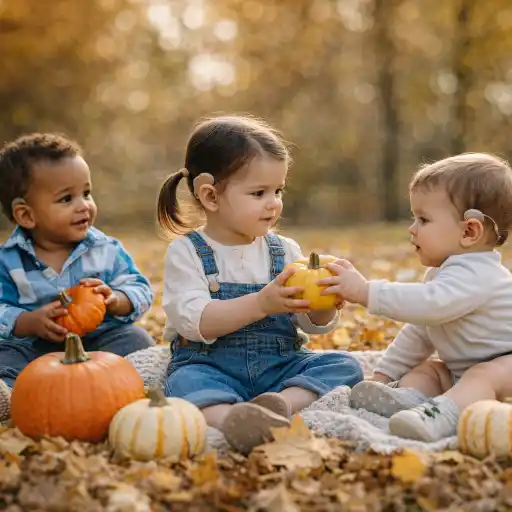
Check any hearing technology only in accordance with the family’s directions and program procedures; do not adjust or handle equipment beyond your training or agreed role. Ask the family how staff should respond if a device seems uncomfortable or is not working.
- Set up stations with clear labels and materials within children’s reach.
- Keep pathways open and designate a calmer area where a child can take a break without being excluded.
- Agree on a visual attention cue—such as a wave or raised picture card—and use it consistently.
- 🪑 Invite children to choose a place where they can see the activity and their peers comfortably.
What activities make a fall celebration engaging through more than sound?
Build the event around shared ideas such as harvest, friendship, gratitude, or caring for the community rather than relying on one holiday tradition. This gives families room to participate in ways that fit their culture and beliefs. ECR4Kids’ suggestions for inclusive fall gatherings include seasonal art, sensory stations, stories, and activities centered on kindness and connection.
Offer several ways to explore the season: leaf rubbing or collage, sorting pumpkins or pinecones by size and texture, a supervised sensory table, a gratitude mural, or a cooperative “find the colors of fall” walk. Use large, durable objects and avoid small items that pose choking risks for young children. During storytelling, pair expressive facial cues and gestures with pictures, props, or signed language as appropriate to the child and family.
Music and movement can remain part of the celebration, but should not be the only route to participation. Let children feel safe, appropriate vibrations from an instrument, watch a movement demonstration, follow picture cues, or choose a quieter alternative. The aim is not to make every child experience sound in the same way; it is to provide meaningful choices and participation. For fall sensory play, tactile and visual materials can make exploration rich and collaborative.
- Prepare a shared mural where every child can add a leaf, drawing, or message.
- Use partner tasks, such as sorting harvest objects together or building a pretend market.
- Offer choices to observe, join briefly, or move between stations; participation need not look identical.
How should staff communicate during the celebration?
Gain the child’s attention before speaking or signing, then face the child and keep your face visible. Use concise, natural language; do not shout or exaggerate speech. Say the child’s name or show the visual cue, identify the topic, and demonstrate the next step. When you are unsure whether a message was understood, rephrase it, point to a visual, or show the action rather than repeating the same words louder.
Group conversation can become difficult when several people speak at once. Establish a simple turn-taking routine: one person speaks or signs at a time, and a facilitator indicates whose turn it is. Repeat or summarize peer contributions when needed, and leave a pause so the child can look between the speaker, interpreter if present, materials, and other visual information. Follow the child’s communication plan and the family’s guidance; do not assume that lipreading alone provides full access.
Invite peers into inclusive communication in a low-pressure way. Teach a few relevant signs only when appropriate and accurate, model gestures and visual cues, and emphasize that classmates can communicate respectfully in different ways. Gallaudet’s guidance on fostering social connections highlights direct respectful interaction and collaborative activities. Speak to the child, not around the child, and avoid singling them out as a lesson for the group.
- Preview key words such as “pumpkin,” “turn,” “snack,” and “finished” with pictures or objects.
- Use open-ended invitations and wait long enough for a response in the child’s preferred mode.
- Give each child a clear way to request help, a break, or another turn.
How can providers partner with families and prevent common pitfalls?
Ask families what helps their child participate in group events: preferred communication methods, useful visual supports, device routines, and signs that the child needs a pause. Share the plan in advance, including the schedule, noise level, food or sensory materials, and any invitation for family contribution. Offer accessible ways to participate, such as sharing a recipe, photo, story, or craft idea, without making a family responsible for providing the child’s access.
After the event, share a brief strengths-based note: what the child enjoyed, how they communicated, which supports helped, and what you might adjust next time. With family permission, coordinate with relevant specialists or the child’s educational team. The DRDP Access Project recommends understanding a child’s language and communication approach and collaborating with family and service providers to support appropriate observation and learning.
Common pitfalls are usually avoidable with a little planning:
- Relying only on spoken announcements or songs: pair them with visual cues, demonstrations, or written/picture directions.
- Assuming every Deaf or hard-of-hearing child uses the same communication method: ask the family and follow the individual plan.
- Positioning the child where faces are hard to see: check lighting, seating, and sightlines from the child’s perspective.
- Forcing participation or treating a quiet choice as failure: provide flexible ways to observe, join, or take a break.
Document what worked so the next celebration becomes easier for the team. State requirements vary - check your state licensing agency, and consult program policies and the child’s individualized supports when relevant.
What are the main takeaways for an inclusive fall gathering?
A celebration every child can follow is designed around access from the beginning, not patched together after a child struggles. Plan clear sightlines, lower competing noise, preview the schedule, provide visual and hands-on activities, and communicate in the child’s preferred way. Families are essential partners because they know the child’s communication preferences and what makes participation comfortable.
Most of all, define success broadly. A child might contribute by signing, speaking, watching a demonstration, creating art, collaborating with a peer, or taking a calm break and returning. These are all legitimate ways to belong. Thoughtful, flexible planning makes fall celebrations more welcoming and strengthens everyday classroom practice long after the seasonal decorations come down.
As you plan, ask: Can each child see what is happening, understand the next step, communicate a choice, and participate in a way that feels right? When the answer is yes, the celebration becomes a shared experience—not just an event some children can hear.
References
- Inclusive Fall Celebrations in Early Education
- How can Minnesota child care programs best support children who are Deaf or Hard of Hearing?
- Activities for Preschoolers with Hearing Loss
- Fall Sensory Play: Enriching Activities for Deaf Children
- Autumn Activities for Listening and Language
- Tips for Teaching Students who are Deaf or Hard of Hearing
- Working with a Student who is Deaf/Hard of Hearing
- Fostering Social Connections
- Surviving Preschool
- Using the DRDP (2015) with Children Who Are Deaf or Hard of Hearing
- Every Child Matters: Practical Tips for a Safe and Inclusive Classroom
- Inclusive Care Strategies for Children with Special Needs
- Supporting children with hearing or vision impairments
- The Friendly Monster Listening Club Buy Now $1.50
- Soft or Hard? Sensory Exploration Observation Checklist Buy Now $1.50
- The Friendly Monster Classroom Buy Now $1.75
- CDC: Early Interventions for Hearing Loss
- Early Intervention Activities for Children With Hearing Loss
- Fall Themed Sensory Play
- Nature’s Classroom: Fall Sensory Learning Outdoors
Further ChildCareEd learning: Inclusive Lessons for Preschoolers Buy Now $16.00, Supporting Children with Hearing Loss Buy Now $16.00, Building Equity: Inclusionary Practices in Preschool Buy Now $10.00, Recognize, Respond, Respect: Supporting Diverse Learners Buy Now $55.00$45.00, and Classroom Setup for Child Care Buy Now $24.00.
- CDA Certification en Español: Recursos y Consejos para Educadores Bilingües
- 💛🧩 ¿Cómo puedo hacer que mi enseñanza sea inclusiva para los niños con autismo?
- 10 Ejemplos de Cómo la Cultura Influye en el Desarrollo Infantil
- Cómo Empezar una Guardería en Casa: Requisitos y Pasos
- Proporciones de Cuidado Infantil y Tamaños de Grupo por Edad en Maryland (Guía Rápida para Centros y Hogares)
- Proporciones de Cuidado Infantil y Tamaños de Grupo por Edad en Nueva Jersey (Guía Rápida para Centros y Hogares)
- Proporciones de Cuidado Infantil y Tamaños de Grupo por Edad en Virginia (Guía Rápida para Centros y Hogares)
- Celebrando la amistad en el cuidado infantil durante el Día de los Mejores Amigos
- Canciones, juegos y preguntas de círculo para niños
- Cómo simplificar la capacitación para sus empleados de daycare
- How can Minnesota child care providers keep young children safe around Fourth of July fireworks?
- How can Michigan providers keep children safe around fireworks this Fourth of July?
- How can child care programs keep children safe and calm around fireworks?
- How Can Child Care Providers Teach Holiday Vocabulary with Context and Care?
- How Can Preschool Teachers Use Fall Activities to Strengthen Family Engagement?
- How Can Fall Classroom Activities Teach Positive Behavior?
- How Can Child Care Providers Manage Classroom Transitions and Routines During Fall Celebrations?
- How Can Child Care Providers Celebrate Fall Without Assuming Every Family Shares the Same Traditions?
- How Can Fall Read-Alouds Reflect the Lives of All Children?
- How Can You Plan Fall Celebrations Every Child Can Follow, Including Children With Different Hearing Needs?
