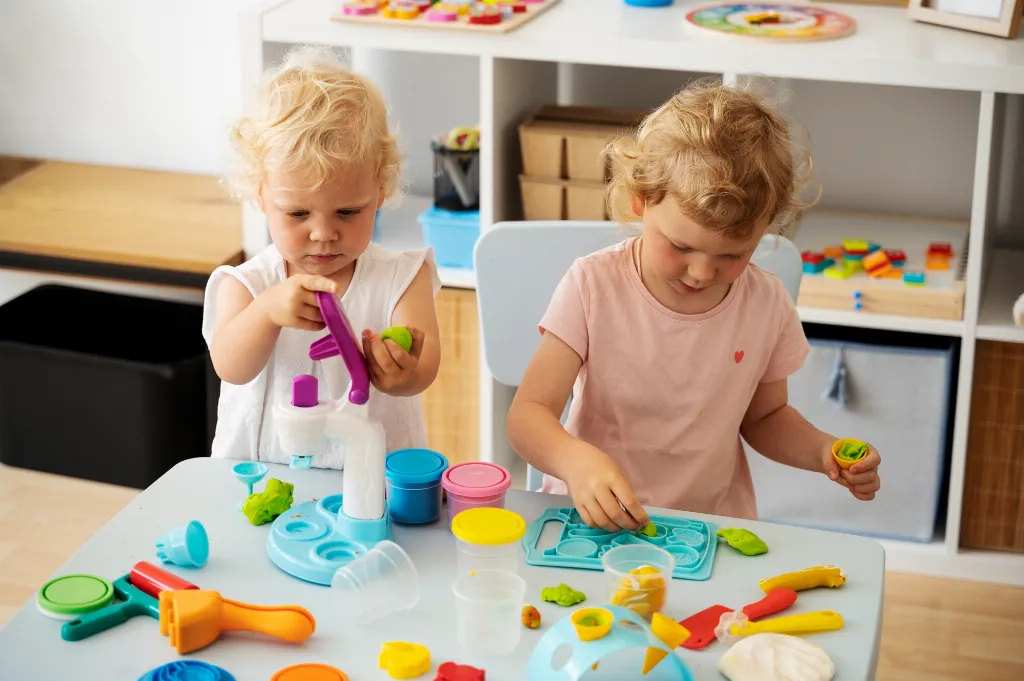
 Good lesson plans help your team feel calm and keep children learning. Use short, playful plans that fit your daily routine and the children's needs. Use simple #lessonplans for your #toddlers that focus on #play, quick #assessment, and small supports for #inclusion. Why it matters: short plans make the day predictable, build relationships, and help children take small growth steps.
For clear steps and a short template, see Toddler Lesson Plans for Play, Learning and Development and other samples at A Simple Guide to Toddler and Preschool Lesson Plans. Remember: state requirements vary - check your state licensing agency.
How do I write a simple toddler lesson plan that fits the day?
Keep plans very short so every staff member can read them quickly. Use one clear goal and four parts. Follow this numbered template:
- 📘 Goal (one sentence): e.g., "Today we will practice taking turns while building with blocks."
- 🧰 Materials (3–6 items): list where each item lives (shelf, bin, cart).
- 🧩 Steps (2–4 short steps): 1) Welcome and song, 2) Main play activity, 3) Free-choice corners, 4) Closing (song or tidy-up).
- 📸 Assessment (quick): one short observation and two family conversation prompts.
Why this works:
- Play is the main teaching tool. See ChildCareEd lesson planning for examples.
- Short goals match toddlers' attention spans (10–15 minutes for a focused activity).
- Using the same template each week saves time and helps substitutes run the room (see sample templates at Early Childhood Lesson Plan Examples).
Quick tips:
- 🧺 Prep once: gather materials into a labeled bin for the week.
- 🔁 Repeat favorites midweek to strengthen learning.
- 📋 Keep the written plan to one page so staff use it.
What play-based activities build learning and development?
Pick one goal and choose 1–4 simple activities that match it. Each activity below supports a different area of development and is easy to run with little prep.
- 📖 Story & Talk
- Read a short book, ask 1–2 open questions, then sing a related song.
- Good for language and attention. See story ideas at ChildCareEd.
- 🎨 Process Art
- Large paper, washable paint, and loose parts. Focus on doing not the product.
- Supports fine motor and creativity. Use different tools for mixed ages.
- 🧺 Sensory Bin
- Rice, dried pasta, or water with scoops and cups. Rotate themes weekly.
- Find no-cost ideas and safety tips at ChildCareEd sensory ideas and more activities at PlayLearn.
- 🌳 Nature Walk
- Collect leaves, count finds, and listen for birds. Great for gross motor and early math.
- See nature and theme ideas at Preschool Plan-It.
- 🧸 Social Skills Game
- Use puppets or a feelings chart to practice sharing and using words.
- See sample social plans at ChildCareEd examples.
Timing idea: Welcome 5 min; Main activity 10–15 min; Free choice 15–20 min; Closing 5 min. Short blocks keep toddlers engaged.
How do I adapt plans for mixed ages, inclusion, and busy schedules?
Adapting saves time and helps every child join. Start with observation and add small supports. Follow these numbered steps:
- 🔍 Observe (5–10 minutes): note one strength and one next step for each child.
- ✨ Layer the challenge:
- Offer three levels: easy, guided, and more challenging roles.
- Example: painting—infants explore sealed paint bags, toddlers use big brushes, preschoolers talk about colors.
- 🔧 Provide simple tools: thicker crayons, tongs, trays, or chair supports so children can join.
- 🤝 Give roles: line helper, book passer, or cleaner to build confidence and participation.
- 📚 Use visuals and routines: picture schedules and song cues help transitions and attention.
Inclusion tips come from developmentally-appropriate practice. See What Is DAP for steps and the idea of matching activities to age, individual needs, and culture. For infant/toddler planning ideas, see Lesson Planning for Infants and Toddlers.
Remember to follow licensing rules: state requirements vary - check your state licensing agency. Small changes—bigger trays, picture steps, extra wait time—help the plan work for more children.
How will I know the plan worked, how do I assess learning, and what mistakes should I avoid?
Assess with quick, doable steps so staff can use them every day. Use portfolios and short observations to track progress.
- 📷 Quick assessment: take one photo + write one sentence about what you saw (who, skill, next step). For portfolio tips see Creating Effective Child Portfolios.
- 📝 Short observation routine:
- Each day, pick one child to watch for 5 minutes and note one strength + one next step.
- Repeat favorite activities midweek and compare notes.
- 🔎 Use milestones: match observations to milestones like those from the CDC to spot delays early.
Common mistakes and fixes:
- ❌ Too many goals. ✅ Fix: pick one clear goal each day or week.
- ❌ Not observing. ✅ Fix: schedule a 5–10 minute observation window daily.
- ❌ Too many materials out. ✅ Fix: offer 1–2 props and a materials basket.
- ❌ Forgetting transitions. ✅ Fix: plan 1–2 songs or visuals for each change.
FAQ (quick):
- Q: How long should a toddler activity last? A: About 10–15 minutes.
- Q: Do I need a written plan every day? A: A short weekly plan plus daily notes works well.
- Q: How do I include children with special needs? A: Observe, layer tasks, add visuals, and work with families and specialists.
- Q: Where can I find ready templates? A: Start with ChildCareEd templates and sample plans.
Conclusion
Simple, play-first #lessonplans help your team feel calm and help children learn every day. Use one clear goal, a short 4-part template, and 1–3 playful activities. Prep materials once, observe daily, and adapt with small supports. For more templates, activities, and courses, explore ChildCareEd resources like lesson plan examples, portfolio guides, and infant/toddler courses. You are the biggest strength in the room—your planning and warm interactions make big learning happen.
- CDA Infants/Toddlers: Lesson Planning Made Easy
- CDA Infants/Toddlers: Health and Safety
- CDA Infants/Toddlers: Abuse and Neglect Reporting Requisites
- 45-Hour Infant and Toddler Curriculum
- CDA Infants/Toddlers: Brain Development and Gene Expression
- CDA Infants/Toddlers: Stages of Development
- CDA Infants/Toddlers: Smart Nutrition & Feeding
- Meaningful Lesson Planning for Infants/Toddlers
- Playing with a Purpose: Infant/Toddler Lesson Planning
- CDA Home Visitor Subject Area 8 Part 1 Birth to 5
- Terrible Two's Can Be Terribly Fun!
- Actividades de Otoño Fáciles para Preescolares esta Temporada
- Can Toddlers Do STEM in the Sandbox at Minnesota Daycares?
- A Simple Guide to Toddler and Preschool Lesson Plans
- How Do I Plan a Strong Preschool Curriculum?
- Canciones, juegos y preguntas de círculo para niños
- How Can Child Care Providers Support Infant Brain Development?
- Toddler Lesson Plans for Play, Learning, and Development
- Weekly Lesson Plans for Infants, Toddlers, and Preschoolers
- How can I make easy infant and toddler lesson plans that really work?
- What should toddler development training teach my staff?
- How can I make infant and toddler lesson plans that really work?
- Daycare Lesson Plans for Toddlers: Easy Activities for Every Day
- From Tummy Time to First Steps: Free Lesson Plans for Infants 0–12 Months
- How Can Child Care Providers Plan Infant Activities Around Developmental Milestones?
- How Can You Repeat a Toddler Activity Without Repeating the Exact Same Lesson?
- How Can You Help an Infant Resume Exploring After Care Interrupts Play?
- How Can November Professional Development Improve Infant and Toddler Teaching Practices?
