A child can be thrilled about starting school and worried about leaving a familiar classroom—or proud of a finished project and sad that playtime is over. Helping children make room for both feelings builds emotional understanding; Opportunity for Growth: Emotional Development  Buy Now $16.00 offers providers a deeper look at young children’s emotional development and practical context for this work. Use the ideas below to turn everyday moments into calm, supportive opportunities to practice “both/and” thinking.
Why does it matter when children can feel two things at once?
Children’s experiences rarely fit neatly into one emotional label. A child might be excited to see a visiting family member and shy about greeting them, or disappointed that a game ended while still feeling proud of how they played. When adults insist on a single answer—“Are you happy or sad?”—children may conclude that one part of their experience is mistaken or unwelcome.
Supporting mixed feelings helps children build emotional vocabulary, perspective-taking, communication, and self-regulation. It also gives educators a fuller picture of behavior. A child who hangs back from a new activity may be curious as well as uncertain; a child who protests cleanup may be enjoying the play and struggling with the transition. Naming both possibilities invites connection instead of judgment.
Emotional understanding develops over time and varies across children. The goal is not to test whether a child can identify a sophisticated emotion or to make every child talk about personal experiences. It is to offer language and support that fit the child’s age, communication style, and comfort.
- Make room for complexity: “You can miss your family and still enjoy being here.”
- Separate feelings from actions: feelings are valid; adults still set limits to keep everyone safe.
- Remember that body language offers clues, not certainty. Ask with curiosity rather than assuming.
How can you introduce “both/and” language without pressuring children?
Start with observation, a tentative feeling label, and an open invitation. For example: “You’re smiling as you show me your picture, and you’re looking at the torn corner. You might feel proud and disappointed. Does either word fit, or is it something else?” The child can agree, choose a different word, point to a visual, or decline to answer.
Use everyday events and story characters before inviting children to describe their own experiences. A character who is moving to a new home might feel curious about the new space and sad to leave friends. A child waiting for a turn might feel eager and impatient. Keep questions short, and allow silence: reflection can take time.
- Try “What feelings might be here?” instead of “You’re happy, right?”
- Offer a few choices: “Excited, nervous, both, or another feeling?”
- Model complexity yourself: “I’m glad we’re going outside and a little worried about the rain.”
- Accept words, gestures, drawings, home-language expressions, picture choices, and assistive communication.
Use “both/and” as an invitation, not a required answer. Some children will identify one feeling today and notice another later. That gradual discovery is meaningful progress.
How can the Emotion Sorting Activity support mixed-feeling conversations?
The Emotion Sorting Activity: Hard Feelings vs. Happy Feelings Buy Now $1.49 gives children a concrete starting point. Its cards include mad, happy, worried, proud, scared, calm, excited, and sad. The original two-category sort can help children notice and name feelings, but providers can extend it so children do not learn that emotions must always fit into a strict “hard” or “happy” box.
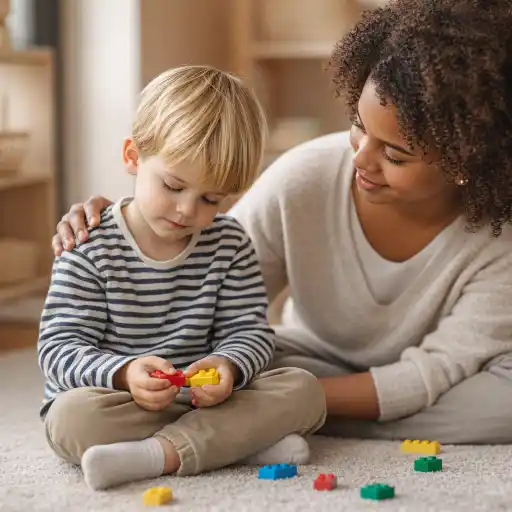
Introduce the activity during a calm moment. Explain that “hard” can mean uncomfortable or challenging—not bad—and that happy feelings are not the only feelings worth sharing. Invite children to place a card in a category, then discuss whether a feeling might belong in more than one place, change over time, or need more context. For instance, excitement can feel joyful and a little overwhelming.
- 😊 Try a “both” space: Add a third mat or basket labeled “Two feelings can fit.” Children may place a card there or select two cards for one scenario.
- Sort a story: Read about a character facing a change. Ask which feelings might show up before, during, and after the event.
- Use a puppet: “Bear is happy about the picnic and worried because it might rain. What could help Bear?”
- Invite explanations, not right answers: “What makes you think that?” and “Could another feeling fit too?”
Keep turns brief and voluntary. The activity is a conversation aid, not an assessment of whether a child has selected the “correct” emotion.
How can educators respond when mixed feelings show up in behavior?
Behavior may communicate more than one need or feeling. A child who refuses to leave blocks may be disappointed about stopping, proud of the structure they built, and unsure about what comes next. Respond first to safety and connection; save teaching and reflection for when the child is calmer.
A practical sequence is notice, validate, support, and revisit. Notice observable details without making a character judgment. Validate a possible feeling with flexible language. Offer one manageable support or choice, then briefly revisit the event afterward to practice a next step.
- Notice: “You’re holding the block tower and standing by the shelf.”
- Validate: “You may feel proud of your building and disappointed that cleanup is starting.”
- Support: “Would you like to take a photo of it or save one minute to show me?”
- Revisit: “You wanted to keep building. Next time, you can ask for one more minute.”
When behavior is unsafe, pair empathy with a clear boundary: “You’re angry that the truck is gone. I won’t let you hit. You can ask for a turn or squeeze this pillow.” Mixed feelings can help adults understand the moment; they do not remove the need for safe, consistent guidance. If patterns are persistent, intense, or unsafe, collaborate with families, program leadership, and qualified specialists rather than drawing conclusions from one incident.
How can you adapt this practice for different ages and communication needs?
Keep the emotional idea while changing the way children participate. Infants and young toddlers benefit from warm co-regulation and simple narration: “You wanted the toy, and now you’re upset. I’m here.” Older toddlers can point to pictures or choose between two possible feelings. Preschoolers may explore familiar combinations such as excited and nervous or happy and sad, while older children may discuss why feelings change as events unfold.
Use visuals, puppets, gestures, drawing, movement, home-language words, signs, and augmentative communication. A child can watch or point rather than speak; participation should not require eye contact, a particular facial expression, or personal disclosure. Children also express emotions differently across cultures and individual experiences, so avoid treating facial cues as proof.
- For toddlers: Use two or three clear picture choices and brief, repeated phrases.
- For preschoolers: Introduce “both,” “and,” and simple story scenarios.
- For multilingual learners: Invite families to share familiar feeling words and comforting routines.
- For sensory-sensitive children: Offer a quiet, seated option and reduce noise or performance demands.
- For children who are overwhelmed: Pause the activity, prioritize safety and connection, and return to the idea later.
State requirements vary - check your state licensing agency when aligning professional learning or classroom practices with local requirements. Directors can help staff stay consistent by agreeing on a few shared scripts and reflecting together on what helps each child feel understood.
Conclusion: What is the essential message about mixed feelings?
Helping a child hold two feelings about the same event begins with a simple message: more than one feeling can be true. Providers can make this idea tangible through stories, thoughtful questions, flexible emotion visuals, and the Emotion Sorting Activity’s cards—especially when they add room for “both” rather than treating categories as fixed rules.
Notice before interpreting, offer feeling words as possibilities, and let children communicate in the ways that work for them. When behavior becomes difficult, connect first, set clear safety limits, and revisit the situation once the child is ready. With brief, repeated, responsive practice, educators help children understand their experiences without needing to erase any part of them. For broader professional learning on the stages and importance of emotional development, explore Opportunity for Growth: Emotional Development Buy Now $16.00.
How can providers continue building their skills?
- Brighter Futures: Social Emotional Development Buy Now $16.00 — explores emotional development and appropriate interactions with young children.
- Self-Regulation & Change: Helping Children Cope Buy Now $16.00 — focuses on routines, responsive care, transitions, and self-regulation.
- CDA Subject Area 3 Buy Now $80.00 — a 10-hour training on social-emotional development, guidance, and self-regulation.
- Early Emotional Wellness Buy Now $16.00 — addresses emotional well-being and supportive program climates.
- The ABCs of Behavior: Turning Challenges into Learning Opportunities Buy Now
$55.00$45.00 — explores behavior, positive guidance, and classroom supports.
- 45 Hour Child Growth and Development
- CDA Bridge Bundle: Preschool
- Pediatric RSV First Aid & CPR/AED
- CDA Bridge Bundle: Family Child Care
- CDA Bridge Bundle: Family Child Care without Portfolio Review
- Art from the Heart for Preschoolers: Open Ended Art Projects that Build Self-Esteem
- CDA Bridge Bundle: Infant/Toddler without Portfolio Review
- CDA Bridge Bundle: Preschool without Portfolio Review
- CDA Bridge Bundle: Infant/Toddler
- Texas Director Credential
- Party Hats and Emotional Regulation: Helping Little Ones Navigate Big New Year Feelings
- Turn Your Home into a Thriving Family Childcare Business!
- CDA Certification en Español: Recursos y Consejos para Educadores Bilingües
- 10 Ejemplos de Cómo la Cultura Influye en el Desarrollo Infantil
- Cómo Trabajar en el Cuidado Infantil en Carolina del Norte: Requisitos y Pasos
- How Can Child Care Programs Support Children’s Mental Health?
- Celebrando la amistad en el cuidado infantil durante el Día de los Mejores Amigos
- Feelings Activities for Toddlers: Building Social and Emotional Skills
- What Does Gentle Parenting Sound Like? Examples of What to Say in Common Situations
- Happy or Sad? Preschool Activities That Help Children Read Emotional Clues
- Feelings Activities for Toddlers: Point, Move, Match, and Name It
- How Can Child Care Providers Support Kindergarten Emotions on the First Day of School?
- How Can We Build an Emotion Vocabulary Children Can Actually Use?
- Why Might a Child Laugh After Making a Mistake—and How Can Providers Help?
- What Should You Do When Children Disagree with a Storybook’s Ending?
- How Can Classroom Photo Sequences Help Children Tell What Happened?
- How Can You Help a Child Hold Two Feelings About the Same Event?
- How Can You Help a Beginning Reader Say More Than the Sentence on the Page?
- Why Does Challenging Behavior Happen at the Same Time Each Day?
- How Can Child Care Providers Support a Grieving Child During Their First Holiday Season?
