Every child care program can be ready for the unexpected. This short guide helps directors and providers make simple plans, practice with their team, and keep children calm and safe. Focus on 1 thing at a time and you will build strong habits. Remember your #safety, your #children, your #staff, your #emergency plan, and #reunification as you read.
Why this matters: Families trust you to keep their children safe. A plan reduces panic, speeds reunification, and shows you are professional. Also, state requirements vary - check your state licensing agency. For more detailed templates and training you can start with ChildCareEd's resources like the Emergency Preparedness Plan Buy Now $0.00 and the Emergency and Disaster Preparedness  Buy Now
 $55.00$45.00 course.
Why does emergency preparedness matter for our center?
2) It keeps families informed and trusting. If parents see a clear plan, they worry less and cooperate faster during reunification.
3) It helps your program keep running. Good plans include basic supplies and backup sites so you can care for children until families arrive. See FEMA and ChildCareEd for tips on supplies and plans (FEMA Preparedness on ChildCareEd Buy Now $0.00).
4) It meets rules. Many states require written plans and drill records. Keep your plan updated and keep logs of drills and training so you can show regulators and families you are prepared.
What should a simple emergency plan include?
- 🔹 Start with a short written plan (1–2 pages) that names the main actions: Evacuate, Shelter-in-Place, Lockdown, Reunify. Use clear words staff can remember. ChildCareEd offers a free template to adapt: Emergency Preparedness Plan Buy Now $0.00.
- 🔸 Do a risk check: list likely local hazards (fire, flood, severe weather, intruder, power outage). FEMA and local emergency managers can help you identify risks (FEMA IS-36 course).
- 🔹 Assign roles: who leads evacuation, who takes attendance, who calls families, who grabs the Go-Bag.
- 🔸 Pick meeting and relocation spots: one on-site and one off-site. Post routes and maps near exits.
- 🔹 Pack a classroom Go-Bag and a center kit (72-hour basics). See ChildCareEd's supply list: Emergency Supply List Buy Now $0.00.
- 🔸 Include children with special needs: notes on mobility, meds, and communication supports.
Keep the plan where staff can reach it and keep a digital copy. Review it at least once a year and after any drill or real event.
How do we train staff and practice drills without scaring children?
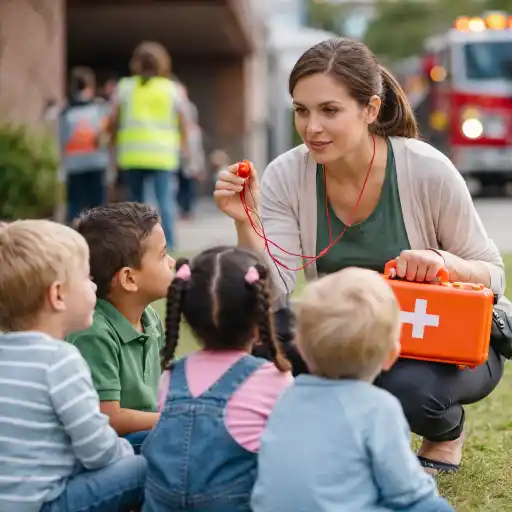
- 📘 Teach staff first: go over the written plan and roles in a staff meeting. Practice tabletop scenarios before live drills so staff feel confident.
- 🙂 Use calm language with children. Explain drills as practice: "We are going to practice our safe walk to the meeting spot." Keep tone steady and short.
- 🔔 Keep drills short and age-appropriate. For toddlers practice tiny steps; for preschoolers add a song or rhyme to guide movement.
- 📋 Do these steps when you run a drill:
- Announce it is a drill and what will happen.
- Have staff follow roles (lead, attendance, grab bag).
- Check that all children are safe and calm.
- Debrief with staff: what worked, what to improve.
- 🧑🤝🧑 Invite local responders to review drills. They can give practical tips and calm staff worries.
Document each drill (date, time, participants, notes). ChildCareEd explains why practice and documentation matter in courses like Emergency and Disaster Preparedness Buy Now $55.00$45.00. For a concise overview of why regular drills, simple tools, and quick thinking protect children and how to begin staff training, see Fire Drills, Flashlights & Fast Thinking.
How do we reunify families and communicate clearly during an emergency?
1) Plan reunification steps now. Choose where families will pick up children and how you will check IDs. The CDC has tools about reunification and why speed matters (CDC Reunification).
2) Use a simple communication plan with one sender. Decide who will send short messages to families (text, email, phone tree). Keep message templates ready: "We are safe. Children are with staff. We will update again at [time]." ChildCareEd covers templates and communication ideas (ChildCareEd article).
3) Make a reunification kit: printed child roster, ID check list, pens, clipboards, Red/Green cards or sign-out sheets. The "I Love U Guys" Foundation explains the Standard Reunification Method and tools like cards and kits (SRM Reunification).
4) After reunification give families a short written note about what happened and resources for emotional support. Keep records of who picked up each child.
Conclusion
Emergency readiness is a set of small steps that add up. Below is a quick checklist to keep on your office wall:
- Write or update a 1–2 page plan with clear roles. (ChildCareEd template Buy Now $0.00)
- Pack classroom Go-Bags and a center kit. (Supply list Buy Now $0.00)
- Train staff, run drills, and document each practice. (Training Buy Now
$55.00$45.00) - Write and rehearse a reunification plan and communication messages. (CDC)
- Review the plan yearly and after any drill or real event. state requirements vary - check your state licensing agency.
Common mistakes & how to avoid them:
- Not updating contact lists — review monthly.
- Skipping drills — schedule brief drills every quarter.
- Using scary simulations — keep practice calm and age-appropriate.
FAQ
- Q: How often should we drill? A: Monthly for fire drills; quarterly for other scenarios is a good start. Check state rules.
- Q: What if phones fail? A: Use printed lists, radios, and an out-of-area contact number in your Go-Bag.
- Q: Can staff carry meds in Go-Bags? A: Follow your licensing rules and parental consent; store meds safely and document them.
- Q: Who should approve our plan? A: The director and your licensing agency; invite local responders for feedback.
Keep it simple, practice often, and support each other. You are doing important work. For step-by-step forms and training, start with ChildCareEd and the CDC links above.
1) It protects children and staff. When staff know what to do, injuries are less likely and children feel calmer. The Centers for Disease Control says early care programs are important in community preparedness — planning helps everyone stay safer (CDC Childcare Providers).- Life in the Fast Lane: Why First Aid Training & CPR is Critical for Those Working With Children
- 🌪️Fire Drills, Flashlights & Fast Thinking: Why Emergency Preparedness Is a Must
- ¿Cómo solicito la licencia para una guardería en California?
- Proporciones de Cuidado Infantil y Tamaños de Grupo por Edad en Maryland (Guía Rápida para Centros y Hogares)
- Proporciones de Cuidado Infantil y Tamaños de Grupo por Edad en Nueva Jersey (Guía Rápida para Centros y Hogares)
- Proporciones de Cuidado Infantil y Tamaños de Grupo por Edad en Virginia (Guía Rápida para Centros y Hogares)
- Lista para Guardería en Casa en Texas: Cómo Iniciar una Guardería en el Hogar
- Cómo Trabajar en el Cuidado Infantil en California: Requisitos y Pasos
- Cómo Trabajar en el Cuidado Infantil en Wisconsin: Requisitos y Pasos
- How can Georgia early childhood educators build confidence with CPR and AED training?
- Group Training for Child Care Staff: What Directors Need to Know
- Cómo simplificar la capacitación para sus empleados de daycare
- How can child care centers be ready for emergencies?
- How can child care centers get ready for emergencies?
- MN Daycare Rules and Regulations 2026: Current Requirements and Upcoming Changes
- How Do You Start a Daycare in Illinois: Home Daycare or Child Care Center?
- Can You Open a Daycare Just for Children With Special Needs? Licensing, Training, and Staffing Explained
