Every day you keep children safe and help families feel calm. This article gives simple, practical tips for Washington child care 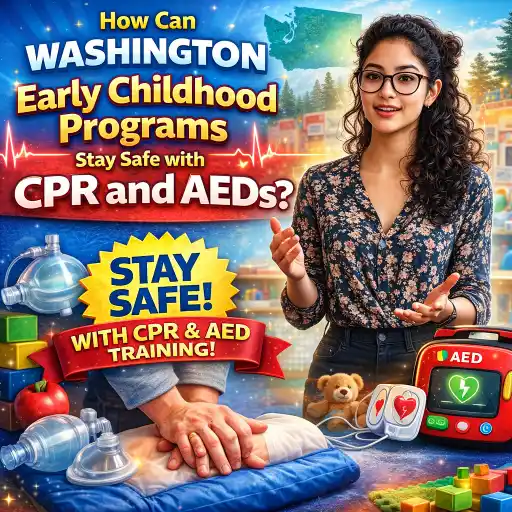 directors and providers about #CPR, #AED, and emergency #safety. You will find steps for staff skills, where to keep an AED, how to plan training, and easy ways to practice. State requirements vary - check your state licensing agency.
Why it matters: 1) Quick action saves lives. 2) Trained staff reduce fear and help families trust your program. For background on why pediatric skills matter, see Keeping Children Safe. For Washington training expectations, see a helpful checklist at Washington training checklist.
What CPR and AED skills should staff have?
- 🩺 Get pediatric CPR & first aid certification. Use a child-focused course such as the ChildCareEd Pediatric In-Person First Aid & CPR/AED Buy Now $95.00 or the blended option Buy Now
$85.00$80.00 that includes skills practice. For step-by-step course options and to register for upcoming certification classes, see our guide Are You Ready? - 📋 Make sure certificates meet licensing needs. For Washington specifics, follow state-approved lists and training trackers in this compliance guide. State requirements vary - check your state licensing agency.
- 🔁 Plan renewal reminders. Most CPR/AED cards are valid two years. Track expirations early so staff don’t lapse.
- 👩🏫 Practice hands-on skills. Skills sessions (in-person or blended) from trusted providers like ChildCareEd or Red Cross help staff feel ready.
How do we plan and track training and records?
- 📁 Create one staff file per person with hire forms, background checks, and scanned certificates. See record tips at How to stay compliant.
- 💻 Keep a digital backup. Save certificates in a secure folder and in a paper file.
- 🗓️ Use a one-page tracker with: course name, date, hours, expiration, and whether it is state-approved. ChildCareEd lists training resources in Health & Safety Training Resources Buy Now $0.00.
- 🔔 Set calendar reminders at 90, 30, and 7 days before expiry to schedule re-certification.
- 📥 Verify MERIT/STARS reporting for Washington-approved courses or save certificates for manual entry. Read more in the ChildCareEd STARS guidance in the compliance article.
- ✅ Keep a program binder with drill logs, emergency plans, and a training dashboard for quick review on visits.
Where should AEDs be placed and how do we maintain them?
- 📍 Choose visible locations. Put AEDs where adults can reach them quickly and where signage shows the location. University and organizational policies recommend public, unlocked placement during occupied hours — see an example policy at Indiana University AED policy.
- 🔋 Maintain and replace parts. Replace pads and batteries by their expiration date and after every use. Log maintenance and check status monthly, like facility checks in Facility walk-through audits.
- 📣 Notify local dispatch if required. Some state laws ask you to register the AED location — check local rules in state AED laws.
- 🧑⚕️ Link with a medical authority. Many AED programs recommend a medical contact or physician oversight for policies and training.
- 🔁 Train multiple staff. At least one trained person per shift is ideal. Consider pairing AED training with your CPR course (many ChildCareEd and Red Cross classes include AED use).
How can we practice, avoid common mistakes, and keep everyone calm?
Practice makes action feel normal. Use these easy-to-follow steps and common-mistake fixes.
- 🧯 Run regular drills. Practice evacuation, medical response, and who calls 911. Log drills in your binder. See emergency planning ideas at Emergency Preparedness Training.
- 🎯 Do short, focused skills refreshers each month. 10–20 minute practice stations keep skills alive.
- 🧸 Teach children basics in a friendly way. Use low-stress activities from ChildCareEd’s Fun Ways to Teach First Aid Buy Now $0.00 so kids know helpers will act if needed.
- ⚠️ Common mistakes and fixes:
- ❌ Mistake: Letting CPR/AED cards lapse. ✅ Fix: 90/30/7 day reminders and shared calendar alerts.
- ❌ Mistake: Buying non-approved courses. ✅ Fix: Confirm Washington approval via DCYF/STARS guidance or use trusted ChildCareEd/Red Cross courses.
- ❌ Mistake: Storing AEDs in locked cabinets during hours. ✅ Fix: Keep AEDs accessible and clearly signed unless your policy requires otherwise.
- 📚 Use blended training: Complete online lessons, then schedule a skills session so staff demonstrate hands-on care. The Red Cross skills sessions are one model.
Conclusion
Keep your program ready by focusing on five things: 1) staff #training in pediatric CPR and first aid, 2) an accessible and maintained #AED, 3) clear recordkeeping and reminders, 4) regular practice and drills, and 5) using trusted providers like ChildCareEd or the Red Cross for training. For course options and local details, start with Health & Safety Training Resources Buy Now $0.00 and the Washington training checklist at What should a Washington child care training checklist include?. State requirements vary - check your state licensing agency.
Quick FAQ (short):
- Q: How often should CPR be renewed? A: Usually every 2 years; check your course card and set reminders.
- Q: Who should use the AED? A: Any trained staff; many state laws offer Good Samaritan protection — see AED State Laws.
- Q: Can online-only classes count? A: Some do, but many licensing rules require an in-person skills check. Use blended courses or skills sessions like Red Cross or ChildCareEd offers.
You’re doing important work. Small steps—tracking, practicing, and using approved training—help your team feel ready and keep children #safe. For more templates and course listings, visit ChildCareEd.
Keeping clear records makes licensing visits calm and keeps your team ready. Try this 6-step plan from simple to done: Having an AED in the right spot and kept working matters. These clear steps help: In Washington, many programs expect staff to know pediatric first aid, child and infant CPR, and how to use an AED when needed. Practical steps:
- 45 Hour Child Growth and Development
- How To Keep A Healthy Class: Six Tips for Germ Control
- Basic Health & Safety and Breastfeeding Awareness
- Bienvenido! Welcoming All Families
- Pediatric RSV First Aid & CPR/AED
- Creating Safe & Healthy Child Care Environments
- Texas Director Credential Renewal
- Texas Director Credential
- Early Childhood Education in Washington
- Getting Ready for the New School Year: Prioritizing Safety with First Aid and CPR Training
- CDA Certification en Español: Recursos y Consejos para Educadores Bilingües
- Curso Para Trabajar En Daycare:Qué Necesitas Para Empezar
- Recursos en Español sobre el Sueño Seguro del Bebé
- Proporciones de Cuidado Infantil y Tamaños de Grupo por Edad en Virginia (Guía Rápida para Centros y Hogares)
- Consejos de Supervisión Activa para Salones de Preescolar y el Juego al Aire Libre
- Retraso del Habla en la Guardería: Cómo Pueden Ayudar los Proveedores
- Cómo Trabajar en el Cuidado Infantil en Carolina del Norte: Requisitos y Pasos
- What Should DC Early Childhood Teachers Know About Pay Equity Right Now?
- What do Washington child care licensing requirements mean for early childhood educators?
- How can Washington early childhood programs stay safe with CPR and AEDs?
- How can Oklahoma child care providers stay ready with CPR and AED skills?
- Are We Ready? CPR and AED Preparedness for Florida Early Childhood Educators
- How can DC early childhood classrooms stay ready with CPR and AEDs?
- Canciones, juegos y preguntas de círculo para niños
- Cómo simplificar la capacitación para sus empleados de daycare
