Every day you keep children safe. Being ready with CPR and AED skills helps you act fast in a real emergency. This short guid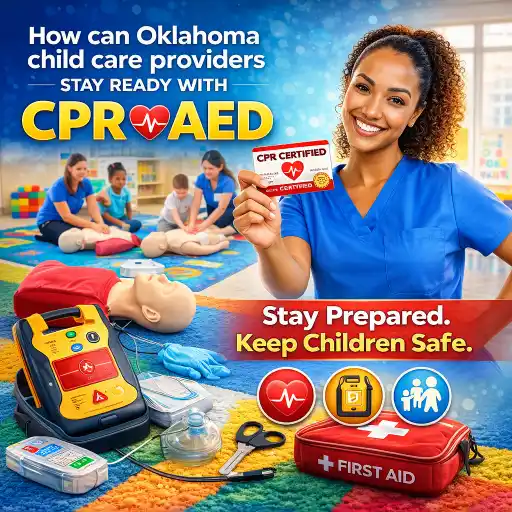 e gives clear steps for #Oklahoma #CPR #AED #training #safety and points you to training that counts for licensing. Links below help you find state-approved options and practical ways to practice at your program. Remember: state requirements vary - check your state licensing agency.
Why does CPR and AED training matter for Oklahoma child care providers?
1. Emergencies can happen fast. Having trained staff means quicker help for a child who chokes, collapses, or has a severe allergic reaction. For a helpful overview of why CPR matters for caregivers, see ChildCareEd’s CPR and First Aid guide.
2. It builds trust. Parents want to know staff is prepared. A current First Aid/CPR/AED certificate shows families you take safety seriously — and many programs require it.
3. It fits licensing and best practice. Oklahoma offers early childhood health supports and training resources through state programs; learn more at the Oklahoma State Department of Health Early Childhood page.
4. It can save lives. Quick CPR and AED use give a child the best chance after sudden cardiac arrest. For guidance on building a program that keeps AEDs ready, see the Louis J. Acompora Foundation’s tips on implementing CPR-AED programs.
Why it matters: Investing in training is investing in children’s safety. Well-trained staff react calmly, keep other children safe, and give accurate information to 911 responders. State rules and local needs change, so stay updated with state sources and approved trainers.
What training options count for Oklahoma licensing and how can I get certified?
1. Know what counts. Oklahoma tracks approved training through the state professional development system. Many child care trainings from ChildCareEd explain state-approved training and how it applies to licensing.
2. Choose a course format that works for your schedule:
- 🔹 Blended learning (online + skills check). Example: ChildCareEd’s blended First Aid & CPR/AED, which has an online portion followed by a hands-on skills session — sometimes remote skills verification (RSV) or in-person with an instructor. See ChildCareEd’s blended options and a sample RSV course here.
- 🧑🏫 In-person classes. If your employer or licensing needs an instructor-led course, ChildCareEd lists in-person courses and schedules at their course page Buy Now $95.00.
- 💻 Online only. Useful for theory, but note: some workplaces or OSHA rules may require an instructor-led skills check to meet workplace standards. The Red Cross explains which formats meet workplace rules.
3. Count the hours and certificates. Keep certificates and OPDR/OPDL IDs ready so completed training is reported. ChildCareEd explains how its courses map to Oklahoma requirements on the Oklahoma course pages: Childcare Courses in Oklahoma.
Tip: state requirements vary - check your state licensing agency before you register. Ask your director which training formats they accept and if the course must be pediatric-focused (infant/child).
How do you build and keep CPR/AED skills ready in your program?
1. Make a simple plan. Start with a written Emergency Action Plan. ChildCareEd offers sample plans you can adapt: Sample Childcare Emergency Action Plan Buy Now $0.00.
2. Create an AED plan:
- 🔸 Designate who will check the AED monthly and after each use (battery, pads, power). The Louis J. Acompora Foundation has clear steps for building an AED program: Implementing CPR-AED Programs.
- 🙂 Assign trained rescuers and keep a list where staff can see it.
- 🔸 Place AEDs where staff can reach them quickly — near phones or exit routes.
3. Practice regularly. Hold short drills every 3 months so staff can practice calling 911, starting CPR, and using an AED. Use scenario role-play: choking, fainting, severe allergy. ChildCareEd’s courses explain realistic child scenarios and hands-on practice: What to Expect.
4. Keep records and refresh skills. Track certification dates and plan renewals. Many CPR/AED certifications last 1–2 years. Consider remote skills verification options if staff cannot leave the center (ChildCareEd RSV info: RSV course). For a deeper look at how remote skills training works and why it can be practical for busy centers, see The Benefits of CPR Remote Skills Training.
What common mistakes should I avoid and where do I find local rules?
1. Common mistakes to avoid:
- 😕 Relying only on online-only certificates when your licensing or employer needs an instructor-led skills check. Check with your program and regard the Red Cross note about workplace rules.
- 📄 Not keeping paper and digital certificates organized. Keep copies, OPDR IDs, and renewal dates.
- 🛠️ Storing an AED and forgetting maintenance. AEDs must be checked regularly — see state AED law guidance like the AED State Laws overview.
- ⏱️ Practicing too rarely. Skills fade — schedule short practice sessions and brief drills.
2. Where to find local rules and help:
- 📘 Oklahoma training and professional development: Oklahoma Scholars/Training and guidance pages help you find approved training paths.
- 🏥 State health supports: Oklahoma State Department of Health Early Childhood for health resources.
- 🧾 Licensing rules: Check your state licensing site, and remember: state requirements vary - check your state licensing agency.
FAQ (quick):
- Q: How often do I renew CPR? A: Usually 1–2 years — check your cert provider and licensing.
- Q: Does an online-only course meet licensing? A: Sometimes not; many licensors want a skills check. Verify ahead.
- Q: Can AEDs be used by staff without a medical license? A: Yes — good samaritan and state AED laws usually allow trained lay rescuers.
Conclusion: You can keep your program ready. Pick an approved course, make a short AED and emergency plan, practice with your team, and track certificates. Use Oklahoma and ChildCareEd resources to stay compliant and confident.
- Adult Only CPR AED and Adult First Aid Blended
- Adult/Child CPR AED and Adult First Aid Blended
- CPR & AED Adult, Child, Infant - Blended
- Pediatric Blended First Aid & CPR/AED Adult, Child, Infant
- Pediatric RSV First Aid & CPR/AED
- Pediatric In-Person First Aid & CPR/AED Adult, Child, Infant
- CPR & AED Adult, Child, Infant - In Person
- Texas Director Credential
- Life in the Fast Lane: Why First Aid Training & CPR is Critical for Those Working With Children
- CDA Certification en Español: Recursos y Consejos para Educadores Bilingües
- ¿Cómo pueden los equipos de cuidado infantil practicar habilidades rápidas de primeros auxilios en situaciones reales?
- Proporciones de Cuidado Infantil y Tamaños de Grupo por Edad en Maryland (Guía Rápida para Centros y Hogares)
- Proporciones de Cuidado Infantil y Tamaños de Grupo por Edad en Virginia (Guía Rápida para Centros y Hogares)
- Lista para Abrir una Guardería en Casa en Dakota del Norte: Cómo Empezar
- Lista para Guardería en Casa en Texas: Cómo Iniciar una Guardería en el Hogar
- Cómo Trabajar en el Cuidado Infantil en Wisconsin: Requisitos y Pasos
- What's new for child care in Oklahoma and what should providers do?
- How can Washington early childhood programs stay safe with CPR and AEDs?
- How can Georgia early childhood educators build confidence with CPR and AED training?
- How can Oklahoma child care providers stay ready with CPR and AED skills?
- Are We Ready? CPR and AED Preparedness for Florida Early Childhood Educators
- Babysitting Training Online: How to Build Skills, Safety, and Confidence
- Celebrando la amistad en el cuidado infantil durante el Día de los Mejores Amigos
- Canciones, juegos y preguntas de círculo para niños
- Which First Aid Course Do Child Care Providers Need for Licensing?
