According to ScienceDaily[1], an online news site featuring breaking news in science, health, and the environment, a child will die of choking on food every five days in the United States. Without knowing first aid or CPR, it is difficult to help the child in a moment's notice, especially while choking the child is unable to communicate and breathe.
At H&H Child Care Training Center we provide accredited First Aid and CPR certification for child care professionals. Choose either the in-person First Aid and CPR course (In-Person First Aid & CPR Buy Now $95.00) or the blended certification that combines self-paced online learning with a brief instructor-led skills session (First Aid & CPR Blended Course Buy Now $85.00$80.00); both issue a two-year HSI certificate accepted by many licensing agencies. This article explains why these trainings matter, how formats differ, how to choose the right option for your program, and how to integrate certification into your center's health and safety plan.
- First Aid and CPR In-Person Training Buy Now $95.00*
- First Aid and CPR Blended Course Buy Now
$85.00$80.00
Why is First Aid and CPR training essential for child care providers?
Child care professionals have an ethical and regulatory obligation to maintain a safe environment; rapid, competent emergency response can prevent morbidity and mortality. Young children are at higher risk of choking, airway obstruction, and sudden medical events because of developmental behaviors (mouthing, limited hazard recognition) and physiological vulnerability. Certification in pediatric-focused First Aid and CPR gives staff the skills to assess scene safety, identify respiratory compromise versus non-breathing, initiate age-appropriate chest compressions and ventilations, and use adjuncts such as bag-valve masks or an Automated External Defibrillator when available. Beyond the immediate clinical actions, training clarifies delegation of roles, documentation requirements, and communication pathways with emergency medical services and families—elements that reduce errors when seconds count. For programs evaluating policy and staffing, these trainings also cross‑walk with licensing and subsidy standards that require documented staff competencies and recorded renewal dates.
Which training formats are available and how do they differ?
Programs typically offer three formats: fully in-person skills classes; blended courses combining self-paced online modules with a short in-person skills verification; and fully remote skills-verification models (RSV) that pair online content with synchronous remote assessment. In-person formats emphasize hands-on muscle memory for infant and child chest compressions and choking relief, while blended formats allow learners to complete cognitive components asynchronously and dedicate in-person time solely to psychomotor assessment. If your staff have limited release time, a blended or RSV pathway can increase completion rates while preserving the essential skills check. Note technical requirements for online and remote modalities—modern browsers and stable connectivity are prerequisites: some platforms require the latest version of Chrome and a functioning webcam (see the platform readiness guidance linked below). (Browser/technical guidance)
How should I choose the right course for my program and licensing needs?
Select the course that matches the ages in your care, your licensing agency's approvals, and staff roles. Infant‑focused programs should prioritize pediatric-inclusive curricula (infant/child/adult content) and practice on infant manikins; supervisory or clinical staff may require BLS or healthcare-provider credentials. Confirm that the certification provider and curriculum are accepted by your state licensing authority—requirements can vary considerably by state. For information about state-specific pathways and how CPR/AED expectations are applied in practice, see related guidance for Georgia and Texas programs and our article on meeting online health-and-safety requirements for family providers. (Georgia CPR/AED guidance; Texas preparedness; North Dakota online H&S)
What happens during training and how do we keep skills current?
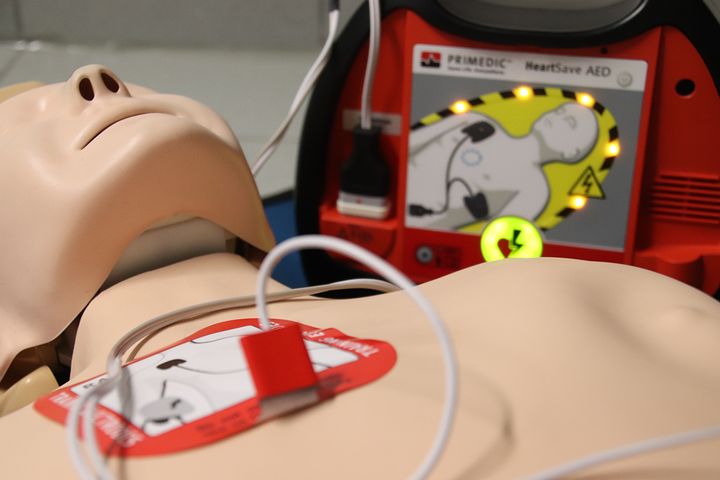
Expect competency-based assessment: instructors observe and score practical demonstrations (compressions, ventilations, choking maneuvers), and participants complete knowledge checks. Programs should collect certificates, log renewal dates, and run quarterly drills so muscle memory and team choreography are maintained. Many providers pair First Aid/CPR certification with a broader Basic Health & Safety course to ensure consistent policies for medication administration, diapering/emergency care, and allergic reaction response; integrating these topics in annual training cycles improves compliance. Practical recommendations: (1) keep at least one pediatric-sized bag‑valve mask and a functional AED on site, (2) require all new hires to complete pediatric-inclusive certification within their probationary period, and (3) schedule yearly refreshers or scenario-based drills to preserve psychomotor quality.
How do state licensing rules in Georgia, Texas, and North Dakota affect First Aid and CPR requirements?
State licensing offices set the acceptance criteria for CPR and First Aid certificates—criteria that can include which curricula are approved, whether blended delivery is acceptable, and which instructor credentials are required. Because requirements vary by jurisdiction, programs should confirm that the HSI or blended certificate you plan to issue is explicitly accepted by your state's licensing agency and retain that confirmation in staff files. For guidance on selecting infant-specific practice and manikins, see our article What is the best infant care training for child care providers? and keep a copy of the state's written guidance in your compliance binder for inspector review.
Recommended ChildCareEd course to add to your program offerings: CPR & AED Adult, Child, Infant - Blended Buy Now $85.00 (blended format covering all ages, with skills verification).
How do training and documentation interact with broader program quality?
Certification should be embedded in your program quality systems: align staff rosters with expiration dates, incorporate emergency-response protocols into the staff handbook, and include parent communication templates for incident reporting. Crosslink training records with your professional development tracking (for example, ECE certificate pathways) so staff can see progression from basic health-and-safety competencies to higher credentials. See articles on ECE certification pathways and food safety training for complementary compliance topics. (ECE certificate in Virginia; Food safety training)
Summary: What should you do next?
If you do not yet hold pediatric First Aid and CPR certification, enroll staff in an age-appropriate course this quarter. For programs with multiple staff schedules, the blended CPR & First Aid option reduces time away from care while preserving hands-on skills verification. Keep a single tracked file of all certificates and schedule scenario drills quarterly. To see state-specific implications or to align training with director credentials, consult our state and licensing guidance pages linked above.
Tags: #safety #CPR #firstaid #preparedness #health
Don't delay! Log in to childcareed.com and sign up today!
*Due to current COVID regulations, we require face masks at all times (masks can be provided by the instructor for a small fee) and keep a strict 6-feet distance from one another. Class sizes are also small in adherence to these regulations.
[1] Nationwide Children's Hospital. (2010, February 28). Choking is a leading cause of injury and death among children. ScienceDaily. Retrieved December 28, 2020 from www.sciencedaily.com/releases/2010/02/100226212559.htm
- 45 Hour Child Growth and Development
- Basic Health & Safety and Breastfeeding Awareness
- Birth to Five CDA Credential with Portfolio Review
- Pediatric Blended First Aid & CPR/AED Adult, Child, Infant
- Pediatric RSV First Aid & CPR/AED
- Pediatric In-Person First Aid & CPR/AED Adult, Child, Infant
- Creating Environments that Nurture Growth and Community
- Texas Director Credential
- ¿Cuánto tiempo se tarda en obtener una certificación CDA?
- ¿Cómo obtengo la certificación CDA en línea en Florida?
- Temas y Actividades para el Día Nacional del Kindergarten para Proveedores
- Capacitación Previa al Servicio para Proveedores de Cuidado Infantil en Dakota del Norte
- Are You Thinking About Selling Your Center? Start Preparing Now
- The Beginner’s Guide to Buying a Child Care Business
- When Should a Child Care Owner Hire a Business Consultant?
- Join Our Private Child Care Business Buyer and Seller Interest List
- Is Your Child Care Center Whispering, “It’s Time for My Next Chapter”?
- Before You Buy the Cute Daycare with the Tiny Chairs, Read This
- Take the Child Care Business Readiness Quiz
- The Smart Buyer’s Treasure Map for Finding a Child Care Center
- A Letter to the Child Care Owner Who Is Wondering, “What’s Next?”
- What Happens After You Fill Out the Child Care Business Interest Form?
- 6 Myths About Buying or Selling a Child Care Center
- How Can Florida Child Care Providers Prepare for Licensing Visits?
- Are You Ready to Be a Lead Teacher? 7 Signs You’re Prepared to Step Up
- What Do I Need to Become a Pre-K Teacher? 7 Things to Have Ready Before You Apply
- How Can Giving Children Real Choices Help Them Calm Down?
- What Does a New Preschool Teacher Need Before Their First Solo Morning?
