The #first30minutes set the tone for the whole day. For child care directors and classroom teams, the arrival window is a predictable, high-impact opportunity to build safety, connection, and instructional time. This article gives a practical, research- and practice-informed plan you can use immediately to shape calmer drop-offs, faster cues, and stronger routines for #morning in your #classroom so staff and #children can focus on learning.
Why it matters:
1) Predictability reduces stress: children behave better and settle faster when adults provide clear, consistent routines (see Importance of Routine in Child Care). 2) A well-managed arrival preserves teacher time for teaching and frees directors to coach—a small investment in the first half-hour yields calmer transitions later (see How to Create a Classroom Schedule).
1) How should the first 30 minutes be structured to support children and staff?
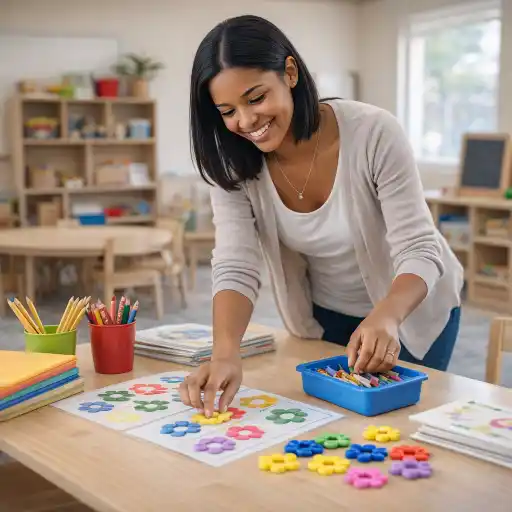
Use a simple, repeatable flow. The goal is to balance quick care tasks, family connection, and a calm welcome that orients children to the day. A practical sequence (30-minute window) looks like:
- 🟢 0–10 min: Arrival & health check (greet, sign-in, hygiene).
- Quick visual check and any brief family exchange (use a morning message card—see Morning Message Card Exchange Buy Now $0.00).
- 🟠 10–20 min: Independent calm choices (books, puzzles, two simple centers) while teachers complete care tasks.
- 🔵 20–30 min: Short welcome circle or small-group greet to preview the day and show the visual schedule.
Why this order? It honors families, protects health & safety, gives children a predictable loop to enter the room, and creates a clear anchor teachers can replicate daily (see Daily Routine Examples).
2) What setup tasks should staff complete before children arrive?
- 🔧 Room safety scan and materials: furniture secure, pathways clear, outdoor gate locked (1–2 minutes).
- 🧼 Hygiene station ready: hand sanitizer or sinks prepped, extra towels, tissues, and cleaning wipes accessible.
- 📋 Family notes visible: sign-in sheet, allergy lists, and any special instructions from families (post near the door).
- 🎯 Activity setup: 2 calm choice centers staged at child eye level so arriving children can self-select and settle quickly.
- 👥 Staffing plan posted: who greets, who handles health checks, and who leads the morning circle.
These small steps are supported by practical program examples like the Cyert Center's Welcoming Process (Cyert Center Welcoming Process) and ChildCareEd's teacher morning routine guidance (A Morning Routine for a Preschool Teacher Buy Now $0.00).
3) How can teams manage drop-off and ease separation anxiety?
- 🎈 Greet by name and keep goodbyes brief and consistent. Create a short exit ritual (a phrase or song) families practice together—this helps with separation (see Separation Anxiety guidance).
- 📆 Preview the day: show the child’s first picture on the visual schedule so they know what’s next (Free Visual Schedule).
- 🤝 Offer a short familiarization plan for new or anxious children: staggered visits, parent shadowing, or Welcome Week models (see Cyert Center).
- 🧸 Provide a calm corner with taught regulation tools (sensory bottle, quiet book) and practice using it when children are calm (Supporting Children During Changes).
State requirements vary - check your state licensing agency for arrival documentation and supervision rules.
4) What visuals, cues, and micro-routines make the first 30 minutes predictable?
Young children rely on concrete cues. Use visuals and short micro-routines to build independence and reduce questions:
- 🎵 Cue + countdown: teach a 2-minute and 30-second warning with the same song or chime each day—practice it often (Transitions & Daily Routines).
- 🖼️ Picture schedule at child eye level: clip or move a photo to indicate "now" and "next"—this is especially helpful at drop-off (see Create a Classroom Schedule).
- ✅ One-step job cards: give arriving children a tiny, specific task (hang a backpack, place a nap blanket) to speed engagement and build competence.
- ⏳ Visual timers: for non-readers, a sand-timer or color timer shows waiting time and reduces arguing about "how long."
These supports lower anxiety and protect instructional minutes; ChildCareEd's practical visuals and transition tools offer ready-to-use downloads and templates (Visual Schedule guidance).
5) What common mistakes derail the first 30 minutes — and how do we avoid them?
Common problems are predictable; enumerate them and use simple fixes:
- 😵 Mistake 1: No pre-arrival setup (staff scramble). Fix: assign a 10-minute pre-open checklist and rotate responsibility.
- ⏱️ Mistake 2: Underestimating transition time. Fix: pad arrival blocks with 5–7 extra minutes and rehearse with your team.
- 🗣️ Mistake 3: Inconsistent messages from staff. Fix: use one script for greetings and goodbyes; post the script by the door and practice it weekly.
- 🚫 Mistake 4: Using calm spaces as punishment. Fix: teach and model the calm corner as a choice during calm periods.
- 📣 Mistake 5: Skipping family communication. Fix: use a morning message card or a one-line note so families and teachers share the same plan (Morning Message Card Exchange Buy Now $0.00).
Small, consistent corrections (one change at a time) create durable improvements. For program-level planning, see the fall-routine playbook and scheduling resources at ChildCareEd (Building a Fall Routine).
Conclusion
Make the first 30 minutes routine-based, brief, and visible. Start by standardizing three elements: (1) a pre-open checklist, (2) a consistent greeting/exit script, and (3) a simple visual "now/next" for children. Implement one change per week, coach staff in 5–10 minute huddles, and keep families informed. Small adjustments in the #morning loop compound into calmer days, stronger family partnerships, and more time for meaningful teaching. For templates, downloads, and courses that support these steps, explore the ChildCareEd resources cited above.
FAQ
- Q: How long until a new arrival routine 'sticks'? A: Expect early improvement in days; consistent habits usually form in 2–4 weeks of daily practice.
- Q: What if a child won’t separate? A: Offer a short, predictable parent-stay plan (staggered exit) and practice brief goodbyes; consider a transitional item from home.
- Q: How to handle mixed-age drop-off? A: Stagger entrances by room or age, use helpers, and keep multiple "calm choice" centers available.
- Q: Should we require parents to sign a morning log? A: Yes if required by licensing—state requirements vary - check your state licensing agency.
- 45 Hour Child Growth and Development
- 45 Hour Preschool Methods and Materials
- Bienvenido! Welcoming All Families
- 45 Hour Infant and Toddler Methods and Materials
- Pediatric RSV First Aid & CPR/AED
- 45 Hour School Age Methods and Materials
- 45-Hour Infant and Toddler Curriculum
- Texas Director Credential Renewal
- Texas Director Credential
- Strong Good Hug, And A Kiss to Say Good Bye
- Frequently Asked Questions
- ¿Cuáles son las mejores actividades del Día de la Tierra para niños en casa o en el aula?
- Proporciones de Cuidado Infantil y Tamaños de Grupo por Edad en Nueva Jersey (Guía Rápida para Centros y Hogares)
- Temas y Actividades para el Día Nacional del Kindergarten para Proveedores
- How can indoor creative play encourage teamwork for preschoolers in California?
- How can Texas early childhood educators build respectful parent partnerships?
- Celebrando la amistad en el cuidado infantil durante el Día de los Mejores Amigos
- Small Group Activities for Preschoolers: Play, Learn, and Grow
- Canciones, juegos y preguntas de círculo para niños
- Can a Signing Day Inspire the Next Generation of Early Childhood Teachers in Georgia?
- How can I stop missing staff training deadlines?
- How can I run a simple first-week staff onboarding plan for Alabama child care?
- How can the first 30 minutes set your classroom up for a successful day?
- Why Do the First Five Minutes with a Child Matter Most?
- How can centers effectively support new employees during childcare onboarding?
- Toddler Classroom Schedule: A Full-Day Example from Drop-Off to Pick-Up
- Mixed-Age Daycare Schedule: How to Plan a Day for Different Age Groups
- Preschool Schedule That Works: When to Plan Centers, Circle Time, and Outdoor Play
- How Can Child Care Providers Create a Preschool Schedule That Supports Learning and Well-Being?
