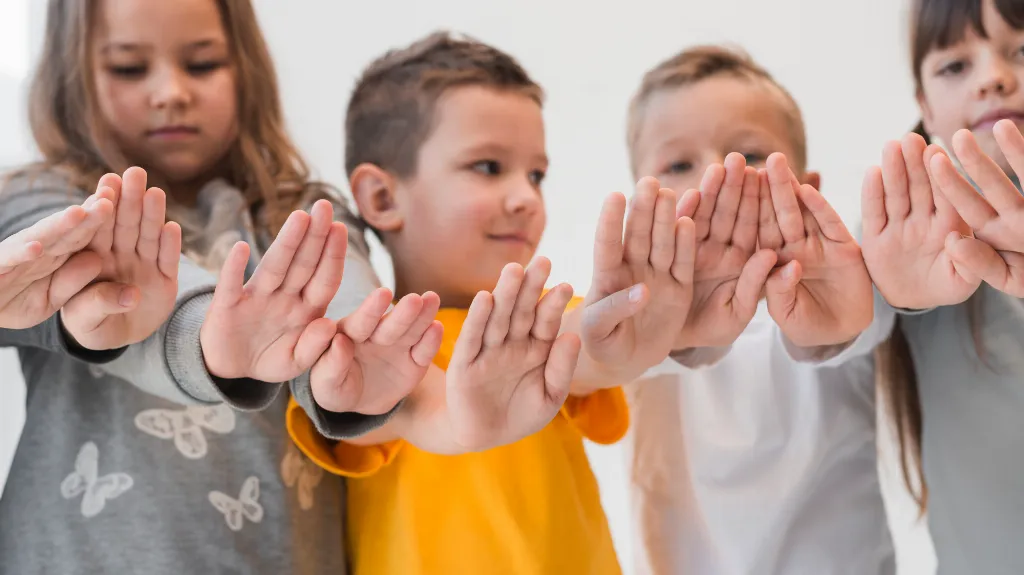
 Sign language activities are simple ways to help babies and young children tell you what they need and feel. This article gives practical ideas child care providers can use every day. You will find games, routines, tips for working with families, and ways to avoid common mistakes.
Use these ideas to make your #classroom calmer and to support #signlanguage, #babysigning, #communication, #infants and #toddlers.
How can I start sign language with infants and toddlers?
1. Start small and repeat. Pick 3–5 signs that match daily routines (for example: more, eat, sleep). Use the sign and say the word at the same time. ChildCareEd shows this simple plan in Babies and Sign Language.
- 😀 Use signs during real moments: meal times, diapering, and nap time.
- 🙂 Watch and wait—give the child time to respond.
- 😄 Celebrate attempts even if the sign is not perfect.
2. Model signs before children sign back. Babies can learn by watching—adults sign first. The ChildCareEd article How Baby Sign Language Can Benefit Your Classroom explains why modeling helps.
3. Keep it consistent. Use the same sign across staff and with families when possible. Ask parents what they prefer and add their choices to your daily plan.
4. Use simple visuals and props. Printable alphabet or image cards help older infants and toddlers link pictures with signs (see Totcards flashcards and printable ASL alphabet resources such as ASL Alphabet Printable).
What fun activities and games help children learn signs?
1. Songs and movement: Add signs to finger plays and songs. Singing while signing helps memory and makes learning playful.
- 🎵 Sign the alphabet song using an ASL Alphabet Song video or printable alphabet cards to help older toddlers fingerspell.
- 🐘 Play the "Elephant" game (no sound) to practice fast signs and build turn-taking; a version is shared in Sign Language Activities.
- 🧸 Use toys and books: sign words while reading or when giving a toy. Books with pictures make great practice times.
2. Routine-based games: Turn snack time into a signing lesson—sign “eat,” “more,” and “all done.” Keep the pace short and repeated across days. The website Baby Signing Activities offers many ideas for real-life practice.
3. Interactive stations: Set up 3 quick centers (books, balls, play food). At each center, staff consistently use 2–3 chosen signs so children see the same words repeated.
Why does sign language matter for child development and families?
1. Less frustration, more learning. When children can show needs—like wanting milk or more play—there are fewer tears and fewer behavior problems. ChildCareEd explains these benefits in How Baby Sign Language Can Benefit Your Classroom.
2. Supports language growth. Signing does not replace talking. Instead, it pairs with speech to help children understand and later say words. Research and programs for baby signing show that children often build vocabulary faster when signs are used with words (see general resources and program examples at Happy Baby Signs FAQs).
3. Helps with inclusion. Sign language supports children with different needs and children learning more than one language. Incorporating signs creates a classroom where more children can be understood. The ChildCareEd article on International Sign Language highlights how signing can make classrooms more inclusive. You can also introduce these ideas during celebrations — see activities to mark the International Day of Sign Languages that promote sign language and cultural diversity in early childhood settings.
Why it matters: 1) Communication is the key to safety, learning, and relationships. 2) Simple, routine signs give children tools now, while spoken words grow. For extra guidance about tracking development, see the CDC's Learn the Signs. Act Early. resources.
How do we avoid common mistakes and bring families along?
Common mistakes to watch for:
- 🚫 Using signs alone without words. Always say the word when you sign.
- 🚫 Changing signs across staff. Pick a small set of consistent signs and stick with them.
- 🚫 Forcing a child’s hands. Never move a child's hands to make them sign.
Tips to include families and follow rules:
- 📧 Share short videos or photos of the signs you use and invite parents to practice at home. ChildCareEd offers training and family guides such as the Training Guide for Families from Diverse Language and Cultural Backgrounds.
- 🤝 Ask families which signs they prefer and note their choice in your plan.
- 📋 Keep a record in lesson plans (use a “sign of the week”) so every staff member knows what to use. See the planning ideas in Babies and Sign Language.
Remember: state requirements vary - check your state licensing agency.
FAQ (quick):
- Q: Will signing delay speech? A: No—signing used with words supports speech.
- Q: When should I start? A: Model signs as early as 6 months; expect sign-back often by 8–12 months.
- Q: Do I need special training? A: No—basic consistency helps. Training (like Language Development
 Buy Now $16.00) can increase confidence.
 - Q: What if families say no? A: Respect their choice and use strong verbal and visual cues instead.
Conclusion: Start simple, keep it fun, and involve families. Small daily signs make a big difference in helping children feel heard and understood. Use short games, routines, and consistent words-with-signs to build stronger communication in your #classroom.
- Building Bridges for Dual Language Learners
- CDA Home Visitor Subject Area 3 Part 3 Birth to 5
- Language Development in Early Childhood
- Building Bridges for Dual Language Learners: For Workforce Solutions
- Recognize, Respond, Respect: Supporting Diverse Learners
- The Best Promotion is Play
- What Makes Me Special: An Overview of Autism and ADHD: For Workforce Solutions
- Baby Steps to Milestones ONLINE
- Montessori Cultural Activities: Exploring the World Through Play and Learning
- Moving About the Classroom: Effective Transitions for Everyday
- Language for Our Littlest Learners: Building Communication From the Start
- The Power of International Sign Language in Early Childhood Education
- CDA Certification en Español: Recursos y Consejos para Educadores Bilingües
- Cómo Ayudar a Niños con Retraso del Habla en el Cuidado Infantil
- Apoyo en Preescolar para Retrasos del Habla: Estrategias Simples que Ayudan
- Retraso del Habla en la Guardería: Cómo Pueden Ayudar los Proveedores
- How Can Texas Early Childhood Educators Build Strong Communication with Children with Special Needs?
- What are fun language-learning games preschool teachers can use?
- Canciones, juegos y preguntas de círculo para niños
- Belonging Activities for Kids Who Feel Left Out: Simple Ways to Help Them Join In
- How Can Child Care Providers Support Language Development in Young Children?
- What Toddler Activities Encourage Language and Communication?
- How Can Child Care Providers Teach Children What to Say During Conflict Beyond “Use Your Words”?
- How Can Child Care Providers Help Children Join Play Without Taking Over?
- How Can Child Care Providers Support Early Writing Without Using Worksheets?
- How Can Child Care Providers Create Print-Rich Early Childhood Environments?
- How Can We Build an Emotion Vocabulary Children Can Actually Use?
- How Can Animal-Themed Bingo Build Descriptive Language in Preschoolers?
- How Can Teachers Support Language Development in Toddlers?
- How Can Read-Aloud Questions Help Children Who Give One-Word Answers?
