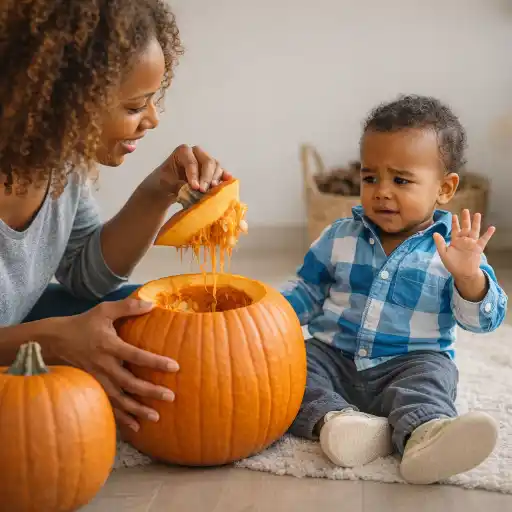
A child’s “I don’t want to touch it” is not a failed pumpkin activity—it is valuable communication about comfort, readiness, and choice. A flexible exploration plan can keep science, language, and discovery accessible without making touch the price of participation. For practical strategies you can use across your preschool curriculum, explore Inclusive Lessons for Preschoolers  Buy Now $16.00; the course focuses on adapting materials and lesson plans so children with different abilities can participate meaningfully. You can also deepen your approach to sensory differences and inclusive classroom supports with Effective Approaches for Autism and Inclusion Buy Now $55.00.
Why should providers welcome a child’s hesitation about pumpkin materials?
Pumpkin pulp can be slippery, cool, stringy, fragrant, and unpredictable. A child who declines to touch it may dislike a particular texture or smell, want time to observe, be uncertain about what will happen, or simply prefer another way to explore. Noise, crowding, fatigue, and the expectations of a group can also influence a child’s response. One refusal does not define a child’s abilities, interests, or future willingness to participate.
For providers, the useful question is not “How can I get this child to touch the pumpkin?” but “What choices make this investigation accessible?” A child can contribute by looking closely, pointing out features, drawing, predicting, comparing, describing, or watching a peer. A shared learning intention—such as noticing pumpkin features—can remain intact even when children choose different pathways.
This matters because autonomy and emotional safety support meaningful engagement. A refusal is communication to acknowledge, not a behavior to overcome through pressure. Respecting the child’s signal protects trust and helps you learn which supports make future activities more comfortable. As ChildCareEd’s guidance on choices during pumpkin exploration explains, observation and respectful invitations can keep discovery open without requiring hands-on contact.
How can a choice menu make pumpkin exploration accessible?
A choice menu is a clear visual display of possible ways to take part. Use a few photographs, simple drawings, or symbols paired with short words. Place it where children can see and reach it, and introduce each option before the activity gets busy. Keep the choices connected to one learning purpose, while allowing children to select, change, or decline an option.
For example, a pumpkin exploration menu might include:
- 👀 Look at the pumpkin with a magnifier and point to a detail.
- 🖍️ Draw the pumpkin or dictate an observation for an adult to record.
- 🥄 Move seeds or pulp with a spoon, scoop, or tongs.
- 📏 Compare whole pumpkins by size, shape, or weight.
- 💬 Listen to a peer’s idea and share an observation in words, gestures, or a home language.
Start with two or three options if a larger board may feel overwhelming. Choices must be genuine: do not make a child select a touch-based option to earn access to another activity. A board can help children understand available options and make a decision, but it is not a substitute for an individualized expressive communication system or AAC. For a useful distinction between visual choice displays and communication systems, see the Indiana Resource Center for Autism’s explanation of choice boards and their purposes.
How can providers support comfort without pressuring children?
Plan multiple entry points before setting out the pumpkin. Offer a whole pumpkin to inspect, a tray that contains loose materials, a quieter place to observe, and tools such as spoons or tongs. Keep wipes or a damp cloth nearby, and consider offering a smaller amount of material. These practical adjustments can make the activity more predictable without assuming that every child will eventually want tactile play.
Use neutral, reassuring language: “You can look, use the scoop, or choose the drawing card.” If a child says no, respond calmly: “You don’t want to touch it. You can watch or choose something else.” Demonstrate your own exploration if useful, but do not require imitation. Avoid physical prompting, teasing, shame, or repeated invitations after a child has clearly declined.
Children can communicate comfort or discomfort in many ways: words, gestures, turning away, pointing, signing, or using a communication device. Give them time to process and respond. Alternatives should be meaningful rather than token activities; drawing what the group notices or comparing pumpkin shapes can support the same shared inquiry in a different form. ChildCareEd’s sensory-friendly classroom guidance offers additional ideas for reducing overload and supporting varied participation. Always supervise closely and choose age-appropriate materials, especially where small seeds or tools are involved.
How can different participation choices still support learning and belonging?
A pumpkin investigation can invite early science, mathematics, language, fine-motor practice, and social connection. Children might notice ridges, compare sizes, estimate how many seeds are visible, describe a scent, or draw a detail. Participation does not have to look identical for learning to be shared. One child may use tongs; another may point to the stem; a third may record a classmate’s observation with a drawing.
Offer prompts that invite thinking instead of testing or directing: “What do you notice?” “Which part would you like to explore?” or “How could you investigate from where you are?” Accept responses through speech, pointing, drawing, movement, gestures, assistive communication, or a home language. A peer’s discovery can spark curiosity, but it should not become a model that every child is expected to copy.
Make the menu visually clear and culturally responsive. Use familiar images, avoid clutter, and consider whether children know pumpkins from home or community experiences. Do not assume that every family celebrates the same seasonal traditions. As ChildCareEd’s pumpkin science ideas illustrate, the same seasonal object can support rich inquiry; flexible pathways help each child take part in that shared learning. These choices support #belonging by recognizing children as capable contributors, not by measuring participation through touch alone.
How can teams prepare, observe, and avoid common mistakes?
Before the activity, select one or two learning intentions, prepare the visual menu, gather tools, and review supervision and cleanup needs. Check relevant family information and program policies before using materials that may involve allergies or safety concerns. Make expectations simple, and let children know they can choose, switch options, or observe. State requirements vary - check your state licensing agency.
During exploration, document what you see and hear without labeling a child. For example: “Maya watched the tray, chose tongs, moved two seeds into a cup, and returned to drawing.” Note which options were accessible and what support appeared useful. These observations can guide future planning and provide specific, respectful information for family conversations.
Common pitfalls are preventable:
- Too many choices can make a board hard to process; begin with a small, clear menu.
- Choices that are not actually available weaken trust; offer only options staff can support.
- Counting only hands-on contact as participation overlooks observation, language, and drawing.
- Repeatedly asking after a child declines can feel like pressure; acknowledge the response and move on.
- Unclear safety expectations can create risk; supervise and adapt materials to children’s ages and needs.
Notice and affirm small steps—a glance, a question, choosing a tool, or returning later. These are meaningful ways of engaging with the activity.
Conclusion: What is the most supportive response when a child refuses to touch a pumpkin?
When a child says, “I don’t want to touch it,” providers can respond with respect, curiosity, and practical alternatives. A thoughtful choice menu makes room for observing, drawing, describing, comparing, using tools, or handling materials only when the child chooses. The goal is not to persuade every child to touch a pumpkin; it is to make shared learning accessible while protecting autonomy, safety, and connection.
Prepare a few genuine options, model without pressure, listen to children’s communication, and adjust based on what you observe. When hesitation is treated as information rather than misbehavior, children can explore on their own terms—and educators can plan more responsive experiences for the next discovery.
Related ChildCareEd courses
- Inclusive Lessons for Preschoolers Buy Now $16.00 — strategies for adapting lessons, materials, and participation pathways.
- Effective Approaches for Autism and Inclusion Buy Now $55.00 — practical approaches to inclusion, communication, and sensory sensitivities.
- The ABCs of Behavior: Turning Challenges into Learning Opportunities Buy Now
$55.00$45.00 — a framework for observing behavior in context and responding supportively. - DAP for Preschool Buy Now $24.00 — developmentally appropriate practices for preschool teaching.
- Play with Purpose: Supporting Children with Autism Buy Now $55.00 — play-based ways to support choice, communication, and engagement.
- 45 Hour Child Growth and Development
- 45 Hour Preschool Methods and Materials
- What Makes Me Special: An Overview of Autism and ADHD
- 45 Hour Infant and Toddler Methods and Materials
- 45 Hour School Age Methods and Materials
- CDA Bridge Bundle: Family Child Care without Portfolio Review
- CDA Bridge Bundle: Infant/Toddler without Portfolio Review
- CDA Bridge Bundle: Preschool without Portfolio Review
- Texas Director Credential
- Building Early Science Foundations
- Pumpkin Spice and Sensory Delight: Easy Autumn Sensory Bins for Early Learners
- Actividades de Otoño Fáciles para Preescolares esta Temporada
- Autumn Activities for Toddlers and Preschoolers
- Pumpkin, Leaves, and Apples: Fall Activities for Preschoolers
- Calabazas, hojas y manzanas: actividades de otoño para preescolares
- What toddler development activities can I use in my child care room?
- How can seasonal activities (spring, summer, fall, winter) combine fun with clear educational goals?
- How can pumpkin science create meaningful, hands-on fall learning for preschool classrooms?
- How can childcare programs celebrate the harvest season in ways that are inclusive, safe, and sensory-rich?
- What are safe, engaging non-candy Halloween ideas for daycares?
- Too Wiggly to Sit? Fall Movement Activities Toddlers Will Love
- Crunch, Stomp, Scoop! Fall Activities Toddlers Can’t Resist
- Hello, Fall! Cozy Activities to Help Babies Explore the Season
- How Can Halloween Fine-Motor Activities Be Fun Without Being Scary?
- How Can Fall Food Activities Support Children Who Aren’t Ready to Taste?
- How Can Providers Offer Choices When a Child Says, “I Don’t Want to Touch It,” During Pumpkin Exploration?
- How Can Child Care Programs Plan a Halloween Celebration Where Food Is Optional?
- How Can Halloween Pretend Play Teach Children to Say “Stop” and “Ask First”?
- How Can Fall Movement Games Rescue Rainy Recess in a Small Child Care Classroom?
- How Can Fall Classroom Requests Welcome Every Family—not Just Those Who Bring a Pumpkin?
