Young children's early talk and listening skills matter a lot for their future learning. Strong #language, big #vocabulary, lots of #play, early #literacy, and a smooth start to #school give children a better chance to do well. Child care providers and directors can help by using simple routines, watching milestones, and working with families. This article explains the research, offers everyday steps you can use in your program, shows how to notice when a child needs more help, and points out common mistakes to avoid. For more tips and training, see Language Development Milestones in Early Childhood and How can I support children’s language and literacy development?.
How do early language skills predict later school success?
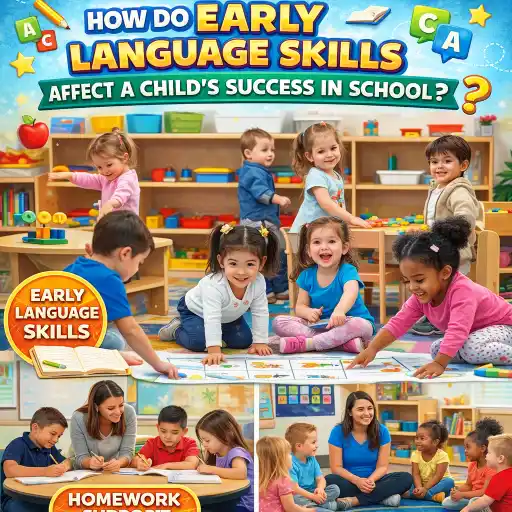
Research shows that the words and conversations children hear and use before they start school shape their learning later. Children who understand and use more words tend to do better in reading, math, and following classroom instructions. Big reviews and reports explain that the first years are a key time to build these skills because the brain is very ready to learn, especially from warm, talk-filled interactions; see the OECD review for a deeper look at why the early years matter The importance of early learning and development.
Studies of preschool models show that play-based and child-initiated programs often help children keep learning gains and stay motivated in school, while overly academic, drill-based preschool can sometimes slow long-term progress; a classic study explains this trade-off Moving up the Grades. Public health and education reviews from the CDC and others point out that high-quality early childhood education improves language, self-regulation, and social skills — all linked to better school outcomes Early Childhood Education | CDC. For a concise discussion that dispels the misconception that preschool is "just play" and explains how skilled early childhood educators intentionally use play alongside structured activities to promote language and school readiness, see Myth: Preschool's Just About Playing with the Kids.
In short, early language is a stepping-stone: gaining words, listening skills, and early conversations helps children learn to read, follow directions, and take part in class — skills that predict school success years later.
What everyday activities help build language before school?
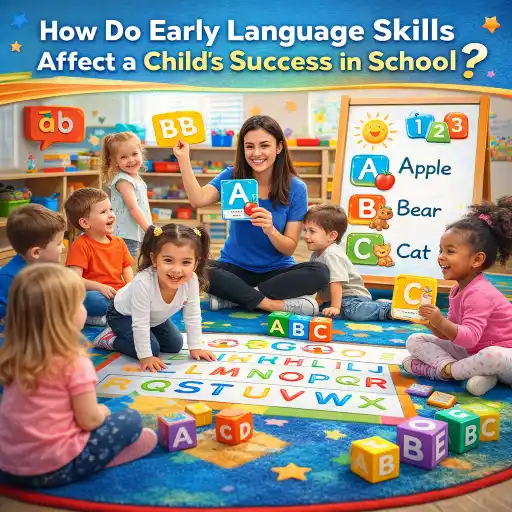
Daily routines give big chances to grow language. Use these practical activities every day in your program. Many of these ideas are recommended by ChildCareEd resources like Boosting Language Through Play and How to Foster Early Literacy Skills.
- 📚 Read aloud every day. Pause, ask one question, and let children turn pages. Repeating favorites builds memory and vocabulary.
- 🎵 Use songs and rhymes. Rhymes help children hear sounds in words — important for later reading.
- 🧩 Follow the child’s lead in play. Describe what they do and introduce new words naturally while they play.
- ✍️ Offer drawing and early writing tools. Label children’s art and write what they say to show that words stand for ideas.
- 🔤 Create a print-rich space. Label shelves, use simple signs, and keep books in every area (including outside).
- 👂 Talk about daily routines. Narrate steps ("We are washing hands") and ask open questions to invite longer answers.
Try short bursts of focused talk: one or two minutes of warm, face-to-face conversation during snack, arrival, or transition times can add up. For ideas about vocabulary lessons and course resources, see Building Vocabulary  Buy Now $16.00 and the course Language Development in Early Childhood Buy Now $16.00.
How can providers spot needs and partner with families?
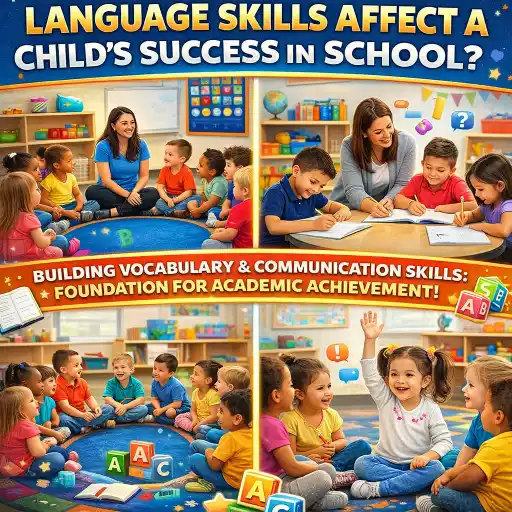
Watching and talking with families helps you notice children who might need extra support. The CDC’s "Watch Me!" guidance shows how to talk with parents, use milestone checklists, and act early when you have concerns Training Module 4 | Watch Me!. Practical steps you can use at your center or home:
- 📝 Observe and note milestones. Keep simple checklists and share examples of what you see during pick-up time.
- 💬 Talk with families often. Use respectful language, describe what you observe, and ask about home routines.
- 📎 Use screening tools when worried. Early screening helps find needs early; resources exist from professional assessment groups (see Pearson’s early childhood tools) Pearson Early Childhood.
- 🔗 Connect to supports. If concerns remain, suggest the child’s pediatrician or local early intervention services. State requirements vary - check your state licensing agency.
- 🤝 Partner with families. Share simple home activities: read 5–10 minutes a day, sing songs, and narrate routines. Programs like PlayReadVIP show that guiding parents to play and read increases school readiness PlayReadVIP research.
Keep conversations positive. Celebrate milestones and offer practical next steps. Document what you see so families and specialists have a clear starting point.
What common mistakes should we avoid and how can we track progress?
Some well-meaning choices can slow language growth. Below are common pitfalls and how to avoid them, with links to research and guidance.
- ⚠️ Over-relying on early drills. Too much formal, teacher-led instruction for young children can lower motivation and long-term gains. Research comparing preschool models warns against overly academic, didactic approaches for many children Marcon study.
- ⚠️ Limited talk time. If adults don’t narrate, expand, and respond, children get fewer words. Make intentional talk a daily habit (see How can I support...).
- ⚠️ Ignoring play. Play is where children practice language and social skills. Keep space and time for pretend play and storytelling.
- ⚠️ Waiting too long to act. Early screening and family conversations matter. Use milestone checklists and refer when needed (CDC Watch Me!).
How to track progress (simple steps):
- 🎯 Choose a few targets (e.g., new words per week, two-word phrases, story retell).
- 📆 Record short notes weekly and share highlights with families monthly.
- 📚 Use checklists and classroom samples (photos of play, child dictation) to show growth.
- 🔍 If progress stalls, refer to specialists and document steps taken.
Using these low-cost tracking steps helps you show progress and act early when children need more support. For program-level evidence that early reading and play support long-term skills, see PlayReadVIP and public health reviews like CDC’s summaries on early childhood education PlayReadVIP and CDC ECE review.
FAQ
- Q: When should I worry about a child’s talking?
A: If a toddler has very few words by 18 months, or a preschooler struggles to put words together at age 3–4, start a friendly conversation with the family and use a milestone checklist. Consider screening or referral when concerns persist. - Q: Does speaking another language hurt English learning?
A: No. Supporting the home language helps overall development and later English learning; bilingual children often keep strong skills in both languages. - Q: How much time should we spend on reading?
A: Short, daily read-alouds (even 10 minutes) plus talk during routines is powerful. Quality matters more than length. - Q: What if a family resists screening?
A: Listen, share observations positively, offer simple activities, and explain how early help can make a big difference. Respect culture and family choices.
Conclusion
Early language skills are one of the strongest foundations for school success. Simple, everyday practices — reading, singing, talking, play, and family partnership — create big gains. Watch for signs early, celebrate steps, and connect families with supports when needed. If your team would like a structured, evidence-based staff course on developmental milestones and classroom strategies, consider the Child Development Training. For practical tools and training for your team, explore courses and articles from ChildCareEd, and remember that state requirements vary - check your state licensing agency. Together, small consistent actions help every child build the language skills they need to thrive in #school and beyond.
- Language Development in Early Childhood
- Language Development in School Age
- Reading Aloud and Storytelling
- Language and Literacy Foundations in Pre-K
- Play Safe, Think Big: Literacy Through Play
- Assessment of Language and Literacy Skills
- Texas Director Credential
- Building Vocabulary
- Supporting Families and Caregivers in Language and Literacy
- Myth: Preschool's Just About Playing with the Kids
- Language for Our Littlest Learners: Building Communication From the Start
- Resources and strategies for parents of children with special needs to ensure a successful school year
- Back-to-School Success: Essential Skills & Strategies for Childcare Professionals
- CDA Certification en Español: Recursos y Consejos para Educadores Bilingües
- Ready, Set, Kindergarten!
- 🎈 Better Together: Why Little Friends Make a Big Difference in Early Childhood
- 10 Ejemplos de Cómo la Cultura Influye en el Desarrollo Infantil
- Retraso del Habla en la Guardería: Cómo Pueden Ayudar los Proveedores
- Cómo Trabajar en el Cuidado Infantil en Carolina del Norte: Requisitos y Pasos
- How can child care providers use the science of reading to boost early literacy in New York?
- How Do Early Language Skills Affect a Child's Success in School?
- How Can Child Care Centers Join Texas' Growing Pre-K Partnership Movement?
- What Kindergarten Readiness Skills Should My Program Build?
- What skills do preschoolers need to be ready for school?
- How Can Washington After-School Providers Support Homework, Social Skills, and Family Stability?
- How can North Dakota child care programs prepare children for school using social-emotional skills?
- Why Does Self-Regulation Matter More Than ABCs for Minnesota Kindergarten Readiness?
- How can we prepare children for the transition to kindergarten in New York?
- How Can Child Care Programs Build Meaningful School Readiness?
