Young children learn language all day, every day. This article gives simple, practical steps that child care providers and directors can use in their classrooms. You will find short routines, read-aloud tips, ways to help dual language learners, and ideas for tracking progress. Use small changes that fit your schedule and your group. Remember: state requirements vary - check your state licensing agency. For hands-on activities and communication strategies geared specifically to infants and toddlers, see the ChildCareEd guide Language for our Littlest Learners.
How can we create a language-rich preschool day?
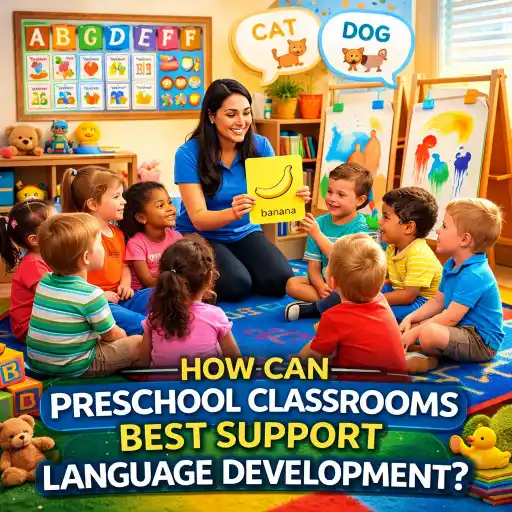
Why it matters: children need lots of words and chances to talk to build brain and social skills. A language-rich day gives children routine chances to hear and use words. Follow these easy steps:
- 😊 Start with daily talk: Describe what you do ("We wash hands now") and let children answer. This is a top tip from Supporting children’s early language and literacy development.
- 📚 Read every day: Pick short books and repeat favorites. Use before/during/after questions like the ones in What Are the Best Read-Aloud Questions to Boost Preschool Comprehension?.
- 🎵 Sing and rhyme: Songs help children hear sounds and learn new #vocabulary.
- 🧩 Offer play talk: Let children tell stories during play and label their play items (blocks, dolls, food).
- 🔤 Add print play: Letter puzzles, name charts, and magnetic letters support early print knowledge (see print knowledge ideas). For more classroom activities and a clear explanation of the print concepts teachers should teach, see Understanding Print Knowledge in Preschool.
Quick routines to try today:
- Morning greeting: ask one short question to every child.
- Snack talk: name foods, colors, and actions.
- Story repeat: read one favorite book for the week and use 1–2 new words each time.
These simple moves help children build strong #language skills while you keep your day calm and predictable.
What classroom strategies boost vocabulary and comprehension?
- Plan 1–3 target words before you read. Introduce each word with a short definition and a gesture. (See read-aloud tips and building vocabulary
 Buy Now $16.00 training.)
 - 📖 Use the before/during/after question pattern:
- Before: a quick prediction question to warm up.
- During: a completion or WH question to keep attention.
- After: a recall or action question so children use new words.
- 😊 Use visuals and gestures: point to pictures, act out verbs, and show props. Visuals help all learners and are recommended in classroom guides like ChildCareEd strategies.
- 🔁 Repeat and extend: reread books across the week and bring book words into centers (block play, art, dramatic play).
- ✍️ Connect print: point to the title and words occasionally to build concepts about print (see print supports).
Why this works: oral language is the bedrock of reading and writing. The Massachusetts literacy guidance explains how vocabulary and syntax help later reading. Short, intentional moves let you teach words in real contexts so children link words to actions and objects. Use #preschool routines to make learning natural and fun. Massachusetts providers can also find state-focused professional development and CDA preparation recommendations on our Happy Massachusetts Day page, which highlights local training and course options.
How can we support Dual Language Learners and children with delays?
- 🤝 Honor the home language: Let families know it is okay to use the child’s first language. Supporting first language helps learning in English (see National Academies and Building Bridges for Dual Language Learners Buy Now $16.00).
- 🖼️ Use visuals and gestures: Picture cards, props, and gestures reduce frustration and help comprehension. Many ChildCareEd read-aloud resources show how to pair pictures with words (read-aloud guide).
- 😊 Give choices and wait time: Offer two picture choices or sentence stems so every child can respond.
- 📚 Read in both languages when possible: Families can read or tell stories in their home language; teachers can repeat and model key words in English (research from UW and ETS supports these strategies — see UW study and ETS report).
- 🧩 Use focused stimulation: repeat target words in short bursts during play and routines to build vocabulary (recommended in several ChildCareEd courses).
For children with delays, screen early and share results with families. ChildCareEd offers free milestone and assessment resources to help plan next steps (Assessment resources). Collaborate with speech therapists when needed, and remember: allow voluntary participation and give children time to respond.
How do we track progress, avoid common mistakes, and involve families?
Tracking and family partnerships make language work stronger. Use simple tools and avoid common pitfalls.
- 📋 Track key milestones: Use short checklists and observe during routines. The CDC milestone checklists are a helpful reference for ages and tips (CDC milestones).
- 😊 Share with families: Send home easy tips like read daily, talk about routines, and sing songs. ChildCareEd family tips and activity packs are ready to use (Talk, Read & Sing Buy Now $0.00).
- 🔎 Common mistakes and how to avoid them:
- ❌ Asking too many questions — instead, limit to 1–2 prompts per read-aloud.
- ❌ Skipping wait time — always pause 5–10 seconds so children can answer.
- ❌ Ignoring the home language — support both languages and use family knowledge as an asset.
- 🧭 Use screening and referral: If a child misses many milestones, talk with the family and pediatrician, and consider screening or referral. The CDC and ChildCareEd resources explain next steps (CDC, ChildCareEd resources).
Short FAQ (quick answers for busy providers):
- Q: How long should a read-aloud be? A: 10–20 minutes for preschoolers; shorter for younger groups. (See read-aloud guide.)
- Q: What if a child doesn’t speak? A: Use picture choices, model answers, and share concerns with the family.
- Q: Can teachers without other-language skills still support DLLs? A: Yes — use visuals, family partnerships, and strategies from Building Bridges Buy Now $16.00.
- Q: Where to get more help? A: Check ChildCareEd courses like Language Development in Early Childhood Buy Now $16.00 and local early intervention contacts.
Keep it simple: talk, read, play, and repeat. Small, steady steps make a big difference for children and families. Your work builds strong #preschool foundations for lifelong learning. Team up with families and use available resources — you are not alone in this important work.
Children who speak more than one language and children with language delays need warm, respectful support. Use strategies that build both the home language and English. The National Academies and ChildCareEd recommend keeping the home language while adding English exposure.Research and practice show that short, focused moves help children learn words and understand stories. Use these step-by-step strategies that fit into normal classroom routines.- Recognize, Respond, Respect: Supporting Diverse Learners
- 45 Hour Child Growth and Development
- CDA Home Visitor Subject Area 3 Part 3 Birth to 5
- Building Bridges for Dual Language Learners: For Workforce Solutions
- 45 Hour Preschool Methods and Materials
- Planning for Every Child: Responsive Strategies in Action
- Language and Literacy Foundations in Pre-K
- Texas Director Credential
- Building Bridges for Dual Language Learners
- Language for Our Littlest Learners: Building Communication From the Start
- CDA Certification en Español: Recursos y Consejos para Educadores Bilingües
- Can Continuing Education in North Dakota Directly Impact Child Outcomes?
- 10 Ejemplos de Cómo la Cultura Influye en el Desarrollo Infantil
- How can preschool classrooms best support language development?
- Celebrando la amistad en el cuidado infantil durante el Día de los Mejores Amigos
- Canciones, juegos y preguntas de círculo para niños
- Team-Building Games for Preschoolers That Teach Cooperation
- Examples of Anecdotal Notes for Preschoolers: 10 Real Classroom Moments, Written the Right Way
- Types of Curriculum in Early Childhood Education: Which Approach Fits Your Classroom Best?
- Training for Preschool Teachers: What Should You Take After You Meet the Minimum Requirements?
- How Can Child Care Programs Build Meaningful School Readiness?
- How Can Bingo Games Support Turn-Taking and Social Skills?
- What Are the Best Print-and-Play Activities for Substitute Teachers?
- How Can Child Care Providers Teach Empathy and Kindness in the Classroom?
- How Can Child Care Providers Support Preschool Development?
- What Should a 3-Year-Old Be Learning at Preschool?
