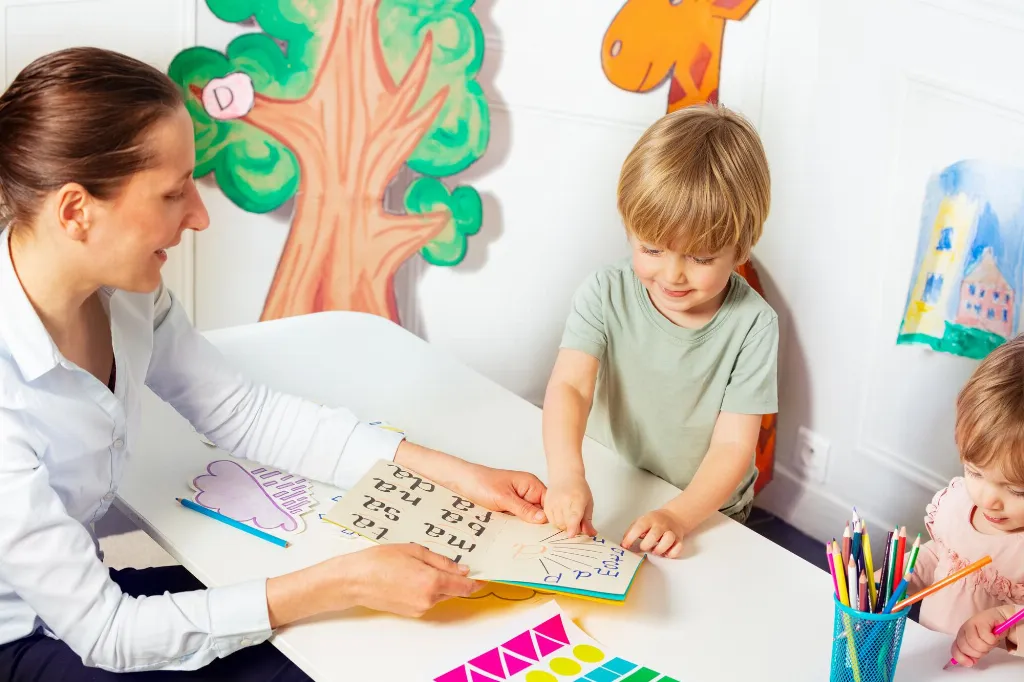
 Teachers are more than people who teach letters and numbers. They guide young children as they learn to play, talk, manage feelings, move their bodies, and make friends. Good teachers notice each child, plan activities that build skills, and work with families.
This article helps directors and child care providers understand the important ways teachers support child growth and development. You will find practical ideas, common mistakes to avoid, and links to trusted resources.
Why does a teacher's role matter for child development?
Teachers shape children’s first big steps in learning. Here are simple reasons they matter:
- 👩🏫 They create safe, warm relationships that help children feel calm and ready to learn. See guidance on building positive teacher-child relationships from CSEFEL.
- 📚 They design play and learning that grows thinking, language, and fine motor skills, as part of Child Growth and Development resources on ChildCareEd.
- ❤️ They teach social skills and emotion words so children learn to self-regulate and get along with others (see Techniques for Emotional Well-Being).
- 🔎 They spot delays and connect families to supports early, which helps children catch up.
- 🌍 They help children understand their world, including culture and differences, using ideas from Family Engagement Strategies.
When teachers are skilled and supported, children’s #development grows faster. Teachers help children become confident #learners and build strong early foundations for life. For more on why quality matters, see the CDC summary on early childhood education at CDC Hi5.
What do teachers do every day to support the whole child?
Teachers support the whole child — mind, body, emotions, and language. Below are common daily strategies you can use in classrooms and group care.
- 📆 Establish predictable routines: children feel safer when they know what comes next. Routines help with behavior, naps, and transitions.
- 📖 Read, sing, and talk often: daily book time, songs, and questions build #language and thinking. ChildCareEd explains how language and literacy fit into whole-child work in How Can Teachers Support Every Part of a Child’s Development?.
- 🧩 Plan play with purpose: play builds problem-solving, motor skills, and creativity. Use nature or loose parts as learning tools (see Natural Play Resources). Consider children's different learning styles—visual, auditory, and kinesthetic—when designing activities to increase engagement and adapt materials.
- 🔍 Observe and document: short notes on each child help you notice progress or concern and guide next steps.
- 🤝 Teach emotion words and model calm responses so children learn to name feelings and self-soothe (see techniques).
- ♿ Make learning inclusive: adapt materials, offer choices, and include diverse books and toys as recommended in Culturally Responsive Teaching.
Helpful tip: small changes matter. Try one new routine or one new song each week and watch children practice new skills. These daily steps support #children and their #learning in powerful ways.
Also remember: state requirements vary - check your state licensing agency for training and documentation rules.
How can programs and leaders support teachers so children get the best care?
Teachers do better work when centers back them up. Program leaders can make practical choices that protect staff energy and improve quality.
- 🔧 Provide regular professional development: offer courses and follow-up coaching. ChildCareEd lists many training options in The Vital Role of Professional Development. The whole-teacher PD idea is explained in an article on the Whole Teacher Approach.
- 🤝 Build peer support: set up short team check-ins, mentoring pairs, and reflection time. Peer groups lower stress and help teachers try new strategies safely (see research on reducing burnout at ChildCareEd).
- 🧾 Reduce paperwork strain: simplify forms and protect planning time so teachers can focus on children.
- 🔁 Use smart staffing: keep ratios steady, schedule float coverage, and rotate duties to avoid fatigue.
- 💚 Support wellbeing: encourage micro-breaks, provide wellness resources, and create clear policies that protect time off (state requirements vary - check your state licensing agency).
- 📈 Measure quality and set goals: use tools like the Environment Rating Scales and local QRIS guidance to target improvements.
Investing in teachers is an investment in children. Higher staff support leads to better teacher-child interactions and stronger child outcomes, shown in reviews like Canada’s literature review and the CDC planning resources at CDC ECE strategies. Programs that plan for staff growth and #wellbeing keep skilled teachers and improve child learning.
How do teachers partner with families and honor culture?
Children learn best when teachers and families work together. Good partnerships also help teachers know what each child needs and value family culture.
- 👋 Start with warm, regular communication: quick daily notes, photos, or short calls build trust. ChildCareEd’s Family Engagement Strategies has practical ideas.
- 🧾 Share learning ideas families can do at home: simple book lists, counting games, or movement activities strengthen classroom goals.
- 🌍 Use inclusive materials: books, dolls, and posters that reflect many families help children feel seen. For more, read Promoting Diversity, Equity, and Inclusion.
- 🎤 Invite family voice: ask what matters to families, invite storytelling, or offer a family word wall in multiple languages.
- ⚠️ Common mistakes to avoid:
- 🛑 Treating engagement as only events: instead, build daily, small connections.
- 🛑 Using one-size approaches: offer flexible meeting times and translations.
Simple acts—learning a greeting in a child’s home language, displaying family photos with permission, or asking families what strengths their child shows—build trust fast. These steps support #teachers and families to help each child thrive in a learning community.
Conclusion: What can I do this week?
Quick, doable actions help children and staff right away. Try these steps:
- ✅ Do a 5-minute staff check-in this week and ask one question: “What small change would help you most?”
- ✅ Add one language-rich routine: read a short book or sing a hello song each day.
- ✅ Start a paired peer observation: two teachers watch each other for 15 minutes and share one positive note.
- ✅ Invite one family to share a story, song, or photo for the classroom this month.
FAQs (short)
- Q: How fast do children change with better teaching? A: You can often see small gains in weeks; stronger gains appear over months.
- Q: Where can staff find training? A: ChildCareEd offers many self-paced and live courses; see ChildCareEd.
- Q: Should I worry about licensing rules? A: Yes — state requirements vary - check your state licensing agency for hours and documentation rules.
- Q: What if a teacher is burned out? A: Start small—micro-breaks, peer support, and task review help; see preventing burnout.
Teachers are the heart of child growth. When programs support teachers, when teachers use simple daily practices, and when families and cultures are honored, children become confident #learners. Thank you for the care you give every day to our youngest learners and for helping them grow into strong, curious, and kind people.
- 45 Hour Child Growth and Development
- CDA Home Visitor Subject Area 3 Part 3 Birth to 5
- CDA: A Closer Look at Assessments
- Heart-to-Heart Communication: Challenging Behaviors
- CDA Bridge Bundle: Family Child Care without Portfolio Review
- CDA Bridge Bundle: Infant/Toddler without Portfolio Review
- CDA Bridge Bundle: Preschool without Portfolio Review
- Lesson Planning to Meet School Age Needs
- Letter & Number Planning in Child Care
- Child Growth and Development
- CDA Certification en Español: Recursos y Consejos para Educadores Bilingües
- 🔍 ¿Qué ves cuando observas a un niño aprender?
- 45-Hour Child Care Training in Texas: Requirements and Options
- 45-Hour Child Care Training in Maryland: Requirements and Options
- How can ECE professional development help educators and children?
- How Teachers Support Children’s Growth and Development
- The Role of Teachers in Child Growth and Development
- How Can Child Care Directors Create Fair and Useful Employee Evaluations?
- Training for Preschool Teachers: What Should You Take After You Meet the Minimum Requirements?
- 45 Hour Infant and Toddler Certification: Is 45 Hours Enough to Be a Lead Teacher in Maryland?
- What Developmental Milestones Should Teachers Know From Birth to Age 5?
- What Are the Most Important Child Care Training Courses for New Teachers?
- How Can AI Support a Teacher’s Professional Development Plan?
