Positive guidance helps preschool teachers and directors teach children how to behave, calm down, and get along. This article gives friendly, practical steps you can try tomorrow. These ideas support your #guidance, improve #behavior in the #classroom, and help #children and #families work together. For more in-depth tips and courses, see Classroom-tested strategies to help preschool teachers manage their classrooms and What Positive Guidance Techniques Help Preschoolers Learn and Stay Safe?.
Why it matters
1. When adults teach rather than punish, children learn skills like sharing, asking, and calming down. This makes days calmer and learning stronger.
2. Programs that use positive guidance see better behavior, happier staff, and clearer family communication. Remember: state requirements vary - check your state licensing agency.
How do simple daily steps make positive guidance work?
Start with a small routine you and your team can do every day. These short, clear steps help children know what to expect.
- 😊 Greet: Welcome each child by name at drop-off. It builds trust and starts the day kindly. See ideas at Guiding with Heart.
- 📋 Predict: Post a picture schedule at child eye level so children know the plan.
- 🎯 Teach: Pick 3 simple rules (for example: gentle hands, listening ears, walking feet). Model and practice rules with short role-play.
- 🏅 Notice: Give specific praise ("You waited your turn—thank you!"). Praise helps children repeat good choices.
- 🧘 Calm: Offer a calm corner with 2–4 tools (book, pillow, breathing exercise) for self-regulation.
Why these steps work:
- They make expectations clear so children can meet them.
- They teach skills (not just punish mistakes), which helps children grow. For training and short how-to guides, visit Staying Positive: Guidance for Preschoolers.
How can room setup and routines prevent behavior problems?
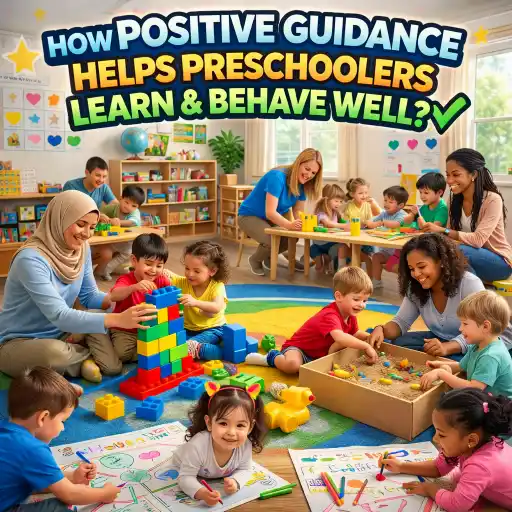
A calm, planned room stops many problems before they start. Small changes in space and schedule help children stay engaged and safe.
- 🧩 Zones: Make clear areas (blocks, art, reading). Label bins with pictures so children know where toys belong.
- ⏱️ Predictable schedule: Use visual schedules and give time warnings like "2 minutes until clean-up." The CSEFEL briefs explain why routines matter.
- 📏 Manage group size: Limit how many children use a center to avoid crowding and fights.
- 🔁 Balance activities: Mix active play, quiet time, teacher-led and child-led choices to keep energy steady.
- 🔍 Observe and tweak: Watch for trouble spots and change furniture or materials to reduce conflicts.
Quick room tips directors can try:
- Place a calm corner where staff can teach children to use it during calm times, not only when upset.
- Keep popular toys in duplicates to reduce squabbles.
- Use routines and helpers so transitions are quick and predictable. For a helpful checklist, see Creating a Positive Learning Environment.
What do teachers say and do in the moment to teach instead of punish?
When behavior happens, the adult’s calm response teaches more than a long lecture. Use a short plan: calm, name, limit, teach.
- 🔎 Stay calm and get down to the child’s level. A calm adult helps a child calm down (co-regulation).
- 🗣️ Name the feeling briefly: "You look mad." This helps kids learn emotion words.
- ⛔ State the limit in a short phrase: "Hands are for helping. Hitting hurts."
- 🔁 Teach a replacement: Offer one simple choice ("Use your words" or "Take three deep breaths").
- 📄 Repair: After calm, reconnect with a short comment and practice the new skill.
Common mistakes and how to avoid them:
- ⚠️ Mistake: Long lectures during meltdowns. Fix: Use short, clear phrases.
- ⚠️ Mistake: Inconsistent responses across staff. Fix: Pick one simple script and practice it together.
- ⚠️ Mistake: Public shaming or long time-outs. Fix: Use brief logical consequences and focus on teaching.
For evidence-based practices and program-wide systems, see the Pyramid Model and NCPMI resources.
How do we team with families and specialists to support each child?
Children do best when home and school use similar steps. A short, respectful plan helps families and staff work together.
- 🤝 Start with strengths: Share one positive thing first ("Lina loves blocks").
- 📊 Share one fact: Briefly describe when and where the behavior happens.
- 🧾 Offer a small plan: Give 1–2 steps you will try and ask the family what works at home. You might also invite families to local parenting seminars where staff and parents learn the same positive-guidance strategies together.
- 🔍 Track patterns: Keep a simple log of time, trigger, and response to spot patterns.
- 👩⚕️ Consult: If behavior is intense or long-lasting, ask for help from mental health or special education staff. The CDC has useful family tips at Positive Parenting Tips.
State requirements vary - check your state licensing agency when you need to report or refer.
FAQ (short)
- Q: How many rules should we teach? A: 3 or fewer simple rules with pictures.
- Q: When do we call a specialist? A: If behavior is intense, dangerous, or stops learning, ask for support.
- Q: Do calm corners work? A: Yes—if children are taught how to use them during calm times.
- Q: What if families disagree? A: Listen, share observations, and try one small strategy together each week.
Need more help? ChildCareEd offers courses like How Can Positive Guidance Improve Classroom Management and Staying Positive.
Conclusion
Positive guidance is simple and powerful: teach clear rules, shape the room and schedule, respond calmly in the moment, and team with families. Try one small change this week—post a picture schedule, teach one replacement skill, or send one positive family note—and watch the difference. Your steady, kind actions help children learn to regulate, play, and grow.
- CDA Home Visitor Subject Area 3 Part 3 Birth to 5
- 45 Hour Preschool Methods and Materials
- Power of Art: Bldg Self-Esteem & Positive Behavior for ALL Abilities
- CDA Bridge Bundle: Family Child Care without Portfolio Review
- CDA Bridge Bundle: Infant/Toddler without Portfolio Review
- CDA Bridge Bundle: Preschool without Portfolio Review
- Connections That Count: Building Relationships in Child Care
- Texas Director Credential
- Anxiety: Signs & Strategies
- Staying Positive: Guidance for Preschoolers
- CDA Certification en Español: Recursos y Consejos para Educadores Bilingües
- ¿Cuál es la Diferencia Entre la Crianza Respetuosa y la Crianza Permisiva?
- Ejemplos de Crianza Respetuosa vs. Crianza Permisiva
- How Can Positive Guidance Build Respectful Classroom Routines in Texas Child Care Programs?
- How can we help children sleep better?
- How can Nevada preschool programs help children with special needs feel heard, included, and understood?
- How can positive guidance help preschoolers learn and behave well?
- How Can Oklahoma Early Childhood Educators Use Classroom Management Strategies to Support Young Learners?
- How Does Temperament Affect How Minnesota Children Learn and Behave?
- Celebrando la amistad en el cuidado infantil durante el Día de los Mejores Amigos
- How can preschool teachers manage behavior with care and confidence?
- What Positive Guidance Strategies Help Preschool Teachers Guide Behavior?
- How can I make preschool classroom rules that children understand?
- Child Care Discipline Philosophy: Supporting Positive Behavior
- Building a Classroom Climate That Supports Learning and Behavior
- What's the Secret to Making Classroom Rules Stick?
- What Are 10 Positive Guidance Strategies Every Child Care Teacher Should Know?
- Why Do Children Behave Differently With Different Teachers?
- Why Do Two Teachers Respond Differently to the Same Classroom Choice?
- When a Preschool Rule Expects More Self-Control Than Children Can Manage, What Should Educators Do?
