Stretching food dollars while serving healthy meals is possible. This guide is for #providers and directors in #NorthDakota who want simple, practical steps to make CACFP work for their program. You will get easy-to-follow steps for joining CACFP, planning low-cost menus, tracking meals, finding reimbursements and #grants, and using family and local food partners to save money. State requirements vary - check your state licensing agency.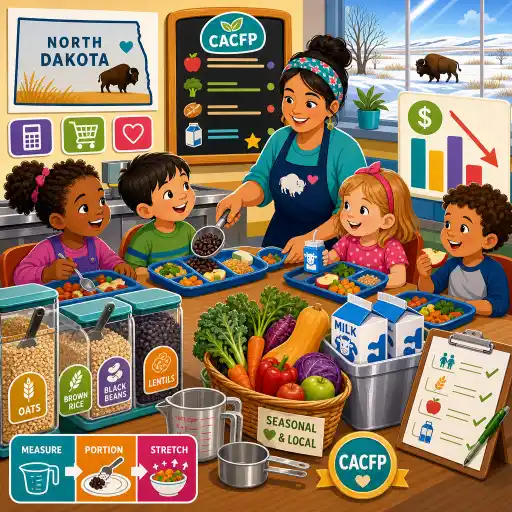
Why it matters:
- Healthy meals help children learn and stay well.
- CACFP brings reimbursement money that lowers your food costs.
- Good menus and records protect your program during reviews.
For North Dakota-specific help,p see the ChildCareEd CACFP overviews and guides, such as How can North Dakota child care programs make the most of CACFP and the state page North Dakota and the Child and Adult Care Food Program.
1) How do we join CACFP and get started in North Dakota?
- 📞 Contact the North Dakota state agency or a local sponsor (many ND providers work with SENDCAA). See the SENDCAA start guide and forms at SENDCAA Meal Reimbursement and the ChildCareEd ND CACFP pages: CACFP for healthy meal planning.
- 📝 Fill out the application and sponsor paperwork. Family child care homes often join through a Family Child Care Home Sponsor—see sponsors listed on the ChildCareEd ND CACFP article: ND CACFP details.
- ✅ Attend required sponsor training on meal patterns, recordkeeping, and monitoring. ChildCareEd offers courses like CACFP Food Menu Buy Now $0.00 and training that supports operations: CACFP Certification Training.
- 🍽️ Set up simple daily forms: menu, meal count, and attendance. Sponsors provide templates—see SENDCAA forms at CACFP Forms.
- 📅 Start small: post a 1-week menu and keep records each day to build habits. Use ChildCareEd's sample menu tools like the Weekly Menu Planner Buy Now $0.00.
Tip: ask your sponsor about Tier 1 eligibility and reimbursement rates early so you can plan your budget (see SENDCAA Tier Eligibility).
2) How can we plan CACFP-compliant, low-cost menus?
- 🍎 Build a short rotating menu (1- or 4-week rotation):
- Include a fruit or a vegetable in each meal.
- Serve a grain (make one whole-grain-rich daily).
- Offer a meat/meat-alternate or other protein.
- Serve age-appropriate milk (unflavored where required).
- 🛒 Save money with planning:
- Make a weekly grocery list from your posted menu.
- Buy seasonal produce and bulk staples to lower costs.
- Use leftovers safely in planned recipes (soups, casseroles).
- 📋 Use CACFP menu templates and portion guides. ChildCareEd has a CACFP Food Menu Buy Now $0.00 and a Weekly Menu Planner Buy Now $0.00 to help match meal patterns.
- 🍼 Plan infant feeds carefully—follow infant meal pattern rules and document developmental readiness. See SENDCAA infant guidance at Infant Meal Patterns.
- 🍽️ Food preparation and nutrition: To help staff plan CACFP-compliant, low-cost menus and build strong mealtime practices, ChildCareEd's Food Preparation and Nutrition
 Buy Now
 $32.00$26.00 is a 4-hour online course covering child nutrition basics, meal pattern requirements, safe food handling, and budget-friendly meal planning — a direct match for the rotating menu, infant feeding, and family-style meal steps outlined in this guide. - 🔁 Rotate favorites and use theme days (e.g., whole-grain Wednesday) to make shopping predictable and reduce waste.
Why this helps: predictable menus cut shopping time, lower waste, and make staff training easier. Keep your posted menu and backup notes for sponsor reviews.
3) How do we keep records, claim reimbursements, and avoid money leaks?
- 🧾 Daily practice:
- Record menu, meal counts, and attendance every day.
- Keep a signed copy or digital photo of parent authorizations when needed.
- 🗂️ Record keeping and supervision: For staff who need to track meal counts, attendance, and reimbursement documentation accurately, ChildCareEd's Balancing Act: Record Keeping & Supervision Buy Now $16.00 is a 2-hour online course covering how to maintain accurate daily logs and organize program files — directly supporting the daily counting routine, receipt storage, and monthly reimbursement tracking steps described throughout this article.
- 💸 Understand tiers and reimbursements:
- Check Tier 1 vs Tier 2 rules and apply if eligible—see SENDCAA Tier rules and rates at Tier Eligibility.
- See how monthly claims get processed at SENDCAA Meal Reimbursement.
- 📱 Use tools to save time:
- Consider meal-tracking software like Brightwheel to log meals and pull reports (see CACFP Meal Tracking Software).
- Keep both paper and scanned digital backups for audits.
- ✅ Train staff and keep certificates organized. ChildCareEd courses can help with CACFP operations and recordkeeping: CACFP Certification Training.
- 🔍 Avoid common mistakes:
- ❌ Missing daily counts — ✅ fix: make counting part of the meal routine.
- ❌ Wrong portions — ✅ fix: use portion guides and quick staff refreshers.
- ❌ Not saving receipts — ✅ fix: scan and store receipts in one folder.
Tip: Track reimbursements monthly and compare to food spend. Small mismatches add up—regular checks help you adjust menus or shopping.
4) How can family-style meals, farm-to-ECE, and partnerships stretch food dollars?
Mix family engagement, local foods, and shared work to make meals cheaper and richer in learning.
- 🤝 Build local partnerships:
- Partner with local farms, CSAs, or farmer markets to buy seasonal produce—see Farm to ECE success ideas at the CDC Farm to ECE page.
- Invite families to donate a favorite cultural recipe or a small bag of produce for taste tests.
- 🍽️ Use family-style meals to teach and reduce waste:
- Children serve themselves with staff supervision; this promotes independence and often reduces plate waste.
- Train staff on safe family-style steps and use child-sized serving tools. Plan purchases of serving tools, aprons, and other classroom supplies during state tax-free shopping dates to lower start-up and replacement costs; see the state-by-state tax-free shopping guide.
- 💡 Cost-saving menu ideas:
- Use beans, eggs, and canned fish for low-cost protein days.
- Turn bulk veggies into soups, stews, or mixed salads.
- Run monthly taste-tests to introduce low-cost produce and build favorites. Use awareness events to engage families — for example, organize simple, child-friendly meal-prep activities for March 10 is National Pack Your Lunch Day! to promote healthy, low-cost lunches and involve parents in recipe swaps.
- 📚 Farm-to-ECE learning:
- Host a farmer visit, plant a small garden, or do simple cooking demos to connect food to learning (see CDC examples at CDC Farm to ECE).
Why this helps: local buys can be cheaper in season, and family engagement builds trust,t so families support program changes. Small community steps add up to big savings.
Conclusion and quick action plan
Take these five steps this month to stretch food costs with CACFP:
- 📝 Post a 1-week CACFP-style menu using the ChildCareEd Weekly Menu Planner Buy Now $0.00.
- 📞 Call a local sponsor like SENDCAA or your state agency and ask about Tier eligibility (see SENDCAA Meal Reimbursement).
- 📱 Try a simple tracking tool or start a paper folder: menu + meal counts + receipts.
- 🍎 Try one farm or seasonal swap this month—buy a bag of local produce and plan two recipes around it (see CDC Farm to ECE: Farm to ECE).
- 📚 Schedule a 15-minute staff huddle to review portion sizes and counting steps.
FAQ (short):
- Q: Who runs CACFP in ND? A: The state agency (NDDPI) and local sponsors like SENDCAA—see ChildCareEd ND CACFP pages for contacts.
- Q: Can family homes join? A: Yes—through a Family Child Care Home Sponsor (see ND CACFP).
- Q: Are digital tools required? A: No, but they save time. Brightwheel and other apps can help (see meal-tracking software info).
- Q: Where to learn more? A: Use ChildCareEd guides and your sponsor’s forms and training links listed above.
Remember: you are doing important work feeding children. Start with one small change this week and build from there. For training, templates, and ND-specific pages, see ChildCareEd: ChildCareEd. #CACFP #NorthDakota #providers #menus #grants
Follow these numbered steps to get enrolled and linked with a sponsor or the state: Good recordkeeping turns meals into steady reimbursement and helps your budget. Use simple steps and repetition to keep costs down while meeting meal patterns.
- North Dakota and the Child and Adult Care Food Program
- Cómo Abrir Una Quardería En Casa Sin Dinero?
- North Dakota Child Care Rule Updates: How to Participate and How to Prepare Your Program
- Cómo Empezar una Guardería en Casa: Requisitos y Pasos
- Proporciones de Cuidado Infantil y Tamaños de Grupo por Edad en Virginia (Guía Rápida para Centros y Hogares)
- Lista para Abrir una Guardería en Casa en Dakota del Norte: Cómo Empezar
- Lista para Guardería en Casa en Texas: Cómo Iniciar una Guardería en el Hogar
- Capacitación Previa al Servicio para Proveedores de Cuidado Infantil en Dakota del Norte
- Las Mejores Ideas de Excursiones para Guarderías en Dakota del Norte
- Child Care Resource Center in North Dakota: What Is It and How Can It Help?
- How can North Dakota childcare programs plan healthy meals and follow CACFP?
- How does ChildCareEd support family childcare providers in small North Dakota towns?
- What Does the Free School Meals Debate Mean for Child Nutrition in North Dakota?
- How can North Dakota child care programs make the most of CACFP for healthy meal planning?
- How can North Dakota providers stretch food costs with CACFP?
- How can SUN Meals and CACFP keep North Dakota children fed all summer?
- How can my North Dakota program make the most of food programs like CACFP?
- How can North Dakota fill the gap for school-age children before and after school?
- How do I open a licensed group child care home in North Dakota?
- How Can Simple Cooking Activities Teach Skills in North Dakota Child Care Programs?
