Good meal planning helps children grow, learn, and stay healthy. This short guide is for child care providers and directors in #NorthDakota who want easy steps to plan meals, follow CACFP rules, and involve families. Use small steps and simple tools to save time and protect kids. For concrete guidance on everyday foods that support brain development and healthy growth, see the Eat, Play, Grow: Essential Nutritional Tips for Growing Minds. Remember: state requirements vary - check your state licensing agency.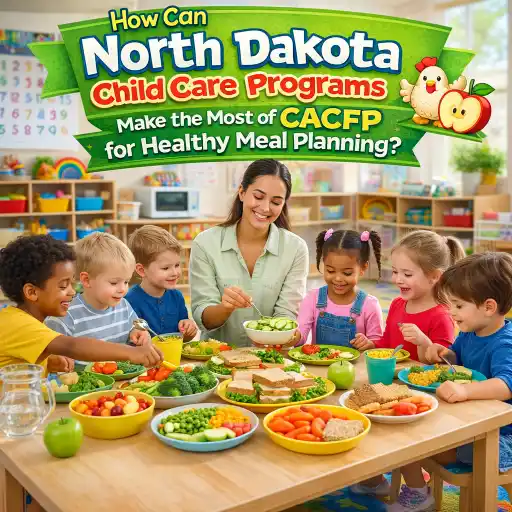
How do North Dakota programs join CACFP and get started?
1. Follow these steps to enroll:
- 📞 Reach out to the North Dakota Department of Public Instruction (NDDPI) or a local sponsor (they run CACFP in ND). For example, SENDCAA is a local sponsor with forms and help—see their CACFP forms.
- 📝 Complete the application and join a sponsor if your program needs one.
- ✅ Attend training on meal patterns, recordkeeping, and monitoring. ChildCareEd offers helpful resources on CACFP operations at ChildCareEd: CACFP rules.
- 🍽️ Food preparation and nutrition: To help staff plan CACFP-compliant menus and build strong, safe mealtime practices, ChildCareEd's Food Preparation and Nutrition
 Buy Now $32.00 is a 4-hour online course covering child nutrition basics, meal pattern requirements, safe food handling, and how to create positive eating environments — a direct match for the weekly menu planning, family-style serving, and CACFP documentation steps outlined in this guide.
 - 📊 Set up simple recordkeeping: daily menus, meal counts, and attendance.
2. Tips that save time:
- 📁 Use sponsor-provided forms and the ChildCareEd Sample Weekly Menu Buy Now $0.00.
- 🧾 Keep a one-week posted menu and a backup planner. Sponsors often offer templates and checklists.
Joining CACFP brings reimbursements and training. Start small and call your sponsor or NDDPI for clear next steps.
What does a CACFP-compliant weekly menu look like?
1. Use a 1-week or 4-week rotating plan. A sample menu helps staff and families know what to expect. See the Sample Weekly Menu (Birth to Five) Buy Now $0.00 for age-appropriate ideas.
2. Quick menu checklist (use each day):
- 🍎 Fruit or vegetable
- 🍞 Grain (make at least one whole-grain-rich each day)
- 🥩 Meat/meat alternate or protein
- 🥛 Milk (age-appropriate—unflavored as required)
3. Snack planning: follow the CACFP snack rules so snacks count for reimbursement. See CACFP Snack Requirements Buy Now $0.00.
4. Practical steps to save money and time:
- 🔁 Rotate favorites weekly so shopping is predictable.
- 🛒 Make a weekly grocery list tied to the posted menu.
- 📋 Use serving-size charts and plate guides from ChildCareEd to keep portions consistent.
5. Link menus to documentation: always write the menu and match it to meal counts. That helps during sponsor reviews and keeps #CACFP reimbursements steady.
How should programs handle infants, allergies, and food safety?
1. Top safety steps:
- 🍼 Label and date bottles and breastmilk. Use written feeding plans for each infant.
- 🔪 Cut and cook foods to reduce choking risks (e.g., slice grapes, cook carrots until soft).
- ⚠️ Keep allergy lists and written medical statements for substitutions. CACFP allows diet changes with a medical note.
- 🥜 Allergy and illness management: For staff who need to feel confident managing food allergies and medical diet substitutions at mealtimes, ChildCareEd's Illness, Medication, and Allergies in Child Care Buy Now $32.00 is a 4-hour online course covering allergy recognition, medical statement procedures, and safe food handling — directly supporting the allergy list maintenance, written medical exception, and label-checking steps described throughout this article.
2. Cleaning and storage rules matter. Clean and sanitize feeders, bottles, and surfaces using CDC steps in How to Clean and Disinfect ECE Settings. That guidance helps prevent illness.
3. Formula and milk safety tips:
- 🧴 Use ready-to-feed formula when possible and follow safe prep times.
- 🥶 Store expressed milk and prepared formula with dates; discard leftovers per guidance.
4. Note: state requirements vary - check your state licensing agency. Keep parents in the loop and get written permission for feeding changes. Good records protect children and your program.
How can family-style meals and family engagement improve mealtimes and avoid common mistakes?
1. Why family-style helps: Children learn self-help, serving, and hunger cues when they serve or pass dishes. Research shows family-style meals help kids notice fullness and make better choices—see the family-style findings summarized at MedicalXpress.
2. Steps to start family-style safely:
- 👩🏫 Train staff in supervision, how to offer choices, and responsive language.
- 🍽️ Use child-sized tools, scoops, and pitchers to reduce spills and mess.
- 🔪 Prepare age-safe pieces (no whole grapes, big chunks, or sticky foods for toddlers).
3. How to involve families:
- 📣 Send short notes about menus and mealtime routines. Use the ChildCareEd sample menu to show families what you serve (Sample Weekly Menu Buy Now $0.00).
- 👨👩👧👦 Invite family recipes and cultural foods—this boosts trust and variety.
4. Common mistakes and how to avoid them:
- ❌ Forgetting to post menus — Fix: post a one-week menu and keep a planner.
- ❌ Inconsistent portion sizes — Fix: use portion guides and short staff trainings.
- ❌ Skipping allergy checks — Fix: read labels each time and keep allergy lists up to date.
5. Farm-to-ECE and local produce can add fresh choices and learning opportunities (see CDC Farm to ECE success stories: Farm to ECE). Small steps, like a monthly market or a taste test, can build interest and support local farmers.
Summary
Quick to-do list:
- 📝 Post a 1-week CACFP-style menu using the ChildCareEd sample.
- 📞 Contact NDDPI or a local sponsor like SENDCAA to start CACFP enrollment.
- 👩🏫 Hold a short staff huddle on safe serving, allergies, and recordkeeping.
- 🍏 Try one family-style meal each week and ask families for a favorite recipe.
Helpful links: North Dakota CACFP help on ChildCareEd: North Dakota CACFP, the ChildCareEd CACFP Food Menu Buy Now $0.00, and the SENDCAA CACFP forms. Your work matters: healthy meals help #children focus and grow. Keep doing one small thing today to make meals better and safer. #CACFP #menus #nutrition #NorthDakota.
- Stay Alert! Steps for Emergency Prep
- SIDS: Saving Babies: A Change of Position, A Change in Tradition
- Positive Attention: Interactions and Supervision of Infants and Toddlers: For Workforce Solutions
- Legal & Ethical Essentials in Child Care
- Nutrition Essentials for Child Care Providers
- Positive Attention: Interactions & Supervision for Infants & Toddlers
- Texas Director Credential
- On My Plate: Children's Nutrition
- North Dakota and the Child and Adult Care Food Program
- CDA Certification en Español: Recursos y Consejos para Educadores Bilingües
- Cómo Abrir Una Quardería En Casa Sin Dinero?
- North Dakota Child Care Rule Updates: How to Participate and How to Prepare Your Program
- Cómo Empezar una Guardería en Casa: Requisitos y Pasos
- North Dakota Home Daycare Checklist: How to Start a Daycare at Home
- Lista para Abrir una Guardería en Casa en Dakota del Norte: Cómo Empezar
- Capacitación Previa al Servicio para Proveedores de Cuidado Infantil en Dakota del Norte
- Las Mejores Ideas de Excursiones para Guarderías en Dakota del Norte
- In-Home Daycare Requirements in North Dakota
- Child Care Resource Center in North Dakota: What Is It and How Can It Help?
- How can North Dakota childcare programs plan healthy meals and follow CACFP?
- What Does the Free School Meals Debate Mean for Child Nutrition in North Dakota?
- How can North Dakota child care programs make the most of CACFP for healthy meal planning?
- How can North Dakota providers stretch food costs with CACFP?
- How can SUN Meals and CACFP keep North Dakota children fed all summer?
- How can my North Dakota program make the most of food programs like CACFP?
- How can North Dakota fill the gap for school-age children before and after school?
- How do I open a licensed group child care home in North Dakota?
- How Can Simple Cooking Activities Teach Skills in North Dakota Child Care Programs?
