Summer brings play, sun, and a gap in school meals. This short guide helps #childcare leaders and directors in #NorthDakota learn how SUN Meals (Summer Food Service Program) and the Child and Adult Care Food Program (#CACFP) can work together to feed children all summer. We explain steps to start, safe serving tips, outreach ideas, and simple tools you can use right away. Remember: state requirements vary - check your state licensing agency.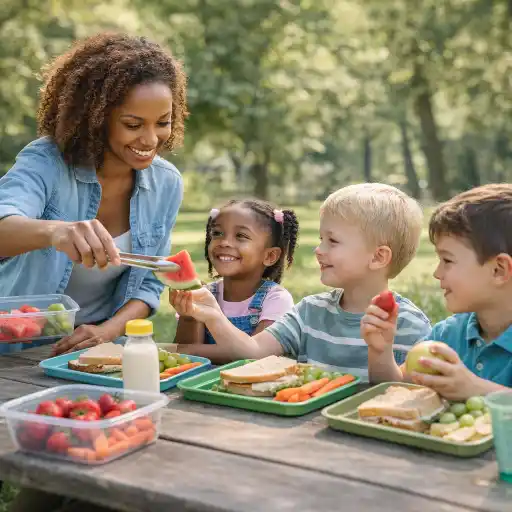
Why this matters
1. Hunger in summer can hurt growth, attention, and learning when school returns.
2. Summer feeding keeps kids healthy and makes families feel supported. Using SUN Meals and CACFP together can expand sites and bring meals into neighborhoods that need them most. For an overview of why summer feeding is critical, see the national SUN Meals description here.
How do SUN Meals (SFSP) and CACFP differ — and how can they work together?
1. SUN Meals (also called the Summer Food Service Program or SFSP) is a federal program that pays for free summer meals at community sites like parks, schools, and libraries. See a plain description of the SUN/SFSP program here.
2. CACFP reimburses child care programs and family child care homes for meals and snacks year-round, including summer when children are in care. For practical CACFP guidance for child care programs, review ChildCareEd’s North Dakota CACFP guide. How can North Dakota child care programs make the most of CACFP and the general CACFP overview here?.
3. How they fit together (three examples):
- 🍎 If your child care runs all summer, use CACFP to get meal reimbursements for enrolled children.
- 🍽️ If you want to reach neighborhood kids (including those not enrolled), set up an open SFSP/SUN Meals site or partner with an SFSP sponsor.
- 🔁 Use the Seamless Summer Option or coordinate schedules so CACFP and SUN Meals don't duplicate service and so more kids get food.
4. Who runs each program? SFSP is state-administered (state education or nutrition office), and CACFP is run by state agencies and local sponsors. For North Dakota specifics, start with the North Dakota Department of Public Instruction and local sponsors mentioned in the ChildCareEd ND guide here.
How can a North Dakota child care program start serving summer meals?
1. Quick start checklist (step-by-step):
- 📞 Contact your state agency or a local sponsor. In North Dakota, the Department of Public Instruction (NDDPI) and local sponsors can help—see ChildCareEd’s ND guide, North Dakota CACFP help.
- 📝 Choose your route: enroll in CACFP (for enrolled kids) or become an SFSP/SUN Meals site (to serve the whole community). Many programs partner with a sponsor to run CACFP or SUN Meals.
- 👩🏫 Attend required training on meal patterns, safety, and recordkeeping. ChildCareEd offers useful courses like Creating Safe & Healthy Child Care Environments
 Buy Now $55.00 and Healthy Habits from the Start Buy Now $24.00.
 - 📋 Set up simple paperwork: posted weekly menu, daily meal counts, attendance, and storage logs. Use sponsor templates or ChildCareEd forms described in the ND guide.
- 🛒 Plan a 1- or 4-week rotating menu that meets meal components. Use CACFP menu tools like sample menus and portion charts on ChildCareEd (see their sample menu resources).
2. Tips that save time:
- 🍏 Use sponsor-provided templates and a one-week posted menu.
- 🧾 Keep a backup plan for delivery or vendor delays.
- 🔁 Rotate favorites and shop with a fixed list tied to your posted menu.
3. Note: state requirements vary - check your state licensing agency before you start paperwork or serving.
How do we keep meals safe, meet special diets, and use family-style serving during summer?
1. Food safety basics:
- 🧼 Clean and sanitize surfaces, dishes, and bottles. ChildCareEd offers free resources on germ control and a course on food prep and safety—see How To Keep A Healthy Class and Food Preparation and Nutrition Buy Now $0.00 courses.
- 🥶 Label and date breastmilk and formula. Store and discard per guidance.
- 🌡️ Keep hot foods hot and cold foods cold; follow local health rules for holding times.
2. Managing allergies and medical diet changes:
- ⚠️ Keep updated allergy lists and written medical statements for substitutions. CACFP allows diet changes with medical notes—see the ND CACFP guide here.
- 👩⚕️ Train staff in recognizing reactions and in medication procedures; ChildCareEd’s Allergies and Medication Buy Now $0.00 materials are helpful.
3. Family-style serving (why and how):
- 🍽️ Why it matters: Family-style helps children learn self-help, portion control, and social skills.
- 👶 Safety steps: use child-sized utensils, supervise closely, cut food to safe sizes (no whole grapes for toddlers), and model passing and serving.
- 📣 Involve families: share your posted menu (use ChildCareEd sample menus) and invite family recipes. You can also offer examples like festive, low-sugar toddler recipes to inspire healthier choices and make it easier for families to contribute appropriate dishes.
4. Common mistakes and how to avoid them:
- ❌ Forgetting to post menus — Fix: post a one-week menu and keep a backup.
- ❌ Skipping allergy checks — Fix: read labels every time and keep medical statements on file.
- ❌ Inconsistent portions — Fix: use portion guides and a quick staff huddle before service.
What outreach, logistics, and rural options boost participation and program success?
1. Outreach ideas that work:
- 📣 Use simple flyers and social posts. ChildCareEd has free promo PDFs and resources you can adapt—see their free resources page here.
- 👨👩👧 Invite families to menu tastings or a family-style meal to build trust and sign-ups.
- 🍎 Partner with local food banks, farmers, or libraries to co-host sites and add fresh produce.
2. Rural and non-congregate options:
- 🚚 Use non-congregate pickups, home delivery, or multi-day meal packs where allowed. Guidance on non-congregate rural meals and rules (including how to include menus and civil rights info with deliveries) is explained in the SFSP Q&A here.
- 🗓️ Some states allow multi-day meal issuance (up to 5–10 days) with approvals—work with your state agency before offering bulk packs.
3. Tools and simple records:
- 📋 Use sponsor forms for meal counts and keep a posted weekly menu tied to meal claims (ChildCareEd sample menus help).
- 🧾 Keep records of training, staff rosters, and sanitation logs for reviews.
Summary — quick to-do (start today)
- 📝 Post a 1-week CACFP-style menu using a ChildCareEd sample.
- 📞 Call NDDPI or a local sponsor to ask about CACFP or SUN Meals enrollment (see ND guide here).
- 👩🏫 Hold a short staff huddle on allergies, safe serving, and recordkeeping. ChildCareEd courses like Creating Safe & Healthy Child Care Environments Buy Now $55.00 can help.
- 🍽️ Try one family-style meal each week and invite families to share a favorite recipe.
FAQ (short)
- Q: Can child care centers serve both CACFP and SUN Meals? A: Yes — coordinate with your sponsor and state agency so sites and meal claims follow rules (refer to the ND CACFP guide here).
- Q: Can we deliver meals to homes? A: Some rural programs may use home delivery or multi-day packs with state approval; see the SFSP non-congregate Q&A here.
- Q: Where do I get menu templates? A: Use sponsor forms or ChildCareEd sample menus and portion guides.
- Q: Who enforces standards? A: Your state agency and sponsor monitor program rules; state requirements vary - check your state licensing agency.
Your work matters. Small steps—posting a menu, a short training, a phone call to a sponsor—help more kids eat this #summer. Keep using tools from ChildCareEd and your state agency to stay confident and compliant.
#NorthDakota #CACFP #SUNMeals #childcare #summer
- 👶 ¿Cuáles son las proporciones y grupos requeridos en Dakota del Norte? 🏫
- Cómo Abrir Una Quardería En Casa Sin Dinero?
- Recursos en Español sobre el Sueño Seguro del Bebé
- Cómo Empezar una Guardería en Casa: Requisitos y Pasos
- Proporciones de Cuidado Infantil y Tamaños de Grupo por Edad en Virginia (Guía Rápida para Centros y Hogares)
- Lista para Abrir una Guardería en Casa en Dakota del Norte: Cómo Empezar
- Lista para Guardería en Casa en Illinois: Cómo Iniciar una Guardería en el Hogar
- Lista para Guardería en Casa en Texas: Cómo Iniciar una Guardería en el Hogar
- Cómo Trabajar en el Cuidado Infantil en Carolina del Norte: Requisitos y Pasos
- Cómo Ser Maestra de Preescolar en Dakota del Norte
- Capacitación Previa al Servicio para Proveedores de Cuidado Infantil en Dakota del Norte
- Las Mejores Ideas de Excursiones para Guarderías en Dakota del Norte
- How can North Dakota childcare programs plan healthy meals and follow CACFP?
- What Does the Free School Meals Debate Mean for Child Nutrition in North Dakota?
- Canciones, juegos y preguntas de círculo para niños
- How can North Dakota child care programs make the most of CACFP for healthy meal planning?
- How can Michigan child care programs use CACFP and Summer Meals to keep children nourished when school is out?
- How can North Dakota providers stretch food costs with CACFP?
- How can SUN Meals and CACFP keep North Dakota children fed all summer?
- How can my North Dakota program make the most of food programs like CACFP?
